

Hair loss is a deeply personal, complex, and often heavily emotional journey. For many individuals, hair is intricately tied to identity, youth, and self-confidence. Whether it starts as a slightly receding hairline in your late twenties, a gradually thinning crown, or a sudden realization that your scalp is becoming increasingly visible under harsh lighting, watching your hair volume diminish can take a significant toll on your self-esteem.
In a world full of miracle shampoos, overnight hair-growth serums, herbal concoctions, and countless unverified home remedies, finding a genuine, scientifically proven, and long-lasting solution can feel overwhelming. The reality of the hair care industry is that most over-the-counter products only offer temporary cosmetic fixes or simply do not work at all, leading to a cycle of false hope and financial drain.
If you are genuinely struggling with pattern baldness or severe hair thinning and are exhausted by temporary solutions, it is time to look at the undisputed medical gold standard for hair restoration: Hair Transplantation. Let’s dive deep into the biological mechanics of why this procedure works, what the journey entails step-by-step, and how it can help you permanently reclaim a fuller, entirely natural-looking head of hair.
The Biology of Hair Loss: Understanding the Root Cause
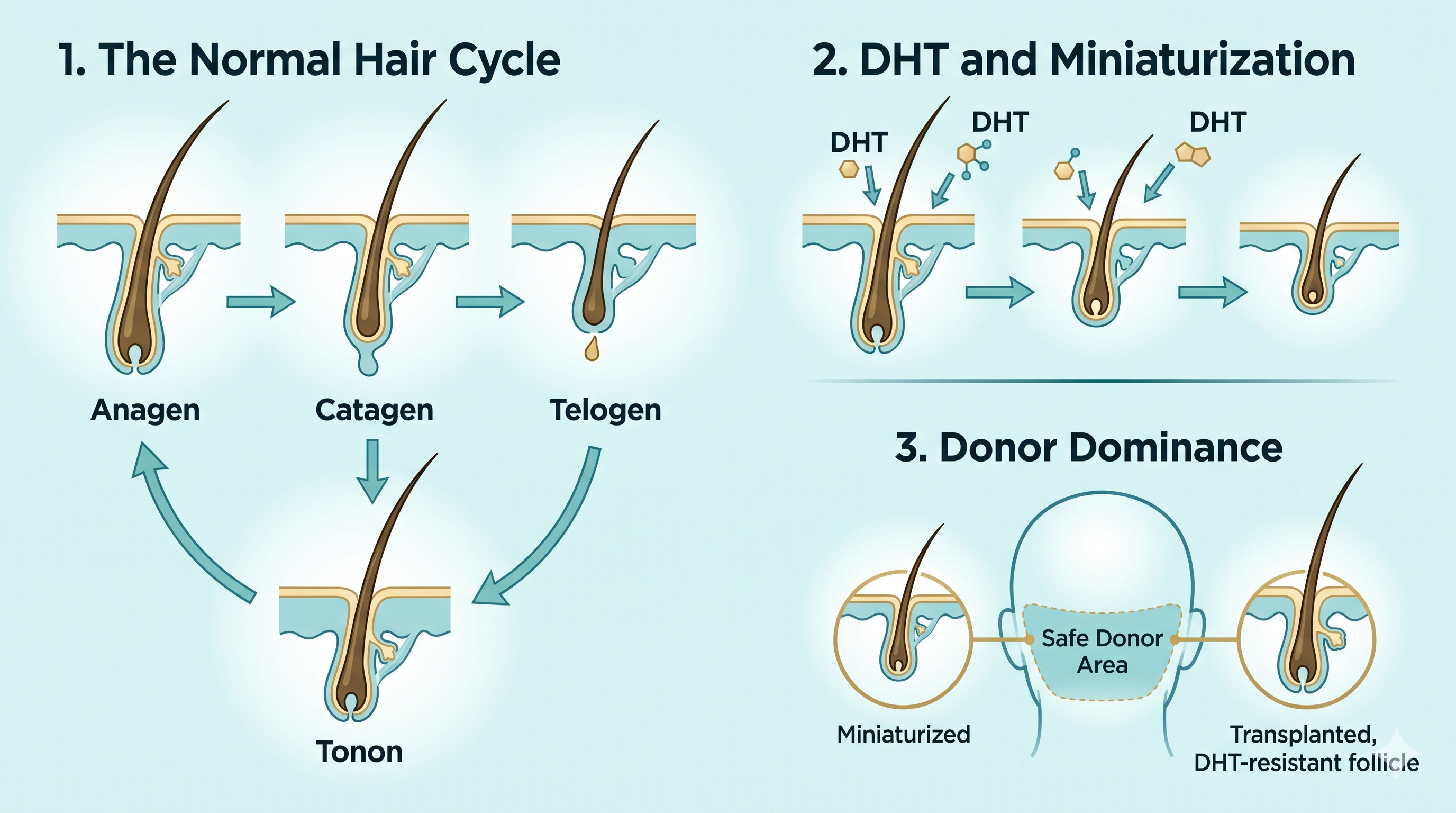
Before understanding the cure, it is absolutely essential to understand the underlying biological cause of the problem. Your hair grows in a specific, continuous cycle: the Anagen (growth) phase, the Catagen (transitional) phase, and the Telogen (resting and shedding) phase. In a healthy scalp, this cycle repeats seamlessly.
However, the most common cause of hair loss in both men and women is a genetic condition known as Androgenetic Alopecia, commonly referred to as male or female pattern baldness. This condition is triggered by a powerful hormone called DHT (dihydrotestosterone), which is a derivative of testosterone.
In individuals genetically predisposed to baldness, the hair follicles located on the top and front of the scalp are highly sensitive to DHT. Over time, DHT binds to the receptors of these hair follicles, causing them to undergo a process called “miniaturization.” The follicles shrink, the growth phase shortens, and the hair strands become progressively thinner and weaker until the follicle eventually closes up completely and stops producing hair altogether.
The Science of Hair Transplantation: The Magic of Donor Dominance
If DHT is attacking the scalp, how does a hair transplant actually survive? The answer lies in a fascinating biological phenomenon known as “donor dominance.” Take a close look at a person with advanced male pattern baldness. You will notice that while the top and front of the scalp may be completely bald, there is almost always a horseshoe-shaped ring of healthy, thick hair remaining at the very back and sides of the head. This specific area is known as the “Safe Donor Area.”
The hair follicles in this donor area are anatomically and genetically different from the hair on top of your head; they are naturally resistant to the destructive effects of DHT. During a hair transplant, highly skilled dermatological surgeons extract these DHT-resistant hair follicles from the back of your head and carefully implant them into the balding or thinning recipient areas.
Because these transplanted follicles retain their original genetic coding (their resistance to DHT), they do not fall out after being relocated. They take root in their new location, establish a new blood supply, and continue to grow naturally for the rest of your life. This biological guarantee is the foundational reason why hair transplants work when all other topical treatments fail.
Why Hair Transplants Are the Ultimate, Long-Term Solution
While the biological premise is sound, the practical benefits of the procedure are what truly make it the ultimate choice for those struggling with severe hair loss.
1. Permanent and Lifelong Results
Unlike topical treatments like minoxidil, which require continuous, twice-a-day application for the rest of your life to maintain results, a hair transplant is a one-time restorative procedure. Once the transplanted follicles heal and successfully anchor themselves in the recipient area, they behave just like your natural hair, moving through normal growth and shedding cycles permanently.
2. A Completely Natural and Undetectable Appearance
Historically, hair transplants were associated with unnatural, “pluggy” looks that were easily noticeable. Today, the aesthetic landscape has completely transformed. With the advancement of modern microsurgical techniques, individual hair follicles are implanted one by one. Expert surgeons pay meticulous attention to the precise angle, direction, and varying density of your original hair growth. The modern focus is heavily on artistic hairline design, ensuring that the new hairline frames your face perfectly and blends so seamlessly that even a hairdresser would struggle to know you had a procedure done.
3. Long-Term Cost-Effectiveness
While a hair transplant requires a higher upfront financial investment compared to purchasing a bottle of anti-hair fall shampoo or a highly marketed serum, it is drastically more cost-effective over a lifetime. You eliminate the endless, frustrating cycle of purchasing expensive cosmetic concealers, topical solutions, wigs, and unproven clinical therapies that never deliver permanent structural results.
4. Zero Specialized Maintenance
Transplanted hair is not synthetic; it is your real, living tissue. Because of this, it requires absolutely no special chemical treatments, unique medical shampoos, or delicate maintenance routines. Once the hair has grown in, you can wash, cut, style, blow-dry, and dye your new hair exactly as you always have.
Decoding the Modern Technique: FUE (Follicular Unit Extraction)
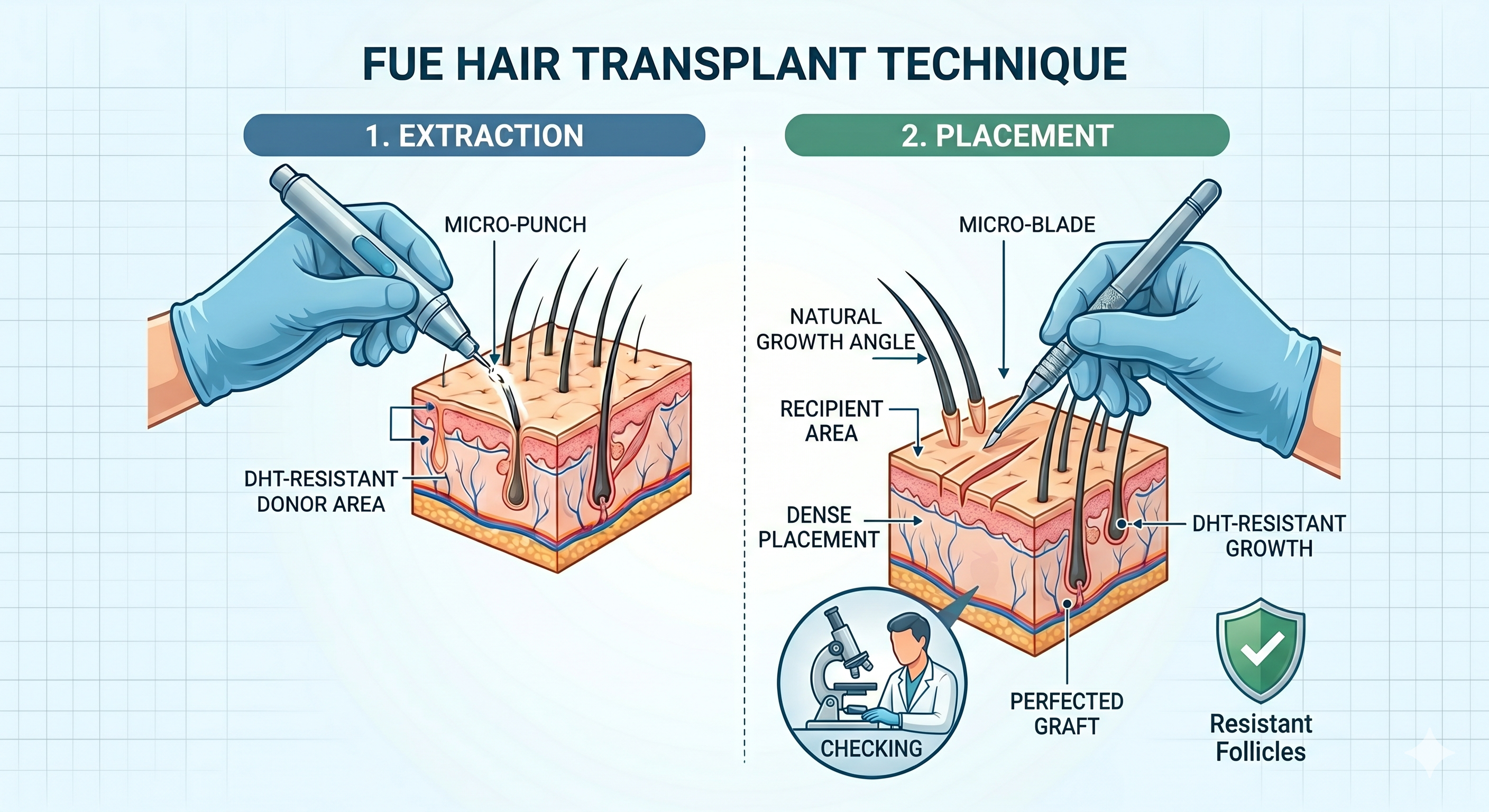
At premium dermatological centers, the traditional, highly invasive methods of hair transplantation have been replaced by advanced, minimally invasive techniques. The current global standard is FUE (Follicular Unit Extraction).
Unlike older methods that involved cutting a large strip of skin from the back of the head (leaving a noticeable linear scar), FUE is an incredibly refined process. The surgeon uses specialized micro-punches—often less than 1 millimeter in diameter—to extract individual follicular units straight from the scalp. This micro-precision leaves only tiny, dot-like marks in the donor area that heal completely within a few days and remain entirely invisible, even if you choose to wear a very short haircut.
The Patient Journey: What to Expect Before, During, and After
Understanding the timeline of a hair transplant helps alleviate anxiety and sets realistic expectations for the results.
The Procedure Day: A hair transplant is an outpatient procedure performed entirely under local anesthesia. This means you are awake, relaxed, and comfortable, but your scalp is completely numb. Most patients spend the duration of the procedure listening to music, watching a movie, or simply napping while the medical team works meticulously to extract and implant the grafts.
The Recovery and Growth Timeline:
Patience is the most critical requirement for a hair transplant patient. Here is what the standard growth timeline looks like:
- Weeks 1 to 3: The scalp heals, and the transplanted grafts settle securely into their new locations.
- Weeks 3 to 6 (The Shedding Phase): This is a normal and expected phase where the newly transplanted hairs fall out. Do not panic; the roots remain safely anchored beneath the skin.
- Months 3 to 4 (The New Growth): The dormant follicles wake up, and you will notice fine, new baby hairs beginning to emerge from the scalp.
- Months 6 to 8: The hair thickens, darkens, and structural density becomes highly visible.
- Months 10 to 12: The final, mature result is achieved, showcasing a thick, natural, and permanent head of hair.
Are You the Ideal Candidate for a Hair Transplant?
While hair transplants boast an exceptionally high success rate, a thorough clinical evaluation is necessary to ensure you are a suitable candidate. The ideal candidate generally meets the following criteria:
- Suffers from stabilized male or female pattern baldness.
- Has a sufficient and healthy supply of donor hair at the back and sides of the scalp.
- Has realistic expectations regarding the density and timeline of the final results.
- Has consulted with a qualified dermatologist to rule out systemic illnesses or temporary conditions (like severe stress or nutritional deficiencies) that might be causing reversible hair loss.
Supercharging Your Transplant Results: The Critical Role of GFC PRP and Mesotherapy
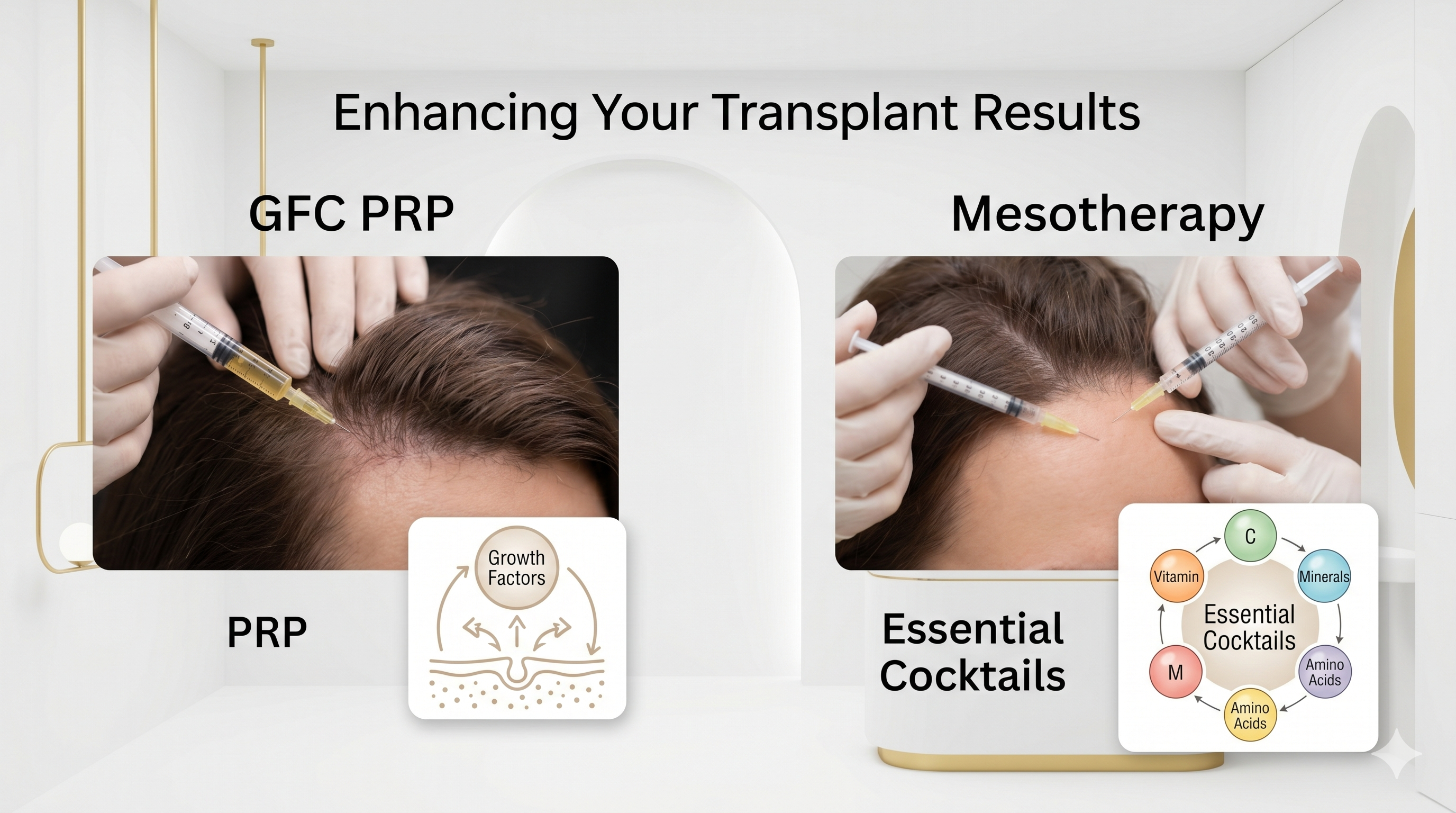
A successful surgical transplant provides the “seeds,” but your scalp is the “soil.” To ensure maximum graft survival, rapidly accelerate the healing process, and encourage dense, robust growth, the environment of your scalp needs to be highly nourished and optimized.
At Aestheticaa By Madhulika, we strongly advocate for a holistic approach to hair restoration. We highly recommend pairing your surgical hair restoration journey with our signature, advanced non-surgical scalp therapies to protect and enhance your investment:
GFC PRP (Growth Factor Concentrate Platelet-Rich Plasma): Moving beyond traditional PRP, GFC is a highly advanced, next-generation therapy. We utilize specialized processes to extract highly concentrated, pure growth factors directly from your own blood. Injecting this potent GFC into the recipient area immediately after a transplant significantly accelerates tissue healing, strengthens the newly transplanted follicular roots, and provides the biological signaling required to awaken any surrounding dormant follicles.
Mesotherapy for Hair: To further optimize the scalp environment, Mesotherapy involves delivering a highly customized, potent cocktail of essential vitamins, minerals, amino acids, and coenzymes directly into the mesoderm (the middle layer of the skin). This ensures that your newly transplanted hair, as well as your existing native hair, receives the ultimate, direct nutritional boost necessary to produce thicker, healthier, and faster-growing hair shafts.
Conclusion
Baldness is not a condition you simply have to accept or hide. It does not have to dictate how you look, how you feel about yourself, or how you interact with the world. With the right medical guidance, rigorous artistic precision, and advanced surgical and non-surgical restorative techniques, achieving a fuller, natural head of hair is entirely within your reach. Hair transplantation remains the most scientifically sound, effective, and permanent way to restore both your hair and your confidence.
Do not wait for hair loss to progress into a larger, more difficult problem to solve. Seek the expertise of a trusted, highly qualified professional who deeply understands both the complex biology of hair restoration and the delicate art of aesthetic recovery. With the clinical excellence and guidance of Dr. Madhulika Mohanty and the dedicated team at Aestheticaa By Madhulika, you can navigate your hair restoration journey with absolute confidence, knowing you are in the hands of one of the most experienced specialists in the region.