
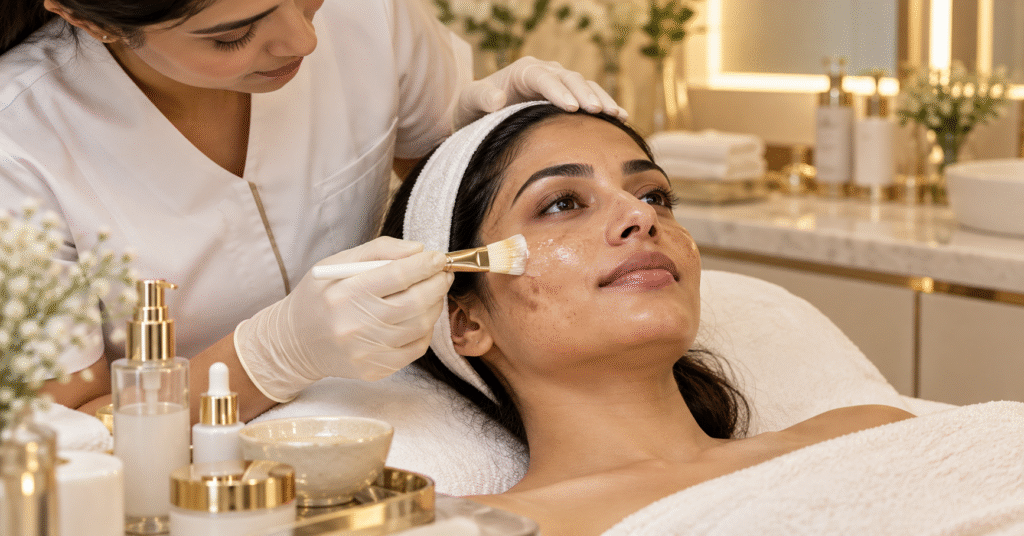
Pigmentation is a frequent reason people seek professional skincare. Some notice patches on the cheeks or forehead; others experience uneven skin tone after sun exposure, hormonal changes or inflammation.
Dark patches may look similar but have different underlying causes. Treating all of them with the same exfoliating product rarely gives consistent results.
Advanced lightening peels for pigmentation are professional treatments designed to improve selected discolouration through controlled exfoliation and carefully chosen ingredients. Learning their benefits and limitations is especially important for melasma and sun-related pigmentation.
Understanding Melasma and Uneven Skin Tone
Melanin is the pigment that contributes to natural skin colour. Uneven melanin production or distribution can make some areas appear darker.
Melasma
Melasma typically causes symmetrical brown or greyish-brown patches on cheeks, forehead or upper lip. Sun exposure, visible light, hormonal changes and genetic factors influence it. Melasma is often chronic or recurrent even after improvement.
Sun-Related Pigmentation
Repeated ultraviolet exposure can contribute to uneven tone and certain dark spots. Not all pigmented lesions are the same, so a professional diagnosis is important before choosing a cosmetic peel.
Post-Inflammatory Hyperpigmentation
Acne, irritation and other inflammatory skin conditions can trigger increased pigment. Marks may remain after the original problem resolves; management depends on pigment depth, sensitivity and ongoing causes.
What Are Advanced Lightening Peels?
Advanced lightening peels use professionally selected exfoliating formulations, sometimes paired with pigment-focused ingredients. Their goal is not to change someone’s natural skin colour, but to address unwanted areas of uneven pigmentation. Depth and intensity should reflect skin condition and tolerance.
How Do Advanced Lightening Peels Work?
Peels exfoliate selected skin layers, allowing pigmented superficial cells to shed. Some formulas include ingredients that influence pigmentation pathways. Melasma, however, involves more than surface pigment: deeper pigment, inflammation, vascular factors and light sensitivity can all contribute. Thus peeling is often an adjunct to broader long-term management, not a permanent cure.
Common Ingredients Used in Pigmentation Peels
Glycolic Acid
An alpha-hydroxy acid that promotes surface exfoliation and may support improvement of some superficial discolouration. Higher concentration is not always better.
Lactic Acid
An alpha-hydroxy acid that can be used in selected superficial formulations. Mild approaches may be appropriate in some patients, though irritation remains possible.
Mandelic Acid
A peeling acid used in some protocols for acne-prone or pigmentation-prone skin. Its molecular size affects penetration characteristics, but it can still irritate.
Combination Formulations
Some professional treatments pair exfoliating agents with pigment-management ingredients. Formula choice, strength and timing should be prescribed by a qualified professional. High-strength at-home peels can cause burns and long-lasting discoloration.
Can Advanced Lightening Peels Improve Melasma?
Selected patients may see improvement, but responses are variable. Melasma often needs ongoing light protection and topical management, sometimes alongside procedures. Irritation from a peel can worsen pigment; careful evaluation is essential, especially in medium and deep skin tones. The realistic goal is gradual improvement and reducing recurrence, not one-session permanent clearance.
Are Advanced Lightening Peels Safe for Indian Skin?
Indian skin encompasses diverse tones and sensitivities; many people develop post-inflammatory pigmentation following irritation. Aggressive peeling can worsen the original concern.
A careful plan considers:
- Appropriate formula, concentration and depth.
- Skin barrier health and sensitivity.
- Previous reactions to cosmetic treatments.
- Other exfoliating procedures or active skincare.
- Reliable photoprotection before and after treatment.
- Whether infections or other contraindications require treatment postponement.
What Results Can You Realistically Expect?
Superficial discolouration may improve across a planned treatment course. Melasma is less predictable due to recurring hormonal and environmental triggers.
Potential benefits include:
- More even-looking skin tone.
- Reduced visibility of selected superficial dark patches.
- Improvement in dullness.
- Smoother superficial texture.
Complete clearance is not guaranteed, and maintenance may be necessary.
Why Sun Protection Is Essential During Pigmentation Treatment
Ultraviolet and visible light can stimulate pigmentation. Broad-spectrum sunscreen with SPF 30 or higher is important. For melasma, tinted sunscreen with iron oxides may offer additional visible-light protection.
Practical habits include seeking shade, wearing a wide-brimmed hat, reapplying sunscreen as appropriate and avoiding unnecessary direct sun exposure after a procedure.
Aftercare Following Advanced Lightening Peels
- Use mild cleansing and appropriate moisturiser.
- Avoid picking or removing peeling skin.
- Pause additional exfoliation until advised otherwise.
- Follow clinician instructions on restarting active skincare.
- Report blistering, unexpected pain or marked irritation promptly.
Recovery varies depending on peel depth and skin response.
Advanced Lightening Peels at Aestheticaa by Dr. Madhulika
Aestheticaa by Dr. Madhulika in Indiranagar, Bengaluru, offers information about advanced lightening peels. Identifying the cause of pigmentation is the first step; treatment planning should also consider sensitivity, lifestyle and goals.
Related service: https://aestheticaabymadhulika.com/advanced-lightening-peels/
Conclusion
Advanced lightening peels can help selected pigmentation concerns but do not treat every dark patch equally. Melasma, sun-related pigmentation and post-inflammatory marks have different drivers. Personalised assessment, sensible treatment intensity and consistent sun protection provide a more sustainable approach than aggressive peeling or permanent-clearance promises.