
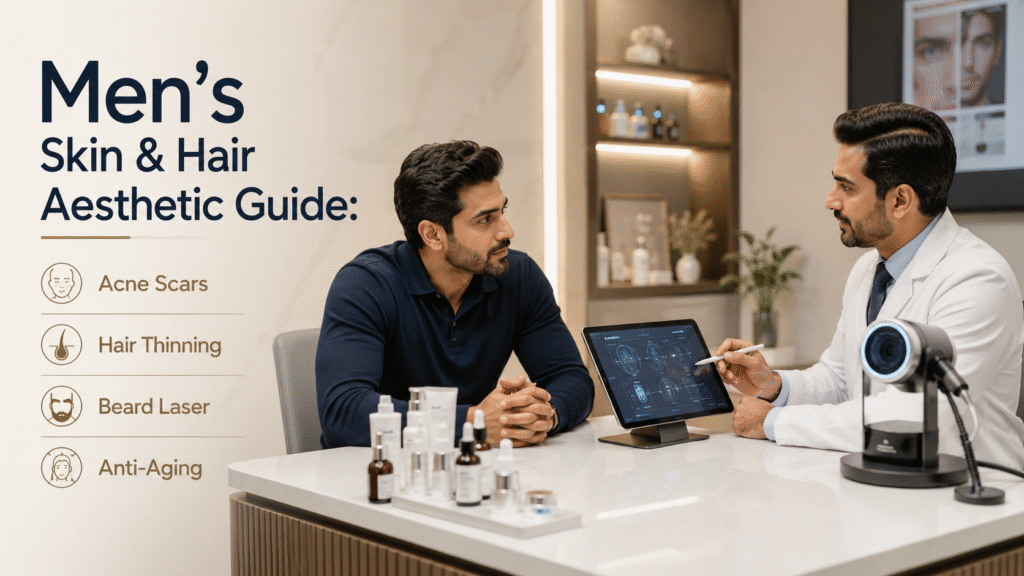
Men’s grooming has changed a lot in recent years. Today, more men are choosing dermatologist-guided skin and hair treatments not only to look better but also to feel more confident and well-groomed.
Skin and hair concerns in men are often different from women. Men usually have thicker skin, more active oil glands, facial hair growth, higher chances of acne-related scars and a different pattern of hair thinning. Daily shaving, sun exposure, stress, pollution and irregular skincare habits can also affect skin quality.
The good news is that many common concerns such as acne scars, oily skin, pigmentation, hair thinning, beard shaping and early aging signs can be managed with the right diagnosis and professional care.
Why Men Need a Different Skin and Hair Approach
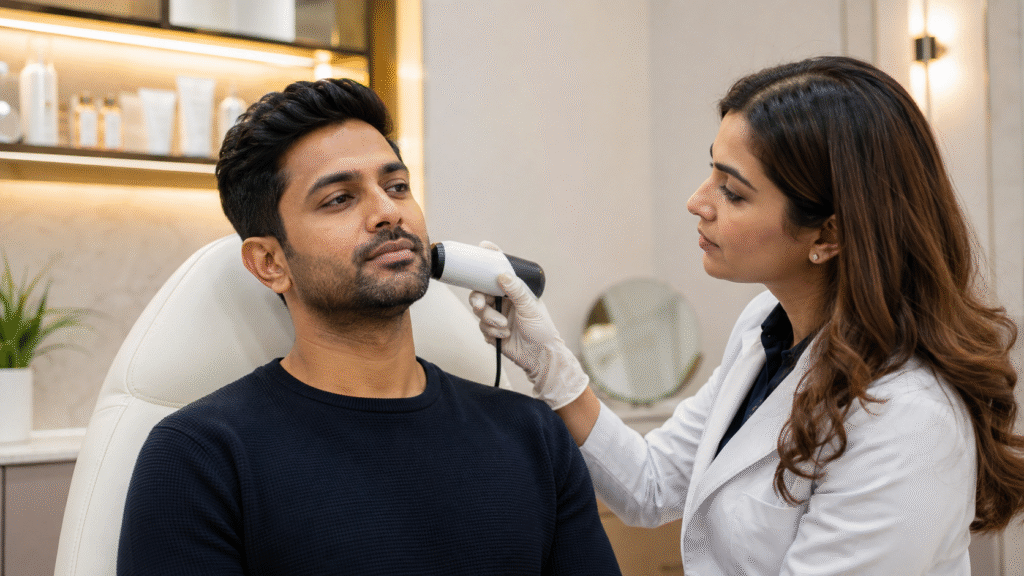
Men’s skin is usually thicker and oilier due to hormonal influence. This can make the skin more prone to enlarged pores, blackheads, acne and greasiness. At the same time, shaving can cause irritation, razor bumps, ingrown hair and pigmentation.
Hair concerns are also very common in men. Male pattern hair thinning often starts with a receding hairline, thinning at the crown or reduced hair density. Many men ignore early hair fall until visible thinning becomes more noticeable.
A simple skincare or haircare routine may help maintain basic hygiene, but concerns like acne scars, pigmentation, deep tanning, hair thinning or beard-area bumps often need targeted treatment.
Dermatologist-guided care helps identify the exact concern and choose treatment based on skin type, hair pattern, severity and lifestyle.
Acne Scars in Men
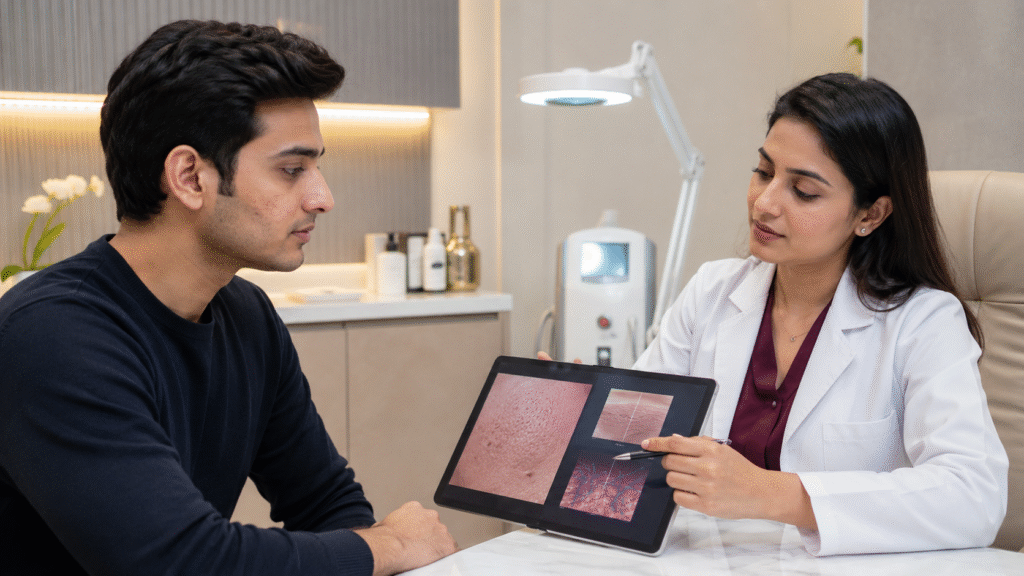
Acne is common in men, especially during teenage years and early adulthood. However, acne scars may remain long after the active acne has reduced.
Men often develop deeper acne scars because acne may be ignored, squeezed or treated late. Some men also avoid skincare because they feel it is complicated or unnecessary. This delay can increase the risk of dark marks, uneven texture and permanent scars.
Common acne scar types include ice-pick scars, boxcar scars, rolling scars and post-acne pigmentation. Each type needs a different treatment plan.
Dermatologists may suggest treatments such as chemical peels, microneedling, laser resurfacing, subcision, RF microneedling or combination therapies depending on the scar type and skin condition.
Acne scar treatment usually takes time. Multiple sessions may be needed, and results vary depending on scar depth, skin healing response and consistency of treatment.
Oily Skin, Open Pores and Blackheads
Many men struggle with oily skin and open pores, especially around the nose, forehead and cheeks. Excess oil can mix with sweat, pollution and dead skin cells, leading to clogged pores and blackheads.
Using harsh face washes multiple times a day may feel refreshing for a short time, but it can disturb the skin barrier and sometimes trigger more oiliness. Scrubbing aggressively can also worsen irritation and pigmentation.
A dermatologist may recommend a simple routine with a suitable cleanser, lightweight moisturizer and sunscreen. For persistent blackheads, congestion and texture, chemical peels or deep cleansing dermatology procedures may be suggested.
The goal is not to remove all oil from the skin. Natural oil is important for skin protection. The goal is to control excess oil without damaging the skin barrier.
Beard Laser and Beard Shaping
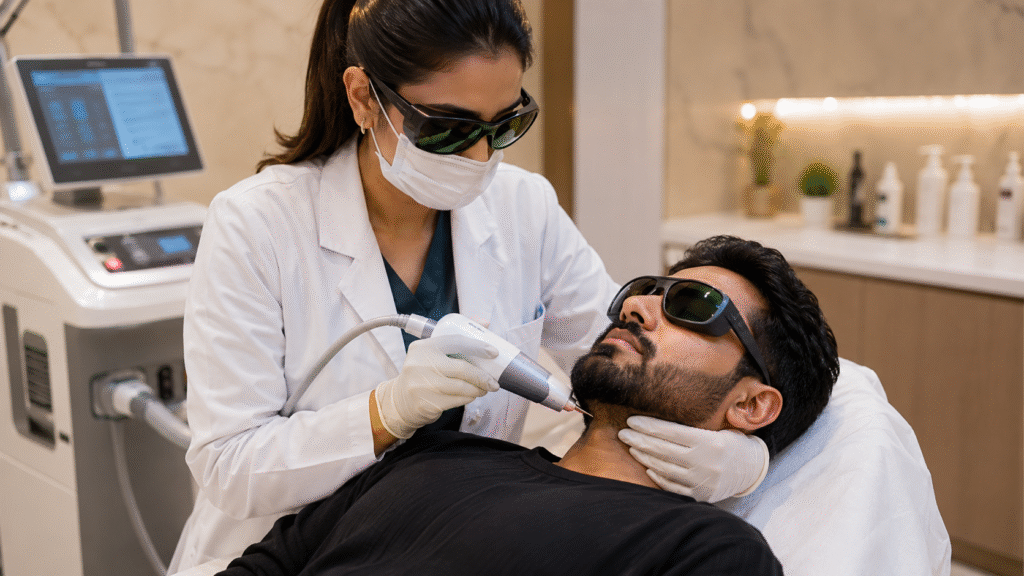
Beard grooming is an important part of men’s aesthetics. Some men prefer a clean beard line, while others want to reduce unwanted hair growth on the neck, cheeks or upper beard area.
Repeated shaving or threading can sometimes cause razor bumps, ingrown hair, pigmentation and irritation. This is especially common around the neck and jawline.
Laser hair reduction can help reduce unwanted hair in selected beard areas and create a cleaner beard shape. It can be useful for men who frequently get ingrown hair, shaving bumps or uneven beard lines.
Beard laser is not always done to remove the entire beard. It can be planned carefully to refine the beard border, reduce neck hair or improve grooming convenience.
A proper consultation is important because the beard area needs precision. The treatment plan should match the desired beard shape, hair thickness, skin type and long-term grooming goals.
Hair Thinning and Male Pattern Hair Loss
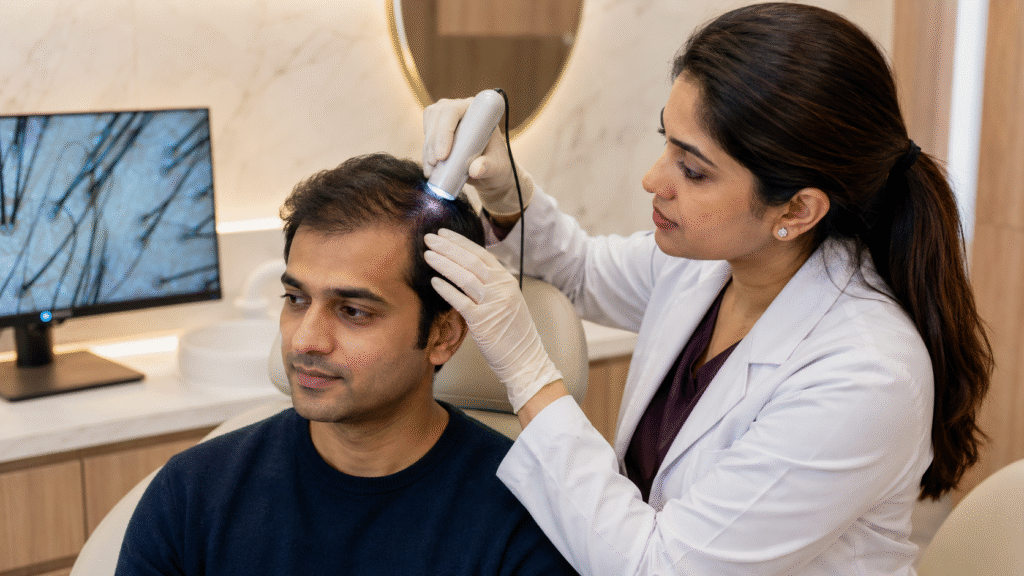
Hair thinning is one of the most common concerns among men. It may start as a receding hairline, thinning at the crown, reduced hair volume or increased visibility of the scalp.
Male pattern hair loss can be genetic, but other factors such as stress, nutritional deficiency, dandruff, thyroid imbalance, poor sleep, illness or harsh hair practices can also contribute to hair fall.
Early diagnosis is very important. In the early stages, hair thinning may be managed better with dermatologist-guided treatment. Waiting too long can lead to advanced density loss, where results may be more limited.
A dermatologist may suggest scalp analysis, blood tests, topical medicines, oral medicines, PRP, GFC or other hair growth stimulating treatments depending on the cause and stage.
Hair fall treatment requires patience. Hair growth is a slow process, and consistency matters. Stopping treatment too early may reduce the chances of visible improvement.
Dandruff, Itchy Scalp and Scalp Build-Up
Men often experience dandruff, oily scalp and itching due to sweat, pollution, helmet use, product buildup or active oil glands. Ignoring dandruff can sometimes worsen scalp inflammation and discomfort.
Many men apply oil to treat dandruff, but oiling may not help everyone. In some cases, heavy oiling can worsen greasiness and flakes.
An itchy or flaky scalp may be caused by dandruff, seborrheic dermatitis, psoriasis, fungal infection, product allergy or scalp sensitivity. This is why recurring dandruff should not be treated randomly for months.
A dermatologist can recommend the right medicated shampoo, scalp care routine or treatment based on the exact cause.
Healthy hair growth starts with a healthy scalp. Managing dandruff and scalp inflammation can support better scalp comfort and hair care outcomes.
Pigmentation, Tan and Uneven Skin Tone

Many men face tanning, pigmentation and uneven skin tone due to sun exposure, shaving irritation, acne marks and lack of sunscreen. Outdoor work, sports, driving and pollution can also contribute to dullness and dark patches.
One of the most common mistakes men make is skipping sunscreen. Even if you do not follow a long skincare routine, sunscreen is important for preventing tanning, pigmentation and early aging signs.
Pigmentation treatment depends on the cause. Acne marks, sun tan, melasma-like patches, shaving pigmentation and friction-related darkening may need different approaches.
Dermatologists may suggest sunscreen, brightening skincare, chemical peels, laser treatments or barrier-repair products depending on the skin type and pigmentation depth.
Using random fairness creams or steroid-mixed creams can damage the skin and worsen pigmentation. Professional guidance is safer and more effective.
Anti-Aging Treatments for Men

Aging in men often appears as forehead lines, under-eye hollowness, dull skin, sagging, rough texture, enlarged pores and tired-looking skin.
Many men do not want dramatic changes. They prefer subtle, natural-looking improvement that makes the face look fresher without looking overdone.
Dermatologist-guided anti-aging treatments may include skin boosters, hydrating facials, chemical peels, laser rejuvenation, microneedling RF, botulinum toxin, dermal fillers or collagen-stimulating treatments depending on the concern.
Botulinum toxin may help soften expression lines in selected areas. Fillers may be considered for volume loss or under-eye hollowness in suitable cases. Skin tightening and collagen-supporting treatments may help improve texture and firmness.
The right treatment should enhance natural features, not change the face completely.
Under-Eye Concerns in Men
Under-eye dark circles, hollowness and tired-looking eyes are common concerns among men. Lack of sleep, stress, genetics, pigmentation, allergies, screen time and volume loss can all contribute.
Not every dark circle has the same cause. Some are due to pigmentation, some due to shadowing, some due to thin skin and some due to lifestyle factors.
A dermatologist may assess the under-eye area and suggest options such as skincare, chemical peels, laser, fillers or lifestyle correction depending on the cause.
Under-eye treatment needs careful planning because this area is delicate. Random creams may not work if the problem is hollowness or shadowing rather than pigmentation.
Simple Skincare Routine for Men
Men do not need a complicated skincare routine to start. A basic routine can make a big difference when done consistently.
A simple routine includes a gentle cleanser, lightweight moisturizer and sunscreen during the day. At night, a dermatologist may recommend acne treatment, retinol, pigmentation cream or barrier-repair products depending on the concern.
Men with oily skin should avoid harsh scrubs and strong face washes used too frequently. Men with dry or sensitive skin should avoid alcohol-heavy aftershaves and fragranced products that cause burning.
The best routine is one that is simple enough to follow every day and suitable for your skin type.
Common Mistakes Men Make with Skin and Hair Care
Many men delay treatment because they think skin and hair concerns will settle on their own. Some use random products, salon treatments or home remedies without understanding the cause.
Common mistakes include popping acne, ignoring acne scars, skipping sunscreen, using harsh scrubs, applying hair oil for every scalp problem, changing shampoos too often, ignoring early hair thinning, shaving against the grain and using steroid creams without prescription.
Another mistake is expecting instant results. Skin and hair treatments take time. Acne scars, pigmentation and hair thinning usually need a planned approach and multiple sessions.
Consistency and correct diagnosis are more important than using too many products.
When Should Men Visit a Dermatologist?
Men should consider visiting a dermatologist if acne keeps coming back, acne scars are visible, hair thinning is increasing, dandruff is recurring, beard bumps are painful, pigmentation is worsening, open pores and blackheads are persistent, or early aging signs are becoming noticeable.
A dermatologist can evaluate skin type, scalp health, beard area, hair density and treatment goals. Based on this, a personalized plan can be created.
Professional care is especially useful when over-the-counter products are not working or when the concern is affecting confidence.
The earlier the concern is treated, the better the chances of managing it effectively.

Conclusion
Men’s skin and hair concerns deserve the same attention as any other health or grooming concern. Acne scars, oily skin, beard bumps, pigmentation, hair thinning, dandruff and early aging signs should not be ignored or treated randomly.
A dermatologist-guided approach can help men choose the right treatments based on their skin type, scalp condition, beard pattern and aesthetic goals.
Whether the concern is acne scars, hair thinning, beard laser or anti-aging, the goal should be simple — healthy skin, stronger hair confidence and natural-looking improvement.