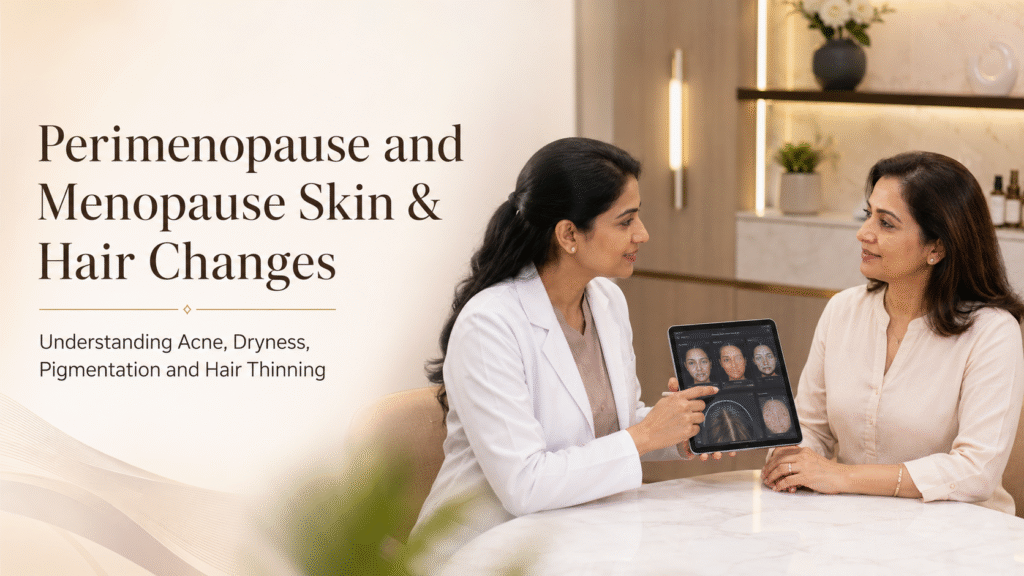
Perimenopause and menopause are natural stages in a woman’s life, but the hormonal changes associated with them can affect much more than the menstrual cycle. Many women begin noticing unexpected changes in their skin, scalp and hair during their 40s and 50s.
Skin that previously felt balanced may suddenly become dry or sensitive. Fine lines may appear more noticeable, pigmentation can become difficult to manage, and occasional acne may return after years of clear skin. At the same time, hair may feel thinner, drier or less voluminous.
These concerns are not simply the result of getting older. Changes in hormones—particularly fluctuating and declining oestrogen levels—can affect skin hydration, collagen production, elasticity and the normal hair-growth cycle. The menopausal transition may last for several years, and every woman experiences it differently.
Understanding what is happening can make it easier to choose the right skincare, haircare and professional treatment plan.
What Is the Difference Between Perimenopause and Menopause?
Perimenopause is the transitional period leading up to menopause. It commonly begins during the 40s, although it can begin earlier for some women. During this stage, hormone levels may fluctuate unpredictably, and menstrual cycles may become irregular.
Menopause is medically recognised after 12 consecutive months without a menstrual period, when no other medical cause is responsible. The years following this point are known as postmenopause.
Although hot flashes, sleep disturbances and mood changes are widely discussed, changes involving the skin and hair are often overlooked.
Why Do Hormonal Changes Affect the Skin?
Oestrogen supports several important functions in the skin. It plays a role in maintaining moisture, collagen, skin thickness, elasticity and the skin’s natural barrier.
As oestrogen levels fluctuate and gradually decline, the skin may produce less natural oil and retain less moisture. Collagen production may also reduce, making the skin feel thinner, less firm and more prone to visible lines.
The American Academy of Dermatology notes that menopausal skin may become drier, thinner and less firm, while facial hair may increase even as scalp hair becomes less dense.
These changes do not happen at the same speed or intensity for everyone. Sun exposure, genetics, stress, smoking, sleep quality, nutrition, existing skin conditions and previous skincare habits also influence how the skin changes.
Common Skin Changes During Perimenopause and Menopause
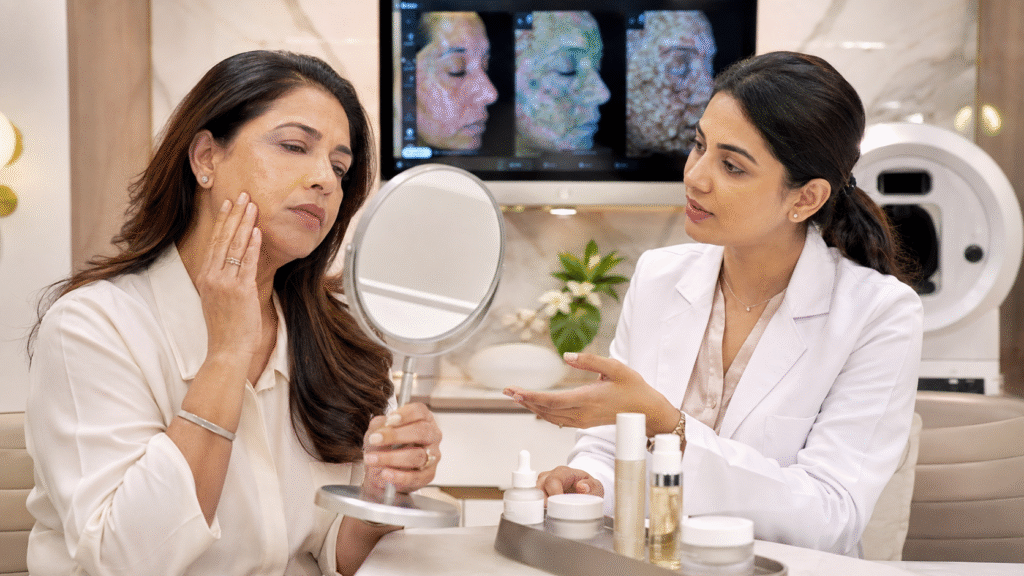
1. Dryness and Dehydration
Dryness is one of the most common menopausal skin concerns. The skin may feel tight after cleansing, appear dull or rough, or develop flaky patches.
Reduced oil production and changes in the skin barrier can make it more difficult for the skin to hold moisture. Products that previously worked well may suddenly feel irritating or insufficient.
A gentle skincare routine during this stage should usually focus on:
- Mild, non-foaming cleansers
- Ceramide-rich moisturisers
- Hyaluronic acid or glycerine-based hydration
- Fragrance-free formulations for sensitive skin
- Regular sunscreen use
- Avoiding excessively hot water and harsh scrubs
Applying moisturiser while the skin is slightly damp can help reduce water loss and improve comfort.
2. Increased Skin Sensitivity
Some women notice that their skin becomes more reactive during perimenopause. Redness, itching, burning or irritation may occur after using active ingredients that were previously well tolerated.
This does not necessarily mean that all active skincare must be stopped. However, the concentration, frequency and combination of ingredients may need to be adjusted.
Using multiple exfoliating acids, strong retinoids and abrasive scrubs together can weaken an already vulnerable skin barrier. A dermatologist can help simplify the routine and reintroduce active ingredients gradually.
3. Fine Lines, Wrinkles and Loss of Firmness
Reduced collagen and elastin support can make fine lines, wrinkles and skin laxity more visible. These changes may be especially noticeable around the eyes, mouth, jawline and neck.
Research reviews associate declining oestrogen during menopause with reduced collagen, elasticity and skin hydration.
A consistent home routine may include dermatologist-recommended ingredients such as antioxidants, peptides, retinoids and broad-spectrum sunscreen. However, topical skincare alone may not fully address deeper collagen loss or noticeable laxity.
Depending on the skin assessment, professional options may include:
- Chemical peels
- Microneedling
- Radiofrequency-based treatments
- Skin-rejuvenation procedures
- Injectable treatments
- Collagen-stimulating therapies
The right treatment depends on skin quality, medical history, sensitivity, pigmentation tendency and the desired level of correction.
4. Adult Acne and Hormonal Breakouts
It can be surprising to experience acne again during the 40s or 50s. Hormonal fluctuations may contribute to increased breakouts, particularly around the chin, jawline and lower face.
Menopausal acne may occur alongside dryness, which makes treatment more complicated. Strong acne products designed for very oily teenage skin may cause excessive irritation in mature or sensitive skin.
A balanced treatment plan may involve:
- Gentle pore-cleansing products
- Carefully selected retinoids
- Azelaic acid
- Anti-inflammatory ingredients
- Prescription medication when required
- Chemical peels or other clinic-based procedures
Persistent or painful acne should be evaluated instead of repeatedly treated with over-the-counter products. Acne may also leave pigmentation more easily in Indian skin tones, making early and appropriate management important.
5. Pigmentation and Uneven Skin Tone
Sunspots, melasma and uneven pigmentation may become more noticeable during midlife. Hormonal fluctuations can influence pigmentation, while years of accumulated sun exposure may begin appearing as visible dark spots.
Heat, ultraviolet exposure, visible light and unsuitable cosmetic products can worsen some forms of pigmentation.
Daily broad-spectrum sunscreen is essential, even when spending much of the day indoors or travelling in a car. Depending on the pigmentation type, a dermatologist may recommend:
- Vitamin C
- Azelaic acid
- Retinoids
- Tranexamic acid-based formulations
- Prescription lightening agents
- Superficial or advanced peels
- Energy-based treatments in carefully selected cases
Pigmentation should be correctly diagnosed before treatment because melasma, sunspots and post-inflammatory pigmentation do not always respond to the same approach.
6. Slower Healing and Easy Bruising
As skin becomes thinner and more delicate, it may bruise more easily or take longer to recover after irritation or minor injury.
Using harsh exfoliation, aggressive home devices or unmonitored treatment combinations may increase the risk of prolonged redness and pigmentation. Professional procedures should be planned with appropriate intensity and recovery time.
7. Increased Facial Hair
Some women develop thicker or darker hair around the chin, upper lip or jawline during and after menopause. This may happen because the balance between oestrogen and androgen activity changes with age.
Gradual facial hair growth is common after menopause, although sudden or excessive growth may require medical assessment to rule out an underlying hormonal condition.
Depending on the hair colour, thickness and skin type, management options may include laser hair reduction, electrolysis or temporary hair-removal methods.
How Does Menopause Affect the Hair and Scalp?
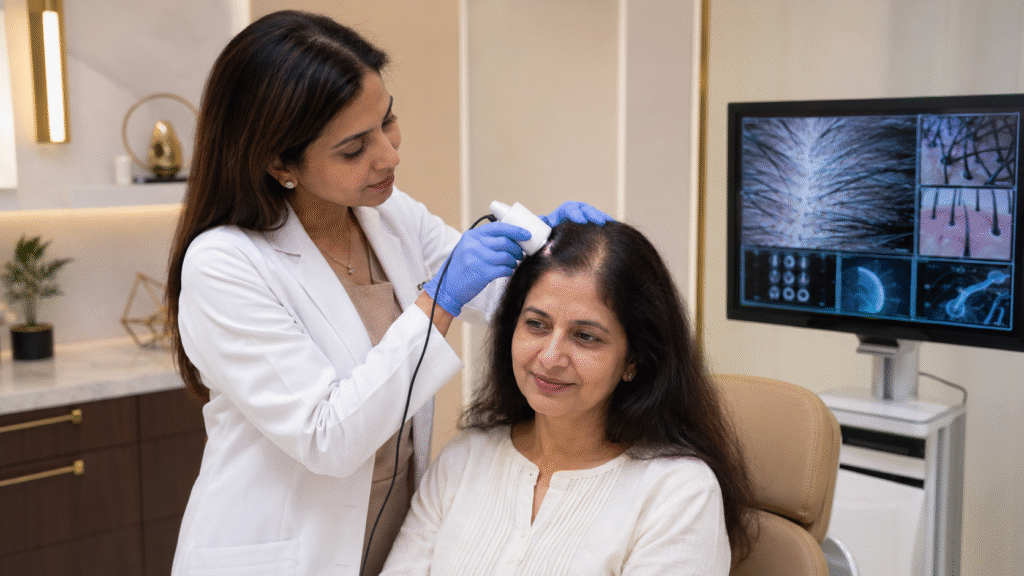
The hair-growth cycle is influenced by hormones, age, genetics, nutrition, stress and overall health.
During perimenopause and menopause, some women notice:
- Increased daily shedding
- Reduced ponytail thickness
- A wider centre part
- Thinning near the crown or temples
- Drier and more brittle hair
- Slower hair growth
- Changes in hair texture
- Increased scalp visibility
Scientific reviews suggest that hormonal changes during menopause can affect the hair cycle and may be associated with diffuse thinning, female-pattern hair loss and changes in hair quality.
However, not every case of hair fall during midlife is caused by menopause.
Other Causes of Hair Thinning That Should Be Checked
Hair shedding may also be related to:
- Iron deficiency
- Vitamin D or vitamin B12 deficiency
- Thyroid disorders
- Significant weight loss
- Crash dieting
- Inadequate protein intake
- Recent illness or surgery
- Emotional stress
- Certain medications
- Female-pattern hair loss
- Autoimmune or inflammatory scalp disorders
- Repeated chemical and heat damage
Telogen effluvium, a form of increased shedding, may occur after physical stress, illness, nutritional deficiency or other triggers. The shedding phase can continue for several months, and recovery depends on identifying and correcting the underlying cause.
This is why taking random hair supplements without a diagnosis may not solve the problem.
What Does Female-Pattern Hair Loss Look Like?
Female-pattern hair loss commonly causes gradual thinning over the top of the scalp. Women may notice a widening centre part, reduced volume or a thinner ponytail.
Unlike sudden shedding, female-pattern hair loss can progress slowly. Early assessment is valuable because treatment usually focuses on preserving existing follicles and improving their growth potential.
The condition is influenced by genetic and hormonal factors, and the affected follicles gradually produce finer and shorter hair.
A dermatologist may examine the scalp using magnification and recommend blood tests when nutritional, hormonal or thyroid-related causes are suspected.
Dermatologist-Guided Options for Menopausal Hair Thinning
Treatment depends on the diagnosed cause. A personalised plan may include:
Topical Treatments
Topical medications may be recommended to support the hair-growth cycle and reduce progressive thinning. These treatments generally require regular and long-term use.
Oral Medication
In suitable patients, prescription medicines may be considered for hormonal or female-pattern hair loss. These medications are not appropriate for everyone and must be used under medical supervision.
Scalp Treatments
Clinic-based treatments may be suggested to support scalp health and hair density. The choice of procedure depends on follicle condition, the type of hair loss and the patient’s medical history.
Correction of Nutritional Deficiencies
Iron, vitamin D, vitamin B12, zinc or protein deficiencies should be corrected only when identified or strongly suspected. Excessive supplementation without testing may be unnecessary and, in some situations, harmful.
Gentle Haircare
Hair that becomes dry or fragile may benefit from:
- Reducing frequent straightening and high-heat styling
- Avoiding tight hairstyles
- Limiting repeated bleaching and chemical processing
- Using mild shampoos
- Conditioning the lengths regularly
- Detangling gently
- Protecting hair from excessive sun and heat exposure
A Simple Skincare Routine for Perimenopausal and Menopausal Skin
A complex routine is not always necessary. Consistency and suitability matter more than the number of products used.
Morning Routine
- Use a mild cleanser or rinse with water if the skin is very dry.
- Apply a hydrating or antioxidant serum.
- Use a moisturiser suited to the skin type.
- Finish with a broad-spectrum sunscreen.
- Reapply sunscreen when exposed to prolonged sunlight.
Night Routine
- Remove makeup and sunscreen gently.
- Cleanse without scrubbing.
- Apply a dermatologist-recommended treatment ingredient.
- Use a nourishing moisturiser.
- Apply a gentle eye or neck product only when required.
Retinoids, exfoliating acids and pigmentation treatments should be introduced carefully, particularly when the skin is dry, irritated or sensitive.
Lifestyle Habits That Support Skin and Hair Health
Skincare and professional treatments work best when combined with supportive lifestyle habits.
Helpful practices include:
- Eating adequate protein
- Including fruits, vegetables and healthy fats in the diet
- Staying hydrated
- Getting regular physical activity
- Managing stress
- Improving sleep quality
- Avoiding smoking
- Limiting excessive alcohol consumption
- Protecting the skin from sunlight
- Avoiding extreme or crash diets
Lifestyle changes cannot completely prevent hormonal skin ageing, but they can support general skin, scalp and hair health.
When Should You Consult a Dermatologist?
Consider seeking professional advice when you experience:
- Sudden or severe hair shedding
- A rapidly widening hair part
- Bald patches
- Scalp redness, itching, pain or scaling
- Persistent adult acne
- Sudden facial hair growth
- Pigmentation that is spreading or changing
- Severe dryness or itching
- A rash that does not improve
- Skin irritation after using active products
- Noticeable loss of firmness that you wish to treat
- Skin or hair changes affecting confidence or quality of life
A dermatologist can distinguish expected menopausal changes from medical conditions that require specific investigation or treatment.
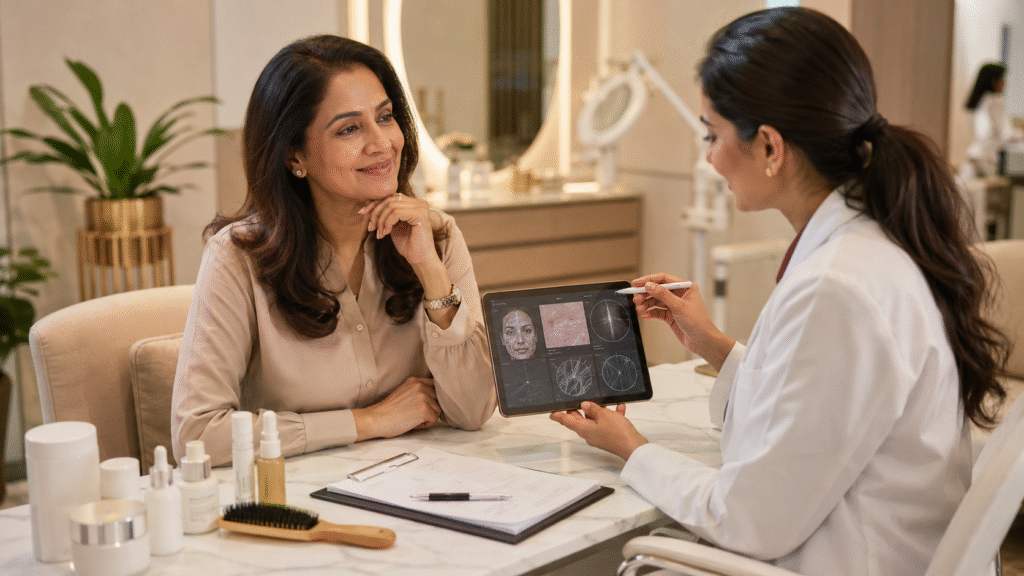
Why Personalised Treatment Is Important
Two women of the same age may experience completely different concerns. One may struggle primarily with acne and pigmentation, while another may notice dryness, wrinkles and hair thinning.
Skin type, scalp condition, hormone history, medication use, existing medical conditions, lifestyle and treatment goals must all be considered before recommending a plan.
A personalised approach may combine:
- Barrier-supporting skincare
- Acne or pigmentation treatment
- Sun protection
- Hair and scalp evaluation
- Nutritional investigations
- Prescription therapy
- Collagen-supporting procedures
- Skin rejuvenation treatments
- Long-term maintenance
The objective should not be to reverse a natural life stage. It should be to help the skin and hair remain healthy, comfortable and well supported through the transition.
Conclusion
Perimenopause and menopause can bring noticeable changes to the skin and hair, including dryness, sensitivity, acne, pigmentation, wrinkles, reduced firmness, facial hair and scalp thinning.
Although hormonal changes are an important factor, not every concern should automatically be attributed to menopause. Thyroid problems, nutritional deficiencies, stress, medication, sun exposure and underlying dermatological conditions can produce similar symptoms.
A dermatologist-guided assessment can help identify the actual cause and create a safe, realistic and personalised plan. With appropriate skincare, scalp care, lifestyle support and professional treatment where needed, women can maintain healthier-looking skin and stronger hair throughout perimenopause, menopause and beyond.