

Melasma treatment can feel frustrating. The pigmentation may gradually become lighter after weeks or months of skincare and professional treatment, only to become noticeable again after a holiday, increased sun exposure, hormonal changes or a break in the maintenance routine.
This does not necessarily mean that the previous treatment failed. Melasma is considered a chronic and relapsing pigmentation disorder. Treatment can reduce excess pigmentation and improve skin tone, but the cells responsible for producing pigment may remain sensitive to light, hormones, inflammation and other triggers. Without ongoing protection and maintenance, the pigmentation can return.
This tendency to recur is especially relevant for Indian skin, which generally has a stronger pigment-producing response. Even mild inflammation, irritation or unsuitable treatment can sometimes make pigmentation darker rather than lighter.
Understanding why melasma returns is the first step towards managing it more effectively and setting realistic expectations.
What Is Melasma?
Melasma is a pigmentation condition that causes irregular brown, grey-brown or sometimes bluish patches on the skin. It most commonly affects sun-exposed areas of the face, including:
- Cheeks
- Forehead
- Upper lip
- Nose
- Chin
- Jawline
The patches are often symmetrical, meaning they appear in similar areas on both sides of the face. Melasma is not infectious or cancerous, and it usually does not cause pain or itching. However, because it appears prominently on the face and can persist for years, it may affect confidence and emotional well-being.
Melasma is more common among women and people with medium to deeper skin tones. Pregnancy, hormonal medication, sunlight and family history are among the recognised risk factors.
Why Does Melasma Keep Returning?
Melasma is not simply a collection of surface-level dark spots. Research suggests that it involves a complex interaction between pigment-producing cells, skin cells, blood vessels, inflammation and changes within the deeper layers of the skin.
Treatment may lighten the visible pigment without permanently removing the underlying tendency of the skin to produce excess melanin. When the skin encounters a trigger again, pigment production may increase and the patches can become darker.
This is why melasma is better managed as a long-term condition rather than treated as a one-time cosmetic concern.
The Most Common Triggers Behind Melasma Recurrence
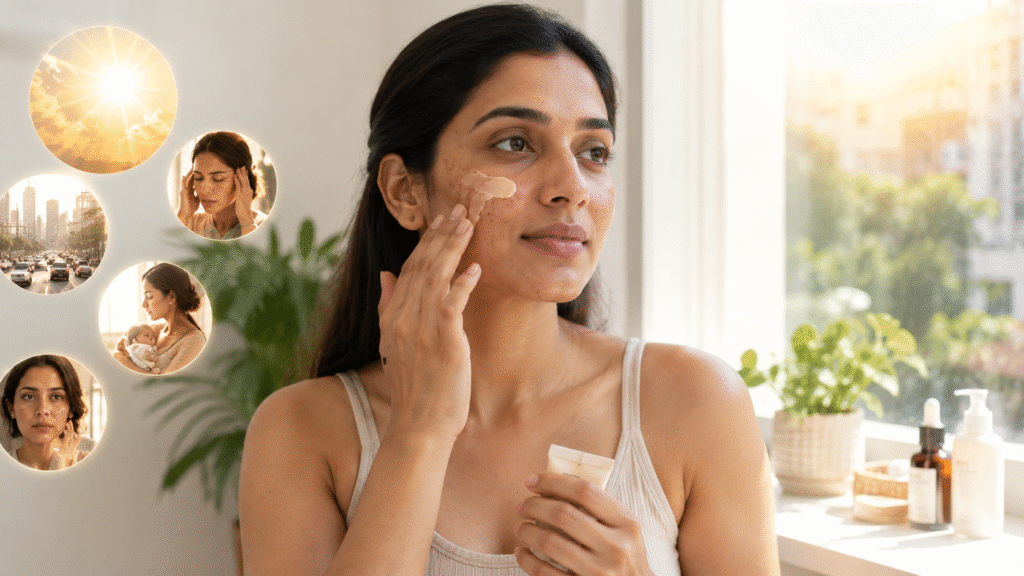
1. Ultraviolet Sun Exposure
Sunlight is one of the most important triggers for the development and recurrence of melasma.
Ultraviolet radiation stimulates melanocytes, the cells responsible for producing melanin. Even brief or incidental exposure—such as driving, sitting near a sunny window, walking outdoors or travelling to work—can contribute to pigmentation over time.
Skipping sunscreen for a few days after treatment may be enough to reactivate pigment production in sensitive skin. Melasma commonly appears darker during sunny seasons and lighter during periods of reduced sun exposure.
Sunscreen should therefore be considered part of the melasma treatment itself, not merely an optional skincare step.
2. Visible Light
Melasma can also be affected by visible light, not only ultraviolet radiation. Visible light may contribute to persistent pigmentation, particularly in people with medium and darker skin tones.
A regular non-tinted sunscreen may provide excellent UVA and UVB protection but may not offer sufficient protection against visible light.
For this reason, dermatologists may recommend a broad-spectrum tinted sunscreen containing iron oxides. Iron oxides help protect against visible light while the sunscreen filters ultraviolet radiation.
The tint should ideally blend with the person’s skin tone so that the recommended amount can be applied comfortably and consistently.
3. Heat Exposure
Some people observe that their melasma becomes more noticeable after prolonged exposure to high temperatures. Common sources may include:
- Cooking near intense heat
- Saunas and steam rooms
- Hot yoga
- Outdoor work
- Prolonged exposure to hot weather
- Repeated use of high-temperature facial devices
Heat may influence skin inflammation and pigment-producing pathways, although its exact role in melasma is still being studied. It should not be assumed that every warm environment will worsen pigmentation, but patients who consistently notice heat-related flares should discuss suitable precautions with their dermatologist.
4. Hormonal Changes
Melasma is often associated with hormonal influences. It may first appear or become darker during:
- Pregnancy
- Use of oral contraceptive pills
- Hormonal therapy
- Changes in reproductive hormones
- Starting or stopping certain hormone-containing medications
Hormonal changes can make pigment-producing cells more responsive to light and other triggers. Not every person taking hormonal medication develops melasma, and prescribed medication should never be stopped without consulting the relevant doctor.
Pregnancy-related melasma may become lighter after delivery, but it can persist or return with future sun exposure.
5. Family and Genetic Tendency
Melasma commonly runs in families. A person with a parent or close blood relative who has melasma may have a greater tendency to develop it.
Genetic susceptibility cannot be changed, but knowing that the condition runs in the family can encourage earlier sun protection and quicker professional assessment when pigmentation first appears.
6. Skin Irritation and Inflammation
Skin irritation can stimulate additional pigmentation, particularly in Indian and deeper skin tones.
Possible sources of irritation include:
- Strong home chemical peels
- Frequent scrubbing
- Unsupervised use of high-strength acids
- Applying multiple active ingredients together
- Waxing over irritated skin
- Fragranced or unsuitable cosmetics
- Incorrect use of retinoids
- Aggressive clinic procedures
- Using fairness or bleaching creams without medical guidance
If a product repeatedly burns, stings or produces prolonged redness, it may worsen dark patches rather than improve them. The American Academy of Dermatology recommends gentle, fragrance-free products for melasma-prone skin because irritation can make pigmentation darker.
7. Stopping Treatment Immediately After Improvement
A common mistake is discontinuing the entire routine as soon as the patches become lighter.
The active treatment phase may reduce visible pigmentation, but the skin still requires protection and maintenance. Without continued sunscreen and a dermatologist-recommended maintenance product, the melanocytes may become overactive again.
Maintenance treatment is usually less intensive than the initial treatment, but it remains essential for extending the results.
8. Incorrect Diagnosis
Not every dark facial patch is melasma. Similar-looking pigmentation may be caused by:
- Post-inflammatory hyperpigmentation
- Sunspots or lentigines
- Pigmented contact dermatitis
- Lichen planus pigmentosus
- Medication-related pigmentation
- Frictional pigmentation
- Certain birthmarks
- Other dermatological conditions
These conditions may require different treatment approaches. A product that works for one type of pigmentation may be ineffective or irritating for another.
A dermatologist may diagnose melasma through clinical examination and, when required, use tools such as a dermatoscope or Wood’s lamp to understand the pigmentation pattern and depth.
Why Is Melasma Commonly Challenging in Indian Skin?
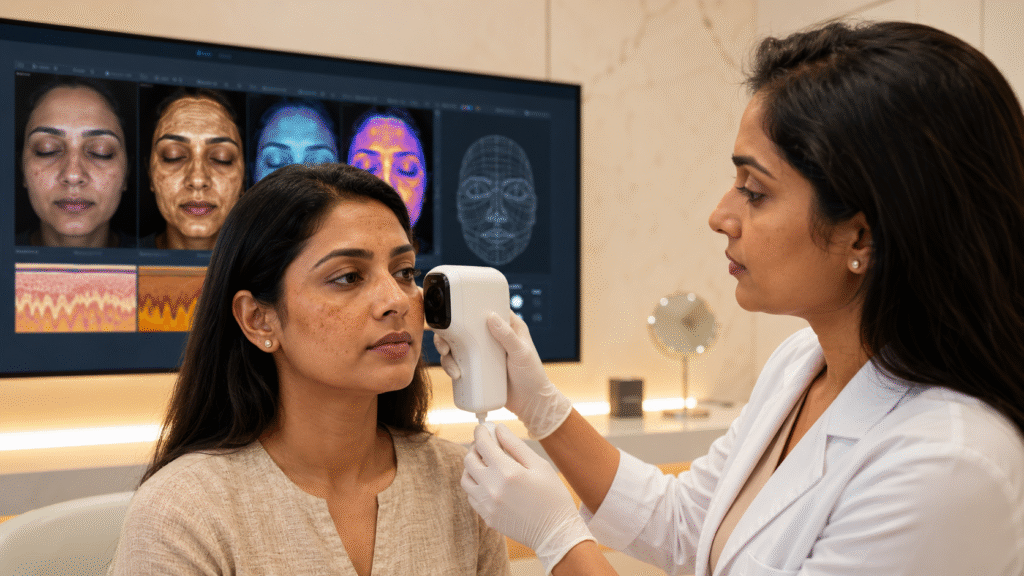
Indian skin includes a wide range of tones and undertones, but many Indian patients have skin that pigments easily after irritation, acne, rashes or procedures.
In deeper skin tones, melanocytes can respond strongly to ultraviolet light, visible light and inflammation. This may increase the risk of both melasma and post-inflammatory hyperpigmentation.
Aggressive treatment does not necessarily produce faster results. Excessively strong peels, lasers or unsuitable combinations may cause irritation followed by darker pigmentation.
Treatment for Indian skin should therefore focus on:
- Accurate diagnosis
- Gradual pigment reduction
- Barrier protection
- Careful selection of procedures
- Strong photoprotection
- Long-term maintenance
The safest treatment plan is not always the most intensive one. It is the plan that improves pigmentation while minimising irritation and recurrence.
Can Melasma Be Permanently Cured?
At present, melasma is generally managed rather than permanently cured. Some people achieve significant and long-lasting improvement, while others experience repeated flares.
Results can vary depending on:
- Depth of pigmentation
- Duration of the condition
- Skin tone
- Hormonal influences
- Family history
- Daily light exposure
- Consistency with sunscreen
- Skin sensitivity
- Treatment adherence
- Previous procedures
Melasma that has been present for several years or includes deeper pigmentation may respond more slowly. Even after a good response, ongoing photoprotection and maintenance are usually required.
The realistic objective is to control the condition, reduce visible pigmentation and make recurrences less frequent or less intense.
How Is Melasma Treated?
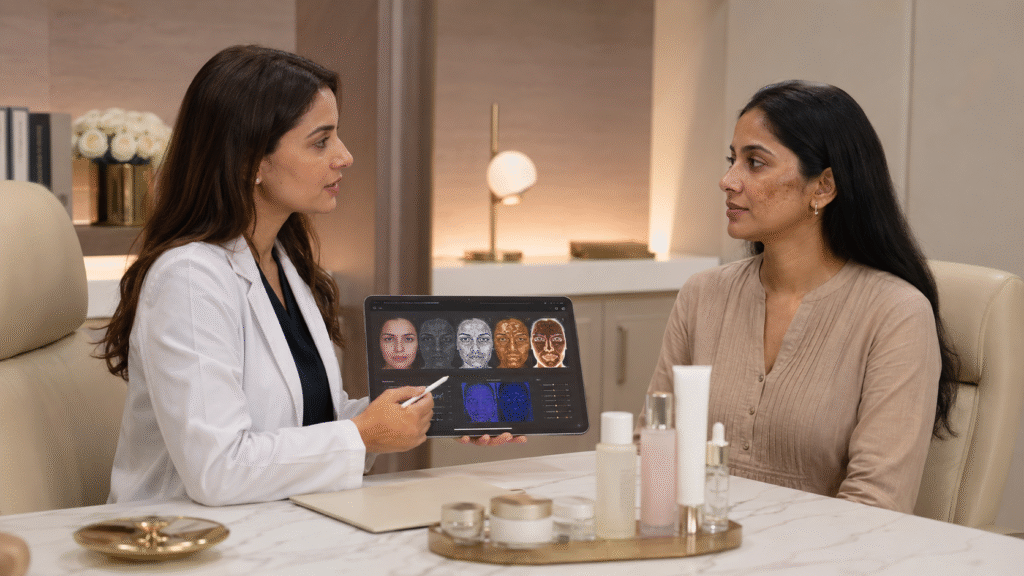
There is no single treatment that works equally well for everyone. Effective treatment often combines sun protection, topical medication and, in selected cases, professional procedures.
1. Daily Photoprotection
A melasma treatment plan should begin with consistent light protection.
A dermatologist may recommend:
- Broad-spectrum sunscreen with SPF 30 or higher
- Protection against both UVA and UVB radiation
- A tinted formulation containing iron oxides
- Reapplication during prolonged exposure
- A wide-brimmed hat
- Seeking shade whenever possible
- Avoiding unnecessary exposure during intense sunlight
- Using protective measures while driving or sitting near bright windows
The sunscreen should be applied in an adequate amount and reapplied based on exposure, sweating and product instructions.
Sunscreen alone may not remove established melasma, but inadequate protection can limit the effectiveness of other treatments and encourage recurrence.
2. Hydroquinone
Hydroquinone is a commonly prescribed depigmenting ingredient that reduces excess pigment production.
It may be used alone or as part of a combination formula. Because prolonged or incorrect use can cause irritation and other complications, hydroquinone should be used for the duration and frequency advised by a dermatologist rather than continuously as a fairness cream.
3. Triple-Combination Cream
A prescription triple-combination cream may contain:
- Hydroquinone
- A retinoid such as tretinoin
- A mild corticosteroid
Each component serves a different purpose: reducing pigment production, supporting skin-cell turnover and controlling irritation.
Although this combination can be effective, it is not intended for indefinite unsupervised use. The duration and maintenance plan should be determined by a dermatologist.
4. Azelaic Acid
Azelaic acid may help reduce pigmentation and inflammation. It is often considered when the skin is sensitive or when other ingredients are unsuitable.
The concentration and formulation should be selected according to skin type and tolerance. Pregnancy-related skincare requires specific medical guidance, even when an ingredient is generally considered suitable.
5. Other Topical Ingredients
Depending on the pigmentation pattern and skin sensitivity, a dermatologist may consider ingredients such as:
- Kojic acid
- Vitamin C
- Cysteamine
- Tranexamic acid
- Niacinamide
- Retinoids
- Thiamidol
- Selected pigment-regulating combinations
These ingredients work through different mechanisms and should not all be layered together. Using too many active products may increase inflammation and worsen pigmentation.
6. Oral Tranexamic Acid
Oral tranexamic acid may be considered for selected patients with persistent melasma that has not responded adequately to other treatment.
It is not appropriate for everyone. A detailed medical history is necessary because tranexamic acid may not be suitable for people with certain clotting risks or medical conditions. It should only be taken after prescription and medical evaluation.
Patients should never self-medicate with tranexamic acid after seeing it recommended on social media.
Professional Procedures for Melasma
Procedures may be added when topical treatment and photoprotection do not provide sufficient improvement. However, procedures should usually support a complete treatment plan rather than replace daily skincare and sunscreen.
Chemical Peels
Superficial chemical peels can help remove excess pigment from the upper layers of the skin and support a more even-looking tone.
The type, concentration and frequency of the peel must be selected carefully. Strong or frequent peels can cause inflammation and post-inflammatory hyperpigmentation, particularly in deeper skin tones.
Microneedling
Microneedling may be used in selected cases to support skin renewal or improve the delivery of certain topical treatments.
The procedure should be performed with appropriate depth, technique and sterile equipment. Aggressive microneedling can increase inflammation and worsen pigmentation.
Laser and Light-Based Treatments
Certain lasers and light-based procedures may improve melasma when carefully combined with topical treatment and strict photoprotection.
However, lasers are not automatically the best or fastest solution. Incorrect parameters, unsuitable devices or repeated aggressive sessions can cause rebound pigmentation, post-inflammatory hyperpigmentation or more treatment-resistant melasma.
Procedure selection should consider the patient’s skin tone, pigment depth, previous treatment response and tendency to develop pigmentation after inflammation.
What Is Rebound Pigmentation?
Rebound pigmentation refers to melasma becoming darker again after an initial improvement.
It may occur due to:
- Excessive sun or visible-light exposure
- Overaggressive procedures
- Skin irritation
- Suddenly stopping treatment
- Inconsistent sunscreen use
- Hormonal changes
- Lack of maintenance therapy
Rebound does not always mean that melasma has become permanently worse. However, the treatment plan may need to be paused, simplified or modified to reduce inflammation before pigment treatment is restarted.
A Dermatologist-Guided Maintenance Plan
Once melasma improves, the treatment usually moves from an active correction phase to a maintenance phase.
A maintenance plan may include:
- Daily broad-spectrum tinted sunscreen
- Regular sunscreen reapplication
- A gentle cleanser
- Barrier-supporting moisturiser
- A milder pigment-regulating product
- Reduced-frequency prescription treatment
- Antioxidants or dermatologist-selected active ingredients
- Periodic review appointments
- Carefully timed maintenance procedures when appropriate
The exact routine depends on how the skin responded during the active treatment phase.
Some patients may need year-round maintenance, while others may require stronger preventive care during seasons or situations associated with increased exposure.
A Simple Daily Routine for Melasma-Prone Skin
Morning Routine
- Cleanse gently without scrubbing.
- Apply a dermatologist-recommended antioxidant or pigment-control serum.
- Use a moisturiser suited to the skin type.
- Apply a broad-spectrum tinted sunscreen containing iron oxides.
- Reapply sunscreen during prolonged exposure.
Evening Routine
- Remove makeup and sunscreen gently.
- Cleanse with a mild product.
- Apply the prescribed melasma treatment.
- Follow with a barrier-supporting moisturiser.
- Avoid adding unprescribed acids or exfoliants.
A routine should remain manageable. A simple plan followed consistently is usually more useful than a complicated routine that repeatedly irritates the skin.
Common Mistakes That Can Worsen Melasma
Using Home Remedies
Ingredients such as lemon juice, baking soda, undiluted apple cider vinegar and abrasive homemade scrubs can irritate the skin.
Temporary peeling should not be confused with safe pigmentation treatment. Irritation may lead to darker and more persistent marks.
Using Steroid-Containing Fairness Creams
Some unregulated fairness or mixed creams may contain potent corticosteroids without clearly displaying them on the label.
Long-term misuse can cause:
- Skin thinning
- Acne
- Increased facial hair
- Visible blood vessels
- Sensitivity
- Uneven pigmentation
- Steroid dependence
Any cream that produces unusually rapid lightening should be used cautiously and preferably reviewed by a dermatologist.
Changing Products Too Frequently
Pigmentation treatments require time. Switching products every few days makes it difficult to assess results and increases the risk of irritation.
According to the American Academy of Dermatology, visible improvement may take several months, particularly when melasma has been present for a long time.
Relying Only on Procedures
A peel or laser session cannot compensate for inconsistent sunscreen use. Procedures may lighten existing pigment, but continued exposure can stimulate new pigment production.
Treating Every Dark Spot as Melasma
Acne marks, sunspots and inflammatory pigmentation may look similar to melasma but require different approaches. Starting strong treatment without confirming the diagnosis can delay improvement.
When Should You Consult a Dermatologist?
A professional consultation is advisable when:
- Facial pigmentation is spreading
- The patches are becoming darker
- Over-the-counter products are not helping
- The skin burns, stings or peels continuously
- Pigmentation developed during pregnancy
- Pigmentation appeared after starting medication
- Previous peels or lasers worsened the condition
- The diagnosis is uncertain
- Melasma is affecting confidence or quality of life
- You are considering oral medication
- You are planning a laser or advanced procedure
A dermatologist can evaluate the pigment pattern, identify possible triggers and create a plan suitable for the patient’s skin tone and medical history.
How to Reduce the Risk of Melasma Returning
Melasma recurrence cannot always be completely prevented, but the risk may be reduced by:
- Wearing sunscreen every day
- Choosing a tinted sunscreen with iron oxides
- Reapplying sunscreen when exposed
- Wearing hats and seeking shade
- Avoiding unnecessary skin irritation
- Following the maintenance routine
- Introducing active ingredients gradually
- Avoiding aggressive home treatments
- Informing doctors about hormonal or other medications
- Scheduling reviews when pigmentation starts returning
- Treating flare-ups early instead of waiting for them to become darker
Long-term control depends more on consistency than on one powerful treatment session.

Conclusion
Melasma commonly returns because it is a chronic, trigger-sensitive pigmentation condition rather than a temporary surface stain. Sunlight, visible light, hormonal changes, skin irritation, genetics and discontinuation of maintenance treatment can all contribute to recurrence.
For Indian skin, treatment must be carefully balanced. Overly aggressive procedures and irritating products can stimulate more pigmentation, while treatment that is too mild or inconsistent may not adequately control the condition.
The most effective strategy generally combines an accurate diagnosis, daily photoprotection, dermatologist-selected treatment and long-term maintenance. Although melasma may not have a guaranteed permanent cure, consistent and personalised care can significantly improve its appearance and help make future flare-ups more manageable.