
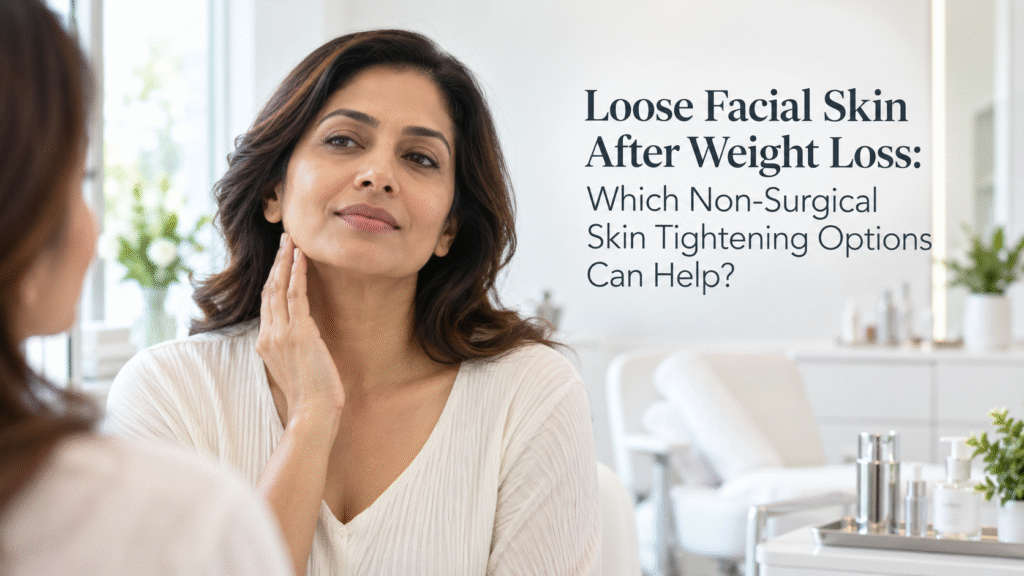
Weight loss can bring many positive changes, but some people notice that their face looks looser, less firm or slightly hollow after losing a significant amount of weight.
This can happen because facial fat volume reduces while the skin may not contract at the same speed.
The result may include:
- Loose skin around the cheeks
- Reduced jawline definition
- Mild sagging
- Fine lines
- A more tired or hollow appearance
- Reduced skin firmness
This does not mean anything has gone wrong.
It simply reflects the way skin, fat, collagen and facial structure respond to weight changes.
For people who do not want surgery, several non-surgical treatments may help improve skin firmness and overall facial appearance.
The right option depends on age, amount of weight loss, skin quality and the degree of laxity.
Why Does Facial Skin Become Loose After Weight Loss?
Skin contains collagen and elastin fibres that help it stay firm and flexible.
When body weight increases, the skin gradually stretches to accommodate changes in facial and body volume.
If a person loses weight, especially a significant amount, the underlying fat may reduce faster than the skin can adapt.
As a result, the skin may appear looser.
Several factors influence how well the skin contracts.
1. Amount of Weight Lost
The greater the amount of weight lost, the more noticeable skin laxity may become.
Minor weight changes may have little effect on the face, while significant weight loss can reduce facial volume more dramatically.
2. Speed of Weight Loss
Rapid weight loss may make volume loss more noticeable.
The skin may not have enough time to gradually adjust to the changing facial structure.
This does not mean slow weight loss will completely prevent loose skin, but gradual changes may sometimes look less dramatic.
3. Age
Collagen production naturally decreases with age.
Younger skin generally has more elasticity and may adapt more easily after weight changes.
As we age, the skin may take longer to tighten and may not return completely to its previous firmness.
4. Genetics
Skin elasticity varies from person to person.
Some people naturally have stronger collagen support, while others may be more prone to sagging.
Genetics can therefore influence how much loose skin develops after weight loss.
5. Sun Exposure
Repeated sun exposure can damage collagen and elastin.
This may reduce the skin’s ability to remain firm.
Daily sun protection is therefore important for maintaining overall skin quality.
6. Smoking and Lifestyle Factors
Smoking, poor nutrition, dehydration and lack of sleep may affect skin health.
These factors do not directly cause all facial laxity, but they can influence how healthy and resilient the skin appears.
Loose Skin or Loss of Facial Volume?
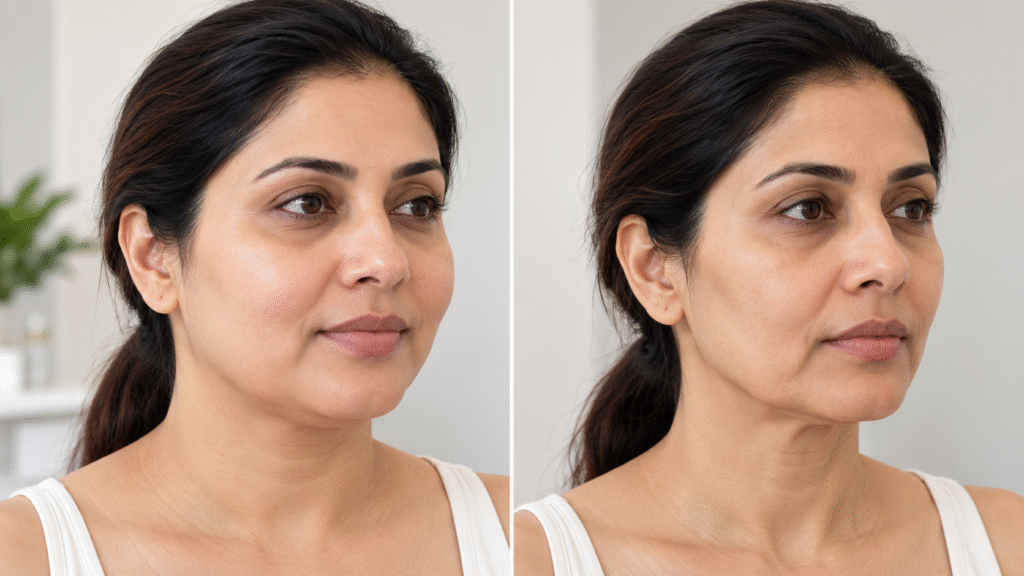
Not every post-weight-loss concern is caused by loose skin alone.
Some people may actually be experiencing volume loss.
Facial fat contributes to:
- Cheek fullness
- Facial contours
- Jawline balance
- Support beneath the skin
After weight loss, the face may look flatter or more hollow even when the skin itself is not extremely loose.
This distinction is important because skin tightening and volume restoration are different treatment goals.
A proper facial assessment can help identify whether the main concern is:
- Skin laxity
- Facial volume loss
- Reduced collagen
- A combination of these factors
Can Loose Facial Skin Tighten Naturally?
Mild skin laxity may improve gradually after weight stabilises.
The skin may continue to adapt over several months.
However, the amount of natural improvement depends on:
- Age
- Genetics
- Skin quality
- Degree of weight loss
- Duration of previous skin stretching
Skincare and healthy lifestyle habits can support skin quality, but creams cannot create the same tightening effect as procedures that work deeper in the skin.
What Can Help Improve Facial Skin Tightness?
Several non-surgical treatment options may be considered depending on the individual case.
1. Radiofrequency Skin Tightening
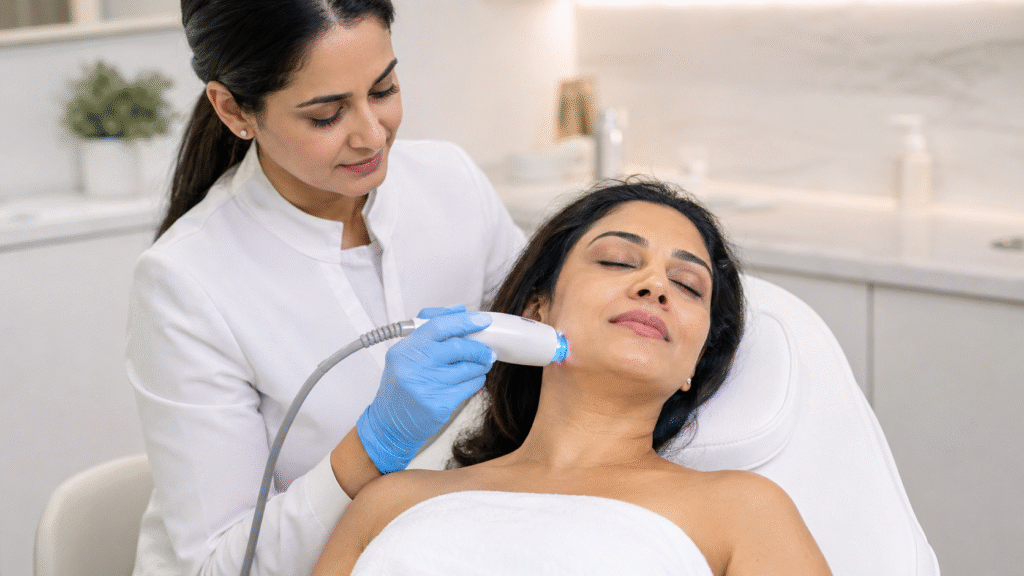
Radiofrequency treatments use controlled energy to heat deeper layers of the skin.
This process is designed to support collagen contraction and stimulate gradual collagen remodelling.
Radiofrequency may be considered for:
- Mild facial laxity
- Reduced jawline definition
- Early sagging
- Skin firmness
The treatment is generally gradual.
Changes may continue to develop over time as collagen remodelling takes place.
The exact treatment plan depends on the technology used and the condition of the skin.
2. Radiofrequency Microneedling
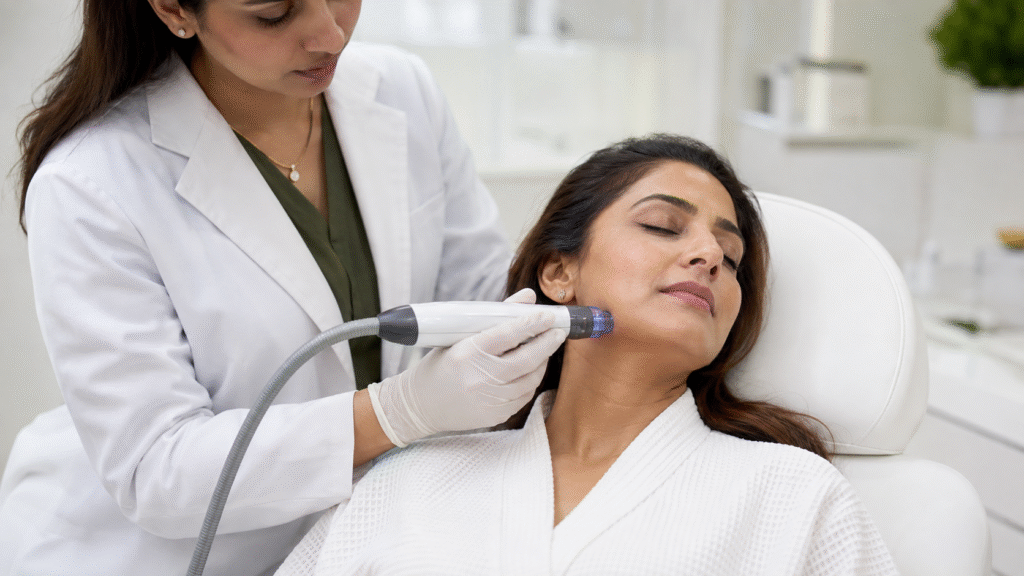
Radiofrequency microneedling combines controlled microneedling with radiofrequency energy.
The microneedles create tiny controlled channels in the skin while the energy is delivered at selected depths.
This approach may be used for concerns such as:
- Mild skin laxity
- Uneven texture
- Enlarged-looking pores
- Acne scars
- Reduced firmness
It may be especially useful when a person wants to address both texture and firmness at the same time.
Results develop gradually because collagen remodelling takes time.
3. Ultrasound-Based Skin Tightening
Certain ultrasound-based treatments deliver focused energy into deeper tissue layers.
These treatments are designed to support collagen production and improve firmness without surgery.
They may be considered when the main concern is mild to moderate facial laxity.
The suitability of these treatments depends on:
- Facial anatomy
- Skin thickness
- Degree of laxity
- Treatment area
Not every person is an ideal candidate.
4. Collagen-Stimulating Treatments
Some treatments focus on improving overall skin quality by encouraging collagen production.
These may include:
- Microneedling
- RF microneedling
- Certain injectable biostimulating treatments
- Other skin rejuvenation procedures
The goal is not to dramatically lift the face but to gradually improve firmness and skin quality.
5. Dermal Fillers for Volume Loss
In some cases, the main concern after weight loss is not loose skin but loss of facial volume.
Carefully placed dermal fillers may be considered to restore support in areas such as:
- Cheeks
- Chin
- Jawline
- Temples
The aim should be subtle structural support rather than making the face look overly filled.
Overfilling a face that has lost weight can create an unnatural appearance.
A conservative approach is generally more appropriate.
6. Skin Rejuvenation Treatments
Treatments aimed at improving hydration and overall skin quality may also help the face look healthier.
These treatments may support:
- Hydration
- Brightness
- Texture
- Overall skin quality
They are generally more useful for improving the appearance of the skin rather than creating significant lifting.
Which Treatment Is Best?
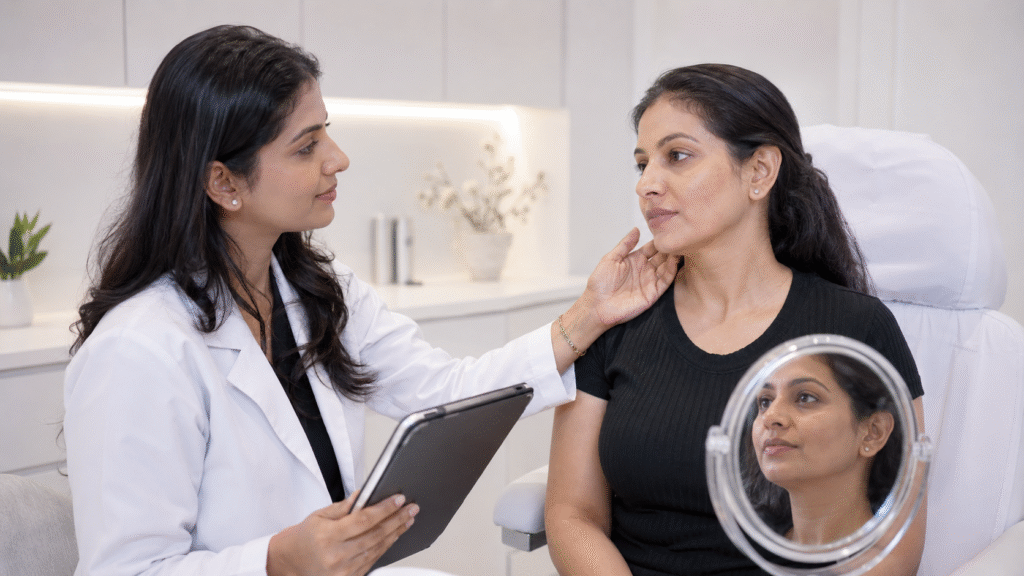
There is no single best treatment for every person.
The choice depends on what is actually causing the concern.
For example:
Mild Skin Laxity
Radiofrequency or other collagen-stimulating treatments may be considered.
Skin Laxity Plus Texture Concerns
RF microneedling may be useful when both concerns are present.
Facial Hollowing
Volume-restoring treatments may be more appropriate.
Significant Loose Skin
Non-surgical procedures may provide limited improvement when laxity is severe.
In these cases, surgical options may provide more predictable tightening.
A realistic assessment is important before treatment.
Can Skin Tightening Replace Surgery?
Non-surgical skin tightening cannot reproduce the same degree of tightening as surgery.
It is better suited for people with:
- Mild to moderate laxity
- Early signs of sagging
- Reasonable skin elasticity
- Realistic expectations
People with significant excess skin may not achieve the result they want from non-surgical treatments alone.
This is why consultation and expectation-setting are important.
How Long Do Results Take?
Collagen-based treatments generally do not create instant final results.
Some people may notice early firmness, but improvements usually continue gradually.
The timeline depends on:
- Treatment used
- Age
- Skin condition
- Degree of laxity
- Individual collagen response
- Number of sessions
Collagen remodelling can continue for several weeks or months after treatment.
How Many Sessions Are Needed?
The number of sessions varies.
Some treatments may require a series of sessions, while others may be performed less frequently.
The plan depends on:
- Treatment technology
- Skin laxity
- Treatment area
- Response to previous sessions
- Desired level of improvement
Maintenance treatments may also be recommended over time.
Can Skincare Tighten Loose Facial Skin?
Skincare plays an important role in maintaining skin quality, but it has limitations.
Helpful ingredients may include:
- Retinoids
- Peptides
- Antioxidants
- Moisturisers
- Sunscreen
These products may support healthy-looking skin and protect collagen.
However, creams cannot significantly tighten moderate or severe loose skin.
Skincare works best as part of a broader skin-health plan.
Importance of Sunscreen After Weight Loss
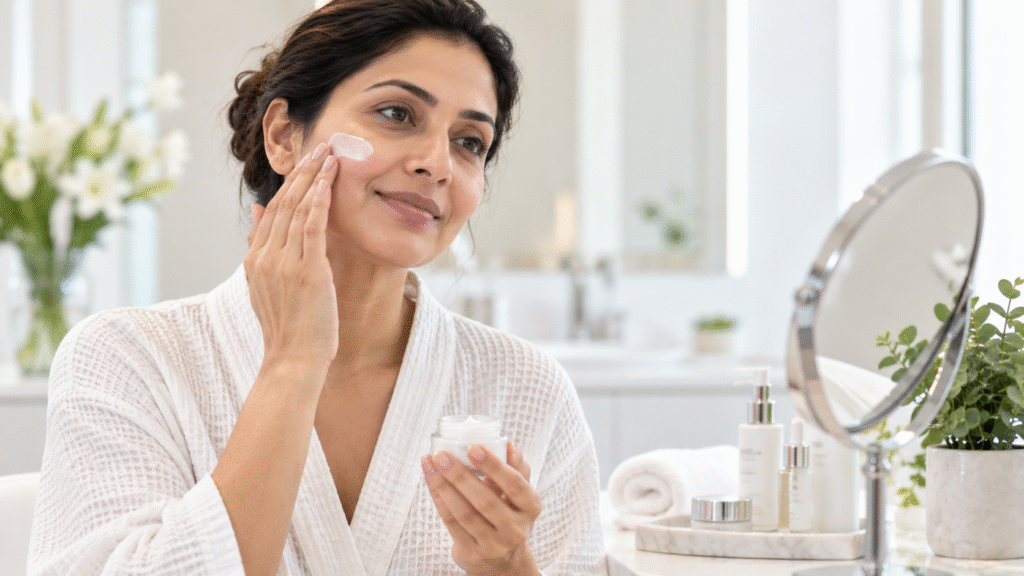
Sun protection is important when trying to maintain skin firmness.
UV exposure contributes to collagen breakdown.
Regular use of broad-spectrum sunscreen may help protect existing collagen and reduce additional photo-ageing.
Other helpful habits include:
- Avoiding prolonged direct sun exposure
- Using hats when outdoors
- Reapplying sunscreen when necessary
- Maintaining a consistent skincare routine
Can Diet Help Improve Loose Skin?
Nutrition supports overall skin health but cannot completely tighten loose skin.
A balanced diet containing adequate:
- Protein
- Vitamins
- Minerals
- Healthy fats
supports normal skin function.
Staying hydrated is also important for overall skin appearance.
However, supplements or specific foods should not be expected to replace medical treatments when skin laxity is significant.
Why Stable Weight Matters Before Treatment
If weight is still changing rapidly, facial volume may continue to change.
This can make it difficult to assess the final degree of skin laxity.
For some patients, it may be better to wait until weight has remained relatively stable before creating a longer-term aesthetic treatment plan.
This allows the face to be assessed more accurately.
Common Mistakes After Weight Loss
Trying to Fix Everything With Fillers
Not every facial change needs volume replacement.
Too much filler may create heaviness or unnatural contours.
Expecting One Treatment to Create a Surgical Lift
Non-surgical treatments usually provide gradual and moderate improvement.
Ignoring Skin Quality
Firmness, hydration, texture and pigmentation all contribute to how youthful the face appears.
Treating Before Weight Stabilises
Continued weight loss may change facial contours after treatment.
Choosing a Treatment Based Only on Social Media
A treatment that works well for one person may not be suitable for another.
Facial anatomy and skin quality need to be considered.
Who May Be a Good Candidate for Non-Surgical Skin Tightening?
Non-surgical options may be suitable for people who:
- Have mild to moderate facial laxity
- Want gradual improvement
- Prefer to avoid surgery
- Have realistic expectations
- Have reasonably healthy skin
- Have stable or near-stable weight
A consultation helps determine which treatment, if any, is appropriate.
When Should You Consider a Professional Assessment?
Consider a professional assessment if:
- Your face looks noticeably looser after weight loss
- You have lost cheek or jawline definition
- You are unsure whether the problem is loose skin or volume loss
- Skincare is not improving firmness
- You are considering RF microneedling or other tightening treatments
- You are considering fillers after weight loss
The most useful treatment plan starts with identifying the actual cause of the change.
What Results Should You Expect?
The goal of non-surgical treatment should be natural-looking improvement.
Depending on the treatment and individual skin, changes may include:
- Improved firmness
- Better jawline definition
- Smoother texture
- Improved skin quality
- More balanced facial contours
Results vary from person to person.
A realistic plan is usually more important than trying to create dramatic changes quickly.
Conclusion
Loose facial skin after weight loss can develop because of changes in facial volume, skin elasticity and collagen support.
For some people, the concern is mainly skin laxity. For others, facial volume loss may contribute more strongly to the change in appearance.
Non-surgical options such as radiofrequency skin tightening, RF microneedling, ultrasound-based treatments, collagen-stimulating procedures and carefully selected volume restoration may help in appropriate cases.
The best treatment depends on the degree of laxity, skin quality, facial structure and individual goals.
Rather than choosing a procedure based only on trends, a personalised assessment can help identify whether the skin needs tightening, volume support, texture improvement or a combination of approaches.