
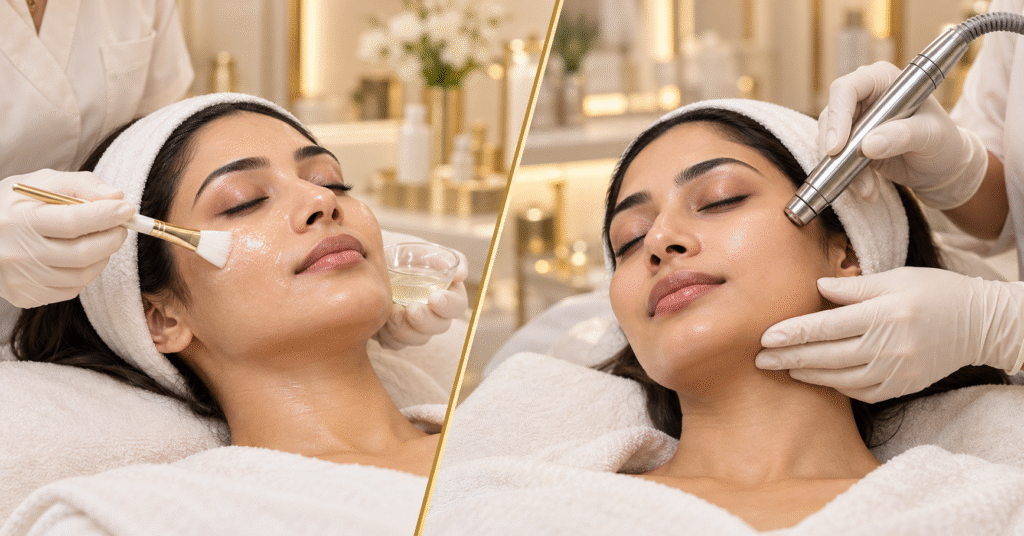
Healthy-looking skin is not only about the products you use. Dead skin buildup, uneven texture and superficial pigmentation can leave skin looking dull despite a consistent skincare routine.
Professional exfoliation can address some of these concerns. Superficial chemical peels and microdermabrasion are two familiar options, but they use different methods and suit different skin concerns.
If you are comparing chemical peel vs microdermabrasion, understanding how they work can help you choose thoughtfully.
What Is a Superficial Chemical Peel?
A superficial chemical peel applies a formulated solution to exfoliate outer skin layers. Depending on the goal, ingredients may include glycolic, lactic or salicylic acids and related compounds. These loosen connections between surface skin cells and promote controlled shedding.
Superficial peels may help improve:
- Mild uneven skin tone and some superficial pigmentation.
- Dullness and mild surface roughness.
- Certain forms of comedonal acne.
- Fine surface irregularities.
The right formula depends on skin type, sensitivity and treatment history.
What Is Microdermabrasion?
Microdermabrasion mechanically removes dead cells from the outer skin surface using a specialised device, such as a diamond-tip applicator or fine particles with suction. It primarily targets the most superficial layer and is considered for mild roughness, dullness and uneven-looking texture. Unlike peels, it does not rely on a chemical exfoliating acid.
Chemical Peel vs Microdermabrasion: Key Differences
- Method: Chemical peel uses a topical solution; microdermabrasion uses mechanical abrasion.
- Main purpose: Peels may target superficial pigmentation and acne-related buildup; microdermabrasion focuses on superficial texture and dullness.
- Sensation: A peel may tingle or sting; microdermabrasion may feel mildly scratchy or like suction.
- Recovery: Superficial peels can cause redness, dryness or several days of flaking; microdermabrasion often has minimal downtime.
- Results: Both may improve superficial skin appearance, but effects and suitability vary.
Neither option is universally better.
Which Treatment Is Better for Pigmentation?
For selected superficial pigmentation, an appropriately chosen chemical peel may be more helpful than microdermabrasion because it encourages the shedding of pigmented surface cells. Microdermabrasion mainly exfoliates surface dead cells and has a more limited role in persistent pigmentation.
Neither procedure guarantees clearance of deep pigment or melasma. Irritation itself can trigger darkening, particularly in pigmentation-prone skin.
Which Treatment Is Better for Acne-Prone Skin?
For selected acne-prone patients, a salicylic acid peel may help with clogged pores and surface buildup. Microdermabrasion may aggravate inflamed acne lesions through friction. With active inflammatory acne, medical acne management generally takes priority over cosmetic exfoliation.
Which Is Better for Sensitive Skin?
Sensitive skin calls for an individual approach. Some may tolerate a mild peel better than physical abrasion; others may react to acid ingredients. Eczema, rosacea, impaired skin barrier and current skincare products all influence suitability. No one procedure is automatically gentler for everyone.
Treatment Experience and Recovery Time
During a Superficial Chemical Peel
Skin is cleansed and the selected formula applied according to its treatment protocol. Mild warmth or tingling may occur. Temporary redness, dryness or flaking can follow. Recovery varies by formula and individual response.
During Microdermabrasion
A device passes gently over the surface to exfoliate. Patients may notice suction and a mild abrasive sensation. Temporary redness or sensitivity can occur, usually with relatively short recovery.
Can Chemical Peels and Microdermabrasion Be Combined?
Combining exfoliating techniques without planning risks over-exfoliation. Sometimes treatments may be included separately within a broader plan, but simultaneous or closely spaced procedures are not appropriate for everyone. Irritation can worsen sensitivity and post-inflammatory pigmentation.
Which Treatment Is More Suitable for Indian Skin?
Medium to deep skin tones may develop pigmentation after inflammation. Treatment settings, clinician assessment and aftercare matter for either procedure. Peels may fit selected pigmentation concerns, while microdermabrasion may fit mild surface roughness, but both can cause problems if performed aggressively.
How to Maintain Results After Exfoliation
- Cleanse gently and moisturise appropriately.
- Use broad-spectrum sunscreen SPF 30 or higher.
- Avoid strong scrubs or additional exfoliation while recovering.
- Do not rub or pick sensitive areas.
- Follow professional instructions on active products and follow-up.
Explore Superficial Peel Treatments at Aestheticaa
Aestheticaa by Dr. Madhulika in Indiranagar, Bengaluru, provides superficial peel services for selected concerns. A consultation can clarify whether pigmentation, acne-related buildup, dullness or texture is the main issue and whether a peel or other method is appropriate.
Related service: https://aestheticaabymadhulika.com/superficial-peel/
Conclusion
Chemical peels and microdermabrasion offer different approaches to exfoliation. Selected superficial pigmentation and acne-related concerns may favour a chemical peel, while microdermabrasion mainly addresses mechanical surface exfoliation. Choosing based on skin needs, avoiding excess treatment and using proper aftercare is more important than choosing whichever sounds stronger.