Unwanted facial hair can be difficult for women living with polycystic ovary syndrome (PCOS). Coarse hair may appear on the upper lip, chin, jawline or neck. Shaving, threading and waxing offer temporary removal but do not alter the underlying hair-growth cycle.
For suitable candidates, laser hair removal for PCOS can provide longer-lasting reduction in unwanted hair. Because hormonal influences persist, results and maintenance requirements may differ from those of people without hormonal conditions.
Why Does PCOS Cause Unwanted Facial Hair?
PCOS is a hormonal and metabolic condition that can affect ovulation, menstrual patterns, skin and hair. Some women have elevated androgen levels or greater follicle sensitivity to androgens. These hormones can encourage fine hair to become thicker, darker terminal hair in androgen-sensitive areas, a process known as hirsutism.
Common Areas Affected by PCOS-Related Hair Growth
- Upper lip and chin.
- Jawline and sideburn area.
- Neck.
- Chest or abdomen.
Not every woman with PCOS develops hirsutism, and not all excessive hair is due to PCOS. Sudden hair growth or other hormonal symptoms warrant appropriate medical evaluation.
How Does Laser Hair Reduction Work?
Laser systems deliver concentrated light absorbed by pigment in hair. Heat can damage selected follicular structures, reducing subsequent terminal hair growth. Laser works best on pigmented coarse hair and follicles in responsive phases of growth. As not all hairs are in the same stage simultaneously, multiple sessions are usually needed.
Patients may notice fewer hairs, finer regrowth or slower return over a course of treatment. Results vary with hair, skin, device parameters and hormonal activity.
Is Laser Hair Removal Effective for PCOS?
It may help manage coarse, pigmented facial hair and reduce reliance on frequent temporary removal. Yet ongoing hormonal stimulation may activate new follicles or cause recurrence. Laser treats the cosmetic hair concern, not the PCOS hormonal condition. Long-term hair reduction does not mean guaranteed permanent removal.
Why PCOS Patients May Need Maintenance Sessions
Even after an effective initial course, hormonal signals may prompt new or previously fine hairs to grow. Maintenance intervals vary by hormonal activity, density, hair thickness, treatment response, medications and other PCOS care. There is no universal schedule.
How Many Laser Sessions Are Needed for PCOS Facial Hair?
Many initial treatment plans involve around six to eight sessions, but some people need more and PCOS-related hair may require continued maintenance. Facial sessions are often spaced several weeks apart in line with the hair cycle. The practitioner should set the interval after assessment. Complete clearance after one or two visits is not realistic.
Which Laser Is Suitable for Indian Skin?
Skin tones vary widely. Because laser targets melanin, unsuitable technology or energy settings can cause burns or pigment changes.
Diode Laser
Diode devices are commonly used and may be suitable for various tones and coarse hairs depending on specifications and settings.
Long-Pulsed Nd:YAG Laser
Long-pulsed Nd:YAG is commonly considered for deeper skin tones because of its wavelength characteristics, although it is not risk-free.
Choosing the Right Treatment
Selection depends on tone, hair colour and thickness, treatment area, previous reactions, pigmentation tendency and trained professional assessment. A new device name alone does not establish superiority.
Is Facial Laser Hair Removal Safe for Women With PCOS?
When correctly performed for suitable patients, it is generally considered safe, but temporary redness, follicular swelling and discomfort are possible. Less common risks include burns, blisters, pigment change and scarring.
Paradoxical hypertrichosis is another consideration: fine hairs can occasionally become more noticeable or thicker following laser, particularly on some facial areas. Treating coarse dark terminal hair is typically more predictable than treating fine facial hair.
What Happens During a Laser Hair Reduction Session?
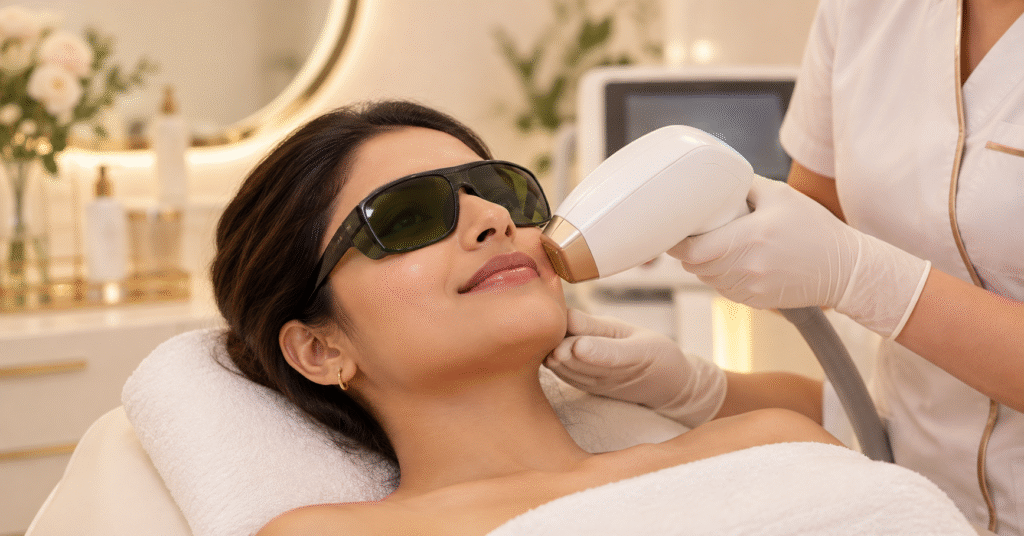
After evaluating skin and hair, the treatment area is prepared and protective eyewear used. The practitioner passes a suitable handpiece over the chosen area. Brief warmth or a snapping sensation may occur; cooling can improve comfort. Mild temporary redness or swelling may follow.
Preparing for Facial Laser Hair Reduction
- Avoid waxing, threading or plucking for the advised period beforehand.
- Avoid tanning and excessive sun exposure.
- Disclose medications, active products and previous skin reactions.
- Follow instructions on shaving or trimming before the appointment.
- Do not stop prescribed hormonal treatments without advice from the prescribing clinician.
Aftercare and Long-Term Hair Management
- Cleanse gently and avoid rubbing or scrubbing.
- Use appropriate sun protection.
- Avoid excessive heat and irritating products right after treatment.
- Follow the clinic’s specific post-treatment guidance.
- Report persistent pain, blistering or severe irritation.
Treated hairs may shed over subsequent days or weeks. Shedding is not proof of instant permanent removal.
Can Laser Hair Reduction Cure PCOS?
No. Laser targets hair follicles but does not correct hormonal imbalance, insulin resistance or other underlying aspects of PCOS. Individual PCOS management may include lifestyle support, clinical monitoring and medication where indicated. Coordinated care can help manage both unwanted hair and the condition contributing to it.
Laser Hair Reduction at Aestheticaa by Dr. Madhulika
Aestheticaa by Dr. Madhulika in Indiranagar, Bengaluru, provides laser hair reduction services. A personalised consultation can help determine whether coarse facial hair is suitable for treatment, what improvements are reasonable and if maintenance is likely.
Related service: https://aestheticaabymadhulika.com/laser-hair-removal/
Conclusion
Laser hair reduction may meaningfully reduce coarse, pigmented facial hair associated with PCOS and decrease the frequency of temporary hair removal. It does not cure PCOS, may require maintenance and is not equally effective for all facial hair types. Individual assessment, suitable equipment and realistic expectations are central to safe long-term management.