
Dark Lips: Causes and Best Lightening Treatments
Lips naturally come in different shades, ranging from light pink and reddish-brown to deep brown. For many people, darker lips are simply part of their natural skin tone. However, some notice that their lips gradually become darker because of sun exposure, smoking, irritation, or changes in pigmentation.
Lip pigmentation is a common cosmetic concern, particularly among people with medium to deeper skin tones. Some experience uniform darkening across both lips, while others notice uneven patches, a darker upper lip, or pigmentation around the lip border.
Many home remedies and cosmetic products promise to make dark lips pink within days. However, not all lip pigmentation has the same cause, and aggressive lightening treatments can sometimes worsen the condition.
The most appropriate dark lips treatment depends on why the pigmentation developed, whether it is natural or acquired, and the condition of the delicate lip tissue.
Understanding these differences is important before trying brightening products or professional procedures.
In this blog, we explore the common causes of dark lips, available lip lightening treatments, skincare practices that may help, and when professional assessment is necessary.
What Is Lip Pigmentation?
Lip pigmentation refers to the natural colour or acquired darkening of the lips caused by melanin and other factors.
Melanin is the pigment responsible for much of the colour of our skin, hair, and lips.
The visible part of the lips is covered by delicate tissue that differs from ordinary facial skin. This makes it more sensitive to irritation, environmental exposure, and certain cosmetic ingredients.
Some people naturally have higher melanin levels in their lips. Others develop additional pigmentation due to inflammation or external factors.
Lip pigmentation may appear as:
- Uniform brown or dark-brown lips
- Darker pigmentation on the upper lip
- Uneven patches across the lips
- Darkening near the lip border
- Brown spots or localised pigmented areas
- Discolouration following irritation or dryness
It is important to distinguish naturally pigmented lips from new or changing dark areas.
Natural lip colour is not a medical condition, and treatment is only worth considering when there is an identifiable concern and a suitable, safe option.
What Causes Dark Lips?
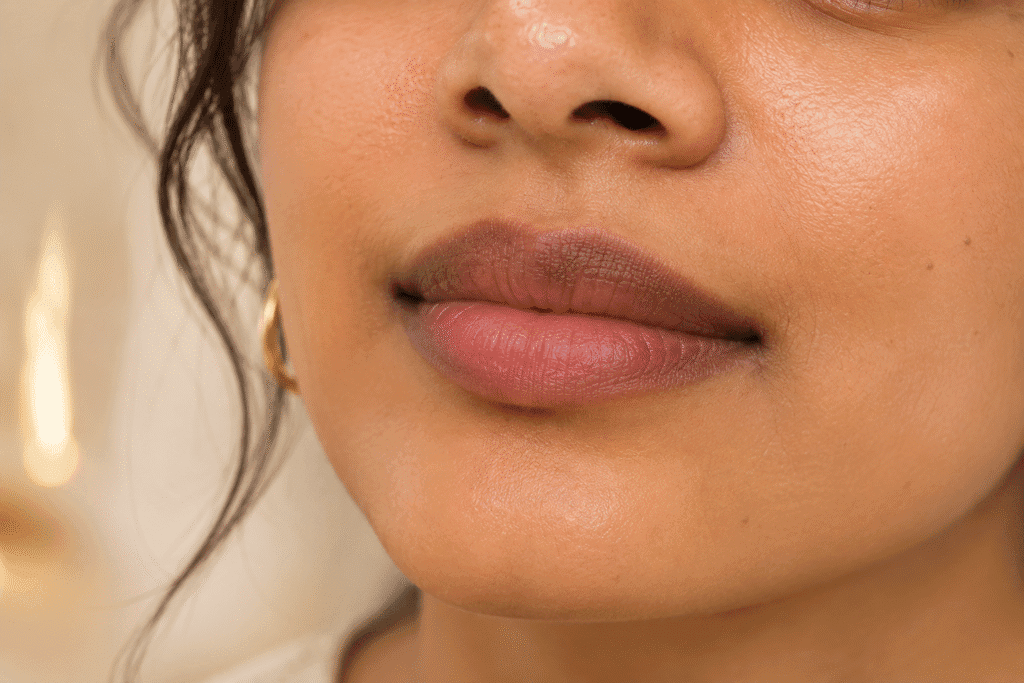
Several factors can contribute to lip darkening. In some individuals, more than one factor may be involved.
1. Genetics and Natural Lip Colour
Genetics is one of the most important factors influencing natural lip pigmentation.
Just as skin tones vary among individuals, lip colour also differs naturally.
People with medium to deeper skin tones may have naturally brown or darker lips because of their melanin distribution.
This pigmentation is not necessarily caused by sun damage, smoking, or poor skincare.
If the lips have remained approximately the same colour since childhood or adolescence, the pigmentation may simply be part of the person’s natural complexion.
There is no medical requirement to change naturally dark lips.
2. Sun Exposure
The lips are regularly exposed to ultraviolet radiation when people spend time outdoors.
Like the surrounding skin, the lips can experience changes related to sun exposure.
Repeated exposure may contribute to pigmentation changes in some individuals.
The lower lip is particularly vulnerable to chronic sun damage.
Sun exposure can also aggravate existing post-inflammatory pigmentation, making previously irritated areas appear darker.
Regular use of a lip balm containing broad-spectrum SPF 30 or higher may help protect the lips from additional UV-related damage.
3. Smoking and Tobacco Use
Smoking is an important factor to consider when evaluating acquired pigmentation around the mouth.
Tobacco exposure can contribute to increased pigmentation in some individuals, a condition sometimes referred to as smoker’s melanosis.
Smoking is also associated with dryness, irritation, and other changes affecting the lips and oral tissues.
The degree of pigmentation varies, and smoking does not cause identical changes in everyone.
Stopping tobacco use may help prevent further tobacco-related changes, although existing pigmentation may take time to improve.
Persistent or changing dark areas in tobacco users should be professionally evaluated rather than assumed to be harmless staining.
4. Lip Licking and Repeated Irritation
Frequently licking, biting, or picking the lips can damage the delicate protective barrier.
Saliva evaporates quickly, often leaving the lips drier than before.
Repeated licking can therefore contribute to a cycle of dryness and inflammation.
When inflammation heals, some individuals develop post-inflammatory hyperpigmentation.
This can leave brown or grey-brown discolouration, particularly in pigmentation-prone skin.
Common habits that may worsen irritation include:
- Repeatedly licking dry lips
- Biting or peeling loose skin
- Aggressive lip scrubbing
- Using harsh exfoliating products
- Frequently rubbing the lips
- Applying unsuitable cosmetic products
Reducing irritation is an important first step before considering pigmentation treatments.
5. Allergic Reactions to Lip Products
Lipsticks, lip balms, fragrances, flavouring agents, and certain cosmetic ingredients can sometimes trigger allergic or irritant reactions.
One condition associated with this is pigmented contact cheilitis.
It occurs when contact with an irritating or allergenic substance causes inflammation and subsequent pigmentation.
Symptoms may include:
- Burning or stinging
- Itching
- Redness
- Dryness or scaling
- Darkening of the lips
- Discomfort after using certain products
The pigmentation may develop gradually.
In some cases, the cause is not obvious because the same cosmetic product has been used for a long time.
A professional evaluation, and occasionally patch testing, may help identify the responsible ingredient.
Avoiding the trigger can allow the skin to recover, although pigmentation may fade slowly.
6. Post-Inflammatory Hyperpigmentation
Post-inflammatory hyperpigmentation develops after irritation, injury, or inflammation.
The lips may become darker following:
- Allergic contact reactions
- Repeated lip biting
- Burns or unsuitable cosmetic procedures
- Inflammatory lip conditions
- Persistent dryness and irritation
During healing, inflammation may stimulate additional pigment production.
This is particularly relevant for Indian skin tones, where post-inflammatory pigmentation may be more noticeable or persistent.
Treating the underlying irritation is usually more important than immediately applying strong brightening ingredients.
7. Medications and Medical Conditions
Certain medications can cause pigmentation changes affecting the skin, lips, or oral tissues.
Some inflammatory, hormonal, and systemic medical conditions may also be associated with changes in pigmentation.
Nutritional deficiencies can sometimes cause changes in the lips and oral tissues, although dark lips alone do not establish a vitamin deficiency.
A new or unexplained pigmentation change may require a review of medical history, medication use, and associated symptoms.
Patients should not discontinue prescribed medication or begin unnecessary supplements without medical advice.
Why Are Dark Lips Common in Indian Skin?
Indian skin includes a wide variety of natural skin tones and pigmentation patterns.
People with medium to deeper skin tones often have greater melanin activity, and their lips may naturally appear more brown or pigmented than those of individuals with lighter complexions.
This is normal and should not automatically be considered a cosmetic problem.
However, Indian skin can also be more prone to visible post-inflammatory hyperpigmentation.
Even relatively mild irritation may occasionally leave persistent darkening.
This makes treatment selection particularly important.
Using strong bleaching creams, aggressive exfoliating acids, or unsuitable laser settings can cause inflammation and potentially worsen pigmentation.
The goal of lip pigmentation treatment should be to address unwanted acquired discolouration safely, not to change someone’s natural lip colour to an unrealistic shade.
Are Dark Lips and Pigmented Lips the Same?
Not always.
The term “dark lips” can describe several different conditions.
Some people have naturally brown lips with uniform pigmentation. Others develop acquired pigmentation after inflammation, sun exposure, smoking, or contact reactions.
A small, well-defined brown spot may represent a benign labial melanotic macule rather than general lip pigmentation.
However, certain pigmented lesions require professional examination to rule out more serious conditions.
The distinction matters because not every dark patch should be treated with a cosmetic lightening procedure.
A new spot, irregular pigmentation, bleeding area, or changing lesion should be examined before any cosmetic treatment is considered.
Best Lightening Treatments for Dark Lips
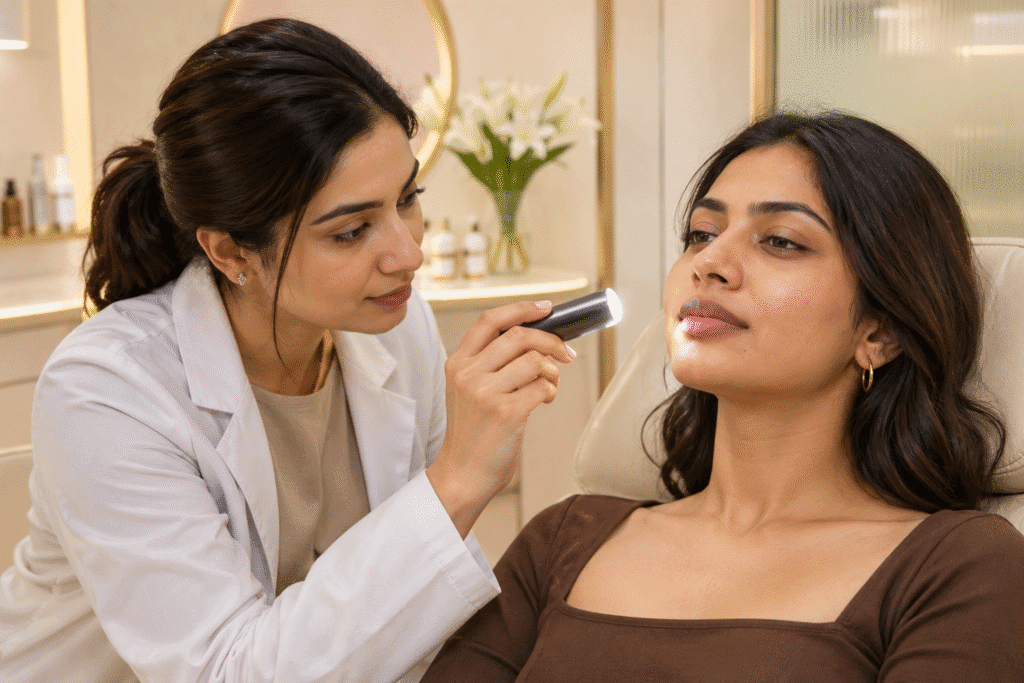
There is no single treatment that works equally well for every type of lip pigmentation.
Treatment selection depends on:
- Cause of pigmentation
- Natural lip colour
- Extent and pattern of darkening
- Duration of pigmentation
- History of irritation or allergies
- Skin tone and pigmentation risk
- Previous cosmetic treatments
- Medical suitability
The first step is to identify the underlying cause and determine whether treatment is necessary.
1. Lip Balm With Sun Protection
Sun protection is one of the simplest and most useful steps in managing lip pigmentation.
An SPF lip balm helps protect the delicate lip surface from ultraviolet radiation.
For people whose pigmentation is aggravated by sunlight, regular protection may help prevent additional darkening.
Choose a broad-spectrum lip balm with SPF 30 or higher, preferably one that is well tolerated and does not contain irritating fragrances or flavours.
Reapplication is important, particularly after eating, drinking, or spending time outdoors.
Sun protection does not remove natural melanin or guarantee lighter lips.
However, it is an important part of preventing avoidable UV-related changes.
2. Barrier Repair and Gentle Lip Care
When darkening is associated with dryness, inflammation, or repeated irritation, repairing the lip barrier should be the priority.
A simple, fragrance-free lip moisturiser or plain petrolatum may help reduce moisture loss and protect irritated tissue.
Patients may be advised to avoid:
- Frequent lip licking
- Peeling dry skin
- Strongly flavoured lip products
- Irritating lipsticks or cosmetics
- Scrubs and abrasive brushes
- Unsupervised exfoliating treatments
Once the irritation is controlled, post-inflammatory pigmentation may gradually improve.
This process can take weeks or months, and recovery depends on the severity of the original inflammation.
3. Doctor-Recommended Pigmentation Products
Some pigmentation concerns may benefit from carefully selected topical treatment.
However, the lips are more delicate than ordinary facial skin.
Ingredients commonly used for facial pigmentation, such as retinoids, hydroquinone, exfoliating acids, or other strong depigmenting agents, should not automatically be applied to the lips.
Products formulated for facial skin may cause significant irritation when used on the lip surface.
In some cases, a medical professional may recommend a suitable product for the exact condition being treated.
The decision depends on whether the pigmentation involves the lip itself, the surrounding facial skin, or an inflammatory disorder.
Self-treating dark lips with strong skin-lightening creams can lead to burning, peeling, allergic reactions, and worsening pigmentation.
4. Laser Lip Pigmentation Treatment
Laser treatment is sometimes considered for selected types of lip hyperpigmentation.
Certain pigment-targeting lasers, including Q-switched Nd devices, have been studied for this purpose.
These lasers deliver energy that interacts with melanin in the treated area.
Under appropriate conditions, this may help reduce certain types of unwanted pigmentation.
However, evidence for laser lip lightening remains limited, and results vary considerably.
Some small clinical studies have reported improvement, while others have found modest benefits or complications.
Potential risks include:
- Temporary swelling
- Pain or discomfort
- Crusting or blistering
- Post-inflammatory hyperpigmentation
- Uneven loss of pigment
- Recurrence of pigmentation
- Scarring in uncommon cases
- Reactivation of cold sores in susceptible patients
Not every laser used for facial pigmentation is suitable for the lips.
The clinician must consider the pigmentation diagnosis, device characteristics, skin tone, and individual risk factors before suggesting treatment.
Laser treatment should not be viewed as a guaranteed method for achieving permanently pink lips.
5. Chemical Peels for Pigmentation
Chemical peels are commonly used to address selected types of pigmentation on facial skin.
They work through controlled exfoliation, and some formulations contain ingredients that influence pigmentation pathways.
However, chemical peels intended for the face should not be assumed to be safe for application directly to the lips.
The lip surface is delicate and requires specialised assessment.
Applying ordinary facial peeling solutions to the lips can cause irritation, chemical burns, and pigmentation changes.
Some specialist procedures have been investigated for selected lip concerns, but they are not appropriate for every person and should not be attempted at home.
At Aestheticaa by Dr. Madhulika, advanced lightening peels are offered for selected facial pigmentation concerns.
These treatments should be distinguished from dedicated lip pigmentation procedures, which require separate evaluation of suitability and availability.
Related service: Advanced Lightening Peels
6. Treating the Underlying Medical Cause
Sometimes, the most effective approach does not involve a cosmetic procedure.
If darkening is related to an allergic reaction, identifying and avoiding the trigger may be the primary treatment.
If tobacco use is contributing to pigmentation, stopping smoking is an important step.
If medication-related pigmentation is suspected, a doctor may review the possible association and determine whether further evaluation is required.
When lip changes are linked to an inflammatory or systemic condition, treating that condition takes priority over cosmetic lightening.
The underlying diagnosis determines the appropriate approach.
Is Laser Treatment Better Than Lip Lightening Creams?
Laser treatments and topical products work differently.
Topical care may help reduce irritation, improve barrier function, and manage selected causes of pigmentation.
Lasers target pigment through controlled energy delivery and may be considered for certain persistent cases.
However, neither approach is universally better.
For irritation-related darkening, using a laser before addressing the underlying inflammation may be inappropriate.
For a benign localised pigmented spot, professional evaluation may identify options that differ from those used for diffuse lip darkening.
The possible benefits must always be weighed against the risk of worsening pigmentation or causing unwanted pigment loss.
A treatment should be selected according to the diagnosis rather than simply because it promises faster results.
Can Dark Lips Become Pink Naturally?
This is one of the most common questions people ask about lip pigmentation.
The answer depends on the natural colour of the lips and the reason for darkening.
If the pigmentation is caused by a reversible factor, such as irritation, inflammation, or a contact reaction, the lips may gradually return closer to their previous colour after the cause is addressed.
However, naturally brown or dark lips cannot be expected to become permanently pink through ordinary skincare.
There is also no single ideal or medically necessary lip colour.
Healthy lips can be pink, reddish-brown, brown, or darker depending on natural pigmentation.
The aim of appropriate lip care is to maintain healthy, comfortable tissue and manage unwanted acquired changes rather than pursue unrealistic cosmetic expectations.
Common Home Remedies for Dark Lips: Do They Work?
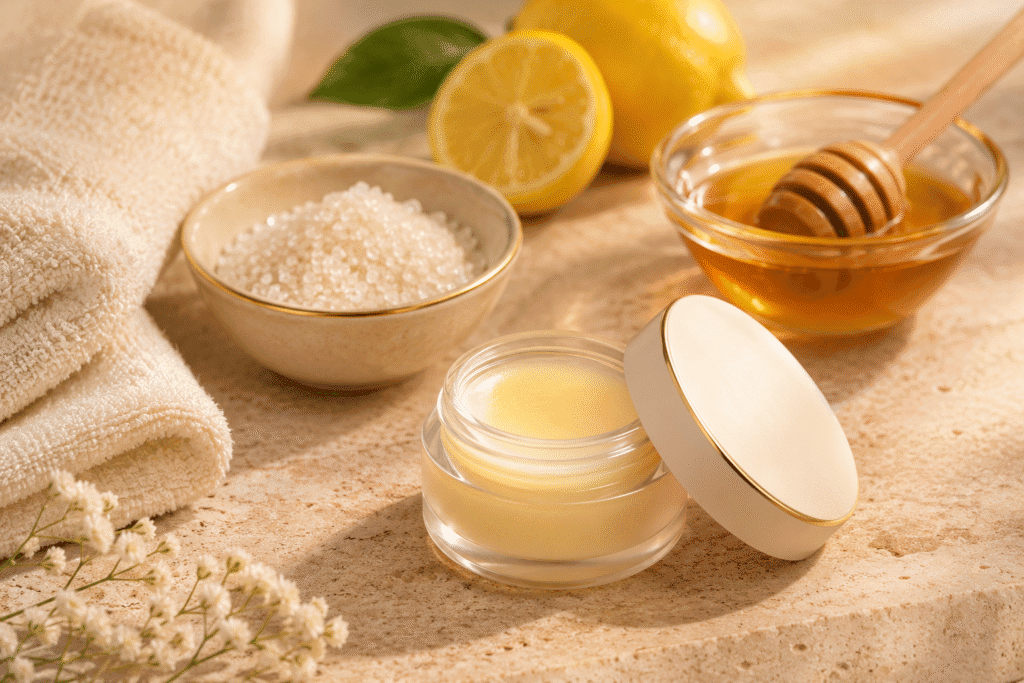
Social media frequently promotes home remedies for dark lips.
Some may feel soothing, but others can irritate the delicate lip surface.
Lemon Juice for Lip Lightening
Lemon juice is often recommended because it contains citric acid.
However, applying lemon directly to the lips can cause burning, irritation, and inflammation.
Citrus exposure combined with sunlight can also trigger certain phototoxic reactions.
This may worsen pigmentation instead of improving it.
Lemon juice should not be used as a DIY lip-lightening treatment.
Sugar Scrubs for Dark Lips
Sugar scrubs are commonly promoted to remove dead skin and reveal pink lips.
However, frequent or aggressive scrubbing can damage the protective barrier.
The lips do not require harsh physical exfoliation to remain healthy.
For dry or chapped lips, gentle moisturising is usually preferable.
Beetroot for Pink Lips
Beetroot may temporarily stain the lips, creating a pinkish-red appearance.
However, temporary staining is not the same as reducing melanin pigmentation.
There is no convincing clinical evidence that beetroot permanently lightens dark lips.
Honey and Natural Oils
Some people use honey or oils to reduce dryness.
Certain moisturising ingredients may support comfort, but they do not necessarily treat pigmentation.
Natural substances can also trigger allergic reactions in susceptible individuals.
A simple, well-tolerated lip moisturiser is generally more predictable than frequently experimenting with homemade mixtures.
Toothpaste or Baking Soda
Toothpaste and baking soda are not appropriate lip-lightening treatments.
They can disrupt the delicate lip barrier and cause irritation.
Repeated use may worsen dryness or post-inflammatory pigmentation.
How to Prevent Lips from Becoming Darker
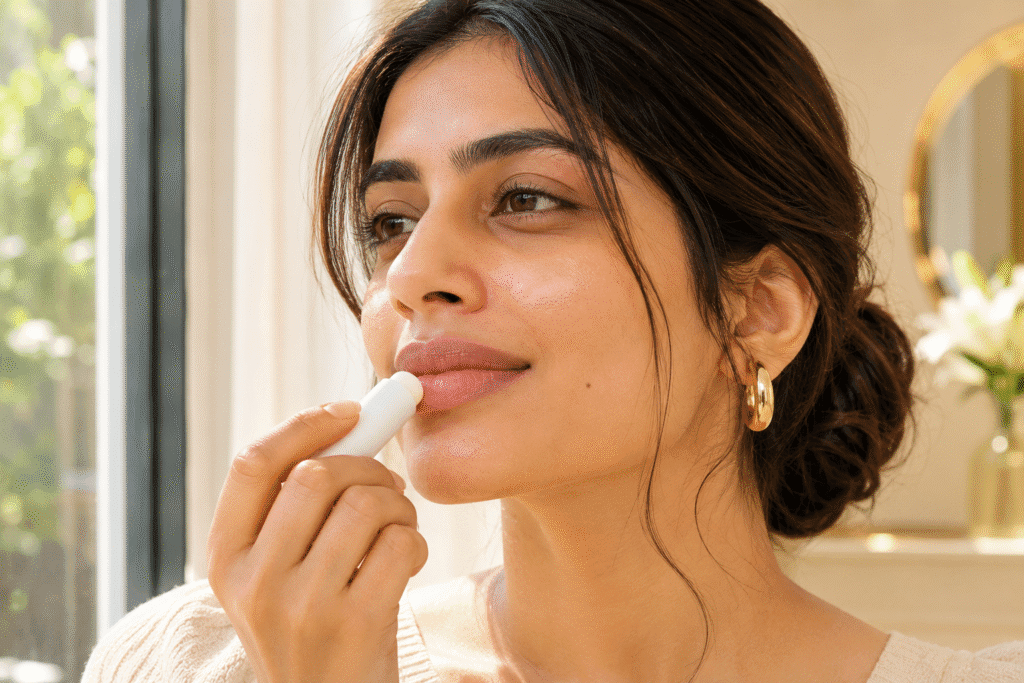
Not every cause of lip pigmentation can be prevented.
However, certain daily habits can help protect the lip surface and reduce avoidable irritation.
Use SPF Lip Balm Regularly
Choose a broad-spectrum SPF 30 or higher lip balm when going outdoors.
Reapply as necessary, particularly after meals and drinking.
A wide-brimmed hat can provide additional protection during prolonged sun exposure.
Avoid Lip Licking and Biting
Repeated licking and biting can contribute to dryness and inflammation.
Applying a suitable fragrance-free lip moisturiser may help reduce the urge to lick dry lips.
Choose Gentle Lip Products
If a lipstick, balm, or cosmetic product repeatedly causes burning, itching, or dryness, stop using it and seek advice if symptoms persist.
Avoid products with ingredients that have previously caused irritation.
Stop Smoking
Avoiding tobacco can help prevent additional tobacco-related changes and supports overall oral health.
Existing pigmentation may take time to improve after the exposure stops.
Avoid Aggressive Exfoliation
The lips are delicate and should not be treated like thick facial or body skin.
Strong acids, rough scrubs, and repeated peeling can cause inflammation.
Address Persistent Lip Inflammation
Dryness, scaling, recurring cracks, or irritation may indicate an underlying lip condition.
Treating persistent inflammation early may reduce the likelihood of further post-inflammatory pigmentation.
How Long Does Dark Lips Treatment Take to Show Results?
The treatment timeline depends on the type and cause of pigmentation.
If the darkening is related to irritation or contact allergy, improvement may begin after the trigger is removed and inflammation settles.
However, residual pigmentation may take several months to fade.
Naturally pigmented lips are not expected to change significantly through moisturising or sun protection alone.
When specialist procedures are considered, the response varies according to the pigmentation type, treatment method, and individual healing characteristics.
Some patients may require multiple treatment sessions, while others may not be suitable for a procedure.
It is also possible for pigmentation to recur, particularly when contributing factors continue.
No responsible treatment plan should promise permanent pink lips or identical results for everyone.
Are Lip Lightening Treatments Safe for Indian Skin?
Safety depends on the procedure, skin tone, pigmentation diagnosis, and individual response.
People with medium to deeper skin tones may have a greater tendency to develop post-inflammatory pigmentation following irritation or injury.
The lips are also anatomically different from ordinary facial skin.
This means that products or procedures suitable for the cheeks and forehead may not be appropriate for the lip surface.
Before any procedure, an assessment should consider:
- Natural pigmentation and skin tone
- Whether the darkening is diffuse or localised
- Previous allergic reactions
- Existing lip dryness or inflammation
- History of cold sores
- Previous pigment-altering procedures
- Risk of hyperpigmentation or hypopigmentation
- Expected benefits and limitations
Some cosmetic procedures may cause uneven lightening, persistent discolouration, or other complications.
For this reason, treatment intensity and method should be determined by an appropriately qualified medical professional.
The safest option may sometimes be conservative care rather than a cosmetic procedure.
When Should You Consult a Skin Expert for Dark Lips?
Dark lips are not always a medical concern.
Naturally pigmented, stable, and symptom-free lips generally do not require treatment.
However, professional assessment is important when pigmentation is new, changing, or accompanied by other symptoms.
Seek evaluation if you notice:
- A new dark spot on the lips
- Rapidly changing pigmentation
- An irregularly shaped pigmented patch
- Persistent bleeding or ulceration
- Unexplained pain or swelling
- Repeated cracking or inflammation
- A non-healing sore
- Sudden pigmentation changes involving the mouth or other parts of the body
Some pigmented lip lesions are harmless, but others require further investigation.
Changing, bleeding, or suspicious lesions should receive appropriate specialist evaluation before cosmetic lightening is considered.
Sudden blue or grey lips associated with breathing difficulty, chest pain, or faintness are a different issue from pigmentation and require emergency medical care.
Lip Pigmentation Consultation at Aestheticaa by Dr. Madhulika
Understanding the cause of dark lips is the first step towards deciding whether any treatment is appropriate.
At Aestheticaa by Dr. Madhulika, located in Indiranagar, Bengaluru, patients can seek professional guidance for skin and pigmentation concerns.
Dr. Madhulika Mohanty focuses on individual assessment and realistic treatment expectations, particularly for concerns involving pigmentation-prone skin.
For those experiencing dark lips, an initial consultation can help clarify whether the pigmentation is natural, irritation-related, or requires further medical evaluation.
The discussion may include lip care habits, contact reactions, sun exposure, smoking history, and previous cosmetic treatments.
Aestheticaa offers advanced lightening peels for selected facial pigmentation concerns. However, the availability and suitability of any dedicated lip-lightening procedure should be confirmed directly with the clinic.
The goal is to understand the underlying concern and explore a safe, appropriate approach rather than choosing a treatment solely for cosmetic lightening.
Related service: Advanced Lightening Peels at Aestheticaa
Related article: Melasma in Indian Skin: Why It Keeps Coming Back and What Actually Helps?
Conclusion
Dark lips can develop for several reasons, including genetics, sun exposure, smoking, allergic reactions, repeated irritation, and post-inflammatory pigmentation.
However, naturally dark or brown lips are normal and do not require cosmetic correction.
When pigmentation develops because of an identifiable cause, appropriate management may help improve the appearance of the lips over time.
Gentle lip care, regular sun protection, avoiding irritating products, and addressing underlying conditions are important first steps.
Specialist options such as pigment-targeting laser treatments may be considered in selected cases, but results are variable, and potential risks must be carefully evaluated.
Strong facial lightening creams, aggressive scrubs, and unsupervised chemical peels should not be used on the lips in an attempt to achieve faster results.
The most effective approach is based on identifying the cause of pigmentation, protecting the delicate lip barrier, and setting realistic expectations.
For individuals concerned about persistent dark lips or looking for guidance on lip pigmentation treatment in Indiranagar, Bangalore, a professional consultation at Aestheticaa by Dr. Madhulika can help clarify the appropriate next steps.
Healthy lips do not need to be a particular shade of pink. The priority should always be comfort, natural appearance, and safe, individualised care.