
Open Pores: Causes and Treatments That Actually Work
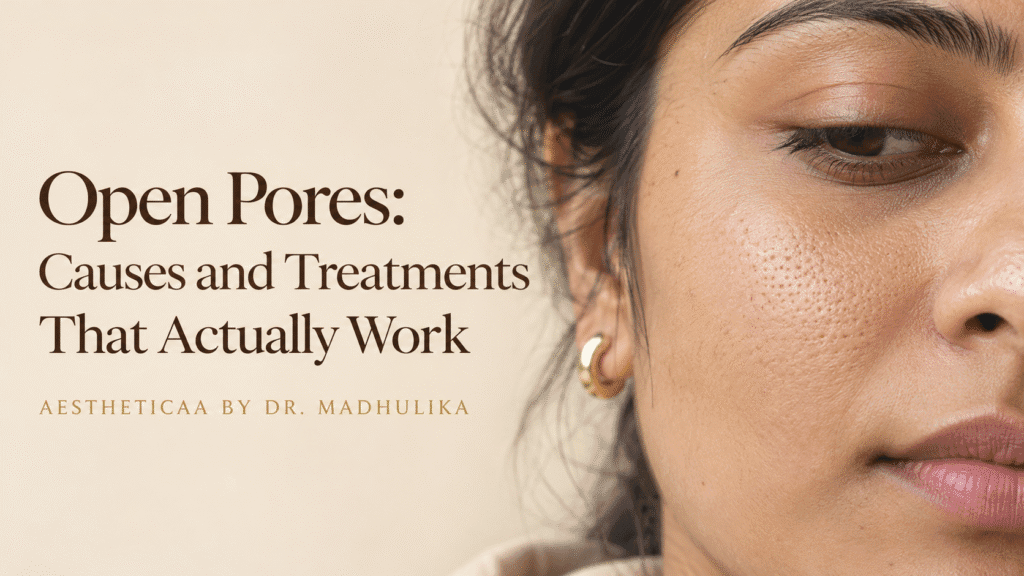
Open pores are one of the most common skin concerns, especially among people with oily, combination or acne-prone skin. They usually appear as small, visible openings on the nose, cheeks, forehead and chin. For some people, enlarged pores become more noticeable with age, while others have naturally visible pores from an early age.
Many skincare products claim to shrink pores permanently, close them overnight or create completely poreless skin. However, these claims can be misleading.
Pores are a normal and essential part of the skin. Although they cannot be permanently closed or removed, certain skincare ingredients and professional treatments may help reduce their appearance.
Understanding what causes enlarged pores is important because different factors require different treatment approaches. In this blog, we will explore why pores become more visible, which treatments may actually help and how to maintain smoother-looking skin.
What Are Open Pores?
Pores are tiny openings on the surface of the skin connected to hair follicles and sebaceous glands.
Sebaceous glands produce sebum, the natural oil that helps protect and lubricate the skin. This oil reaches the surface through follicular openings.
Everyone has pores, but their size and visibility vary from person to person.
The term “open pores” is commonly used to describe enlarged or prominent facial pores. They are most frequently noticeable on:
- Nose
- Cheeks
- Forehead
- Chin
- T-zone
Pores do not physically open and close like doors. Their appearance changes depending on oil production, skin texture, congestion and the firmness of the surrounding tissue.
What Causes Open Pores on the Face?
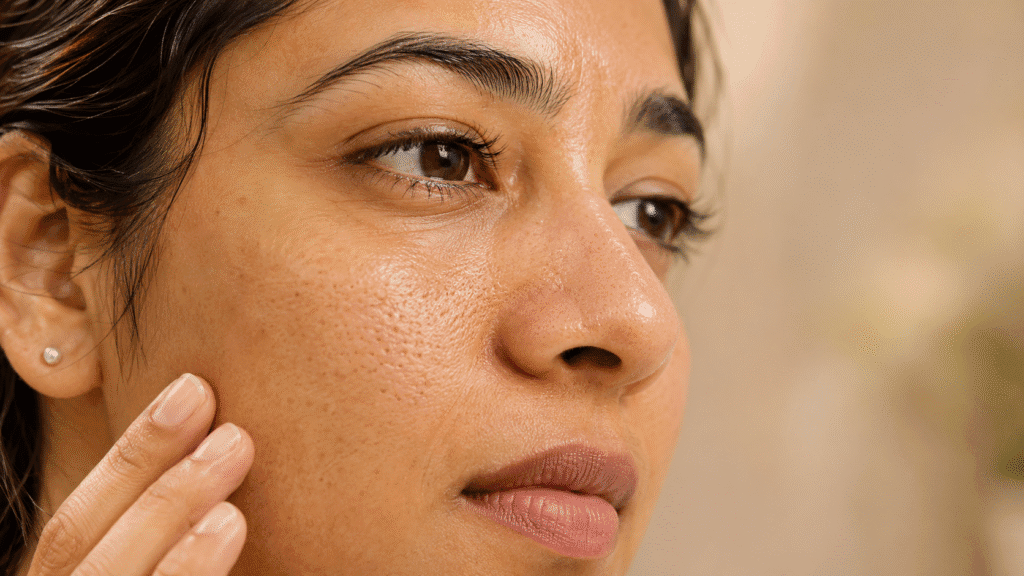
Enlarged pores usually develop because of a combination of genetic, biological and environmental factors.
Excess Sebum Production
Sebum helps maintain the skin’s natural protective barrier.
However, excessive oil production can make pores appear larger, particularly around the nose and forehead.
When oil mixes with dead skin cells, it can accumulate inside follicles and contribute to blackheads or whiteheads.
This is why enlarged pores are often more noticeable in people with oily or combination skin.
Genetics
Genetics plays an important role in determining pore visibility.
Some people naturally have larger sebaceous glands or more prominent follicular openings.
If enlarged pores are common among family members, you may be more likely to experience them.
While genetic pore characteristics cannot be changed, their appearance can sometimes be improved by addressing associated oiliness and congestion.
Ageing and Collagen Loss
Collagen and elastin help maintain the skin’s structure and firmness.
As the skin ages, collagen levels and elasticity gradually decline. This reduces support around the follicular openings and can make pores appear more prominent.
Age-related changes are often noticeable on the cheeks, where pores may appear elongated as the surrounding skin becomes less firm.
Acne and Clogged Pores
Acne develops when follicles become blocked by excess oil and dead skin cells, sometimes followed by inflammation.
Repeated congestion can make pores more noticeable.
Blackheads and whiteheads are particularly common around the nose, forehead and chin.
In some cases, small acne scars may resemble enlarged pores. Distinguishing between the two is important because true scars usually require a different treatment approach.
Sun Exposure
Repeated ultraviolet exposure contributes to collagen breakdown and premature skin ageing.
As skin firmness decreases, pores may become more visible.
Sun exposure can also worsen uneven skin texture and pigmentation, making the overall complexion appear less uniform.
This is one reason sunscreen is an important part of long-term skin care.
Improper Skincare Habits
Certain everyday habits can make enlarged pores more noticeable.
These include:
- Using products that clog pores
- Frequently squeezing blackheads
- Aggressive facial scrubbing
- Excessive chemical exfoliation
- Using unsuitable active ingredients
- Neglecting appropriate cleansing and moisturising
Repeated irritation may damage the skin barrier and make skin texture appear worse.
Can Open Pores Be Permanently Closed?
One of the most common questions about enlarged pores is whether they can be closed permanently.
The answer is no.
Pores are natural structures of the skin, and their baseline appearance is influenced by genetics and anatomy.
No cream, facial, laser or other procedure can guarantee the permanent disappearance of pores.
However, certain treatments may reduce their visibility by addressing the factors that make them appear enlarged.
For example, improving oil control may make congested pores less noticeable, while treatments that support collagen remodelling may improve skin texture in selected patients.
The realistic goal is to achieve healthier, smoother-looking skin rather than completely poreless skin.
Which Treatments Actually Help Reduce Open Pores?
The most appropriate open pores treatment depends on the underlying cause.
A treatment that helps oily and congested skin may not provide the same improvement when enlarged pores are primarily associated with ageing or acne-related textural changes.
1. Salicylic Acid for Oily and Congested Skin
Salicylic acid is a beta-hydroxy acid commonly used in skincare products for oily and acne-prone skin.
Because it is oil-soluble, it helps exfoliate within the follicular opening and reduce the accumulation of dead skin cells.
It may be useful for:
- Blackheads and whiteheads
- Excessive oiliness
- Mild acne-related congestion
- Prominent pores associated with clogged follicles
Salicylic acid does not permanently shrink pores. Instead, it can help make them appear less noticeable by reducing congestion.
Overuse can cause dryness and irritation, so product strength and frequency should suit the individual’s skin tolerance.
2. Retinoids for Pore Appearance and Skin Texture
Retinoids are vitamin A derivatives used for concerns such as acne, uneven texture and signs of skin ageing.
They help regulate skin cell turnover and reduce the buildup of dead cells within follicles.
Certain retinoids also support collagen production, which may improve skin texture over time.
Retinoids may be considered for enlarged pores associated with:
- Oily skin
- Acne and recurring congestion
- Uneven skin texture
- Early age-related changes
However, retinoids can cause irritation, dryness and peeling.
They should be introduced carefully, and retinoid products should generally be avoided during pregnancy. Professional advice is important when selecting a suitable formulation.
3. Chemical Peels for Open Pores
Chemical peels are professional exfoliating procedures that use selected chemical solutions to remove superficial skin cells.
Depending on the formulation, they may help improve clogged pores, mild acne and uneven surface texture.
Common ingredients used in superficial chemical peels include:
- Salicylic acid
- Glycolic acid
- Lactic acid
- Mandelic acid
For some individuals, controlled exfoliation may improve the appearance of pores by reducing the buildup of oil and dead skin cells.
However, chemical peels cannot permanently alter natural pore size.
Peel selection must consider the person’s skin sensitivity, acne activity and risk of post-inflammatory pigmentation.
Aestheticaa by Dr. Madhulika in Indiranagar, Bengaluru, offers superficial chemical peels and acne peels for selected skin concerns following assessment.
Related services:
4. Microneedling Radiofrequency for Skin Texture
Microneedling radiofrequency, also called MNRF or RF microneedling, combines controlled microneedling with radiofrequency energy delivered into the skin.
The procedure is intended to stimulate tissue remodelling and collagen production.
In selected patients, it may help improve the appearance of uneven skin texture, certain acne scars and enlarged pores.
MNRF may be considered when prominent pores are associated with reduced skin firmness or textural changes.
Unlike skincare products that mainly address surface congestion, RF microneedling acts on deeper skin structures.
However, it does not permanently close pores, and results differ between individuals.
The procedure also carries risks, including burns, pigmentation changes, scarring and other complications. Appropriate patient selection, equipment settings and professional experience are essential.
Aestheticaa offers microneedling RF treatment, where suitability can be determined after evaluating the skin.
Related service: Micro Needling Radiofrequency
5. Managing Acne and Excess Oil
When enlarged pores are associated with active acne, controlling the underlying acne is often an important first step.
A doctor may recommend appropriate topical treatments, adjustments to skincare or other acne management options.
Treating recurring blackheads and congestion can help reduce the factors that make pores appear enlarged.
Attempting aggressive cosmetic procedures while the skin is actively inflamed may not be appropriate.
A personalised plan can help determine whether acne control, exfoliation or texture-focused treatment should be prioritised.
Which Open Pores Treatment Is Suitable for Indian Skin?
Indian skin includes a wide range of skin tones and sensitivities.
Many individuals with medium to deeper skin tones are more prone to post-inflammatory hyperpigmentation following irritation, inflammation or unsuitable procedures.
This makes careful treatment selection especially important.
Aggressive exfoliation, excessively strong chemical peels or unsuitable energy-based procedures may worsen pigmentation rather than improve the skin’s appearance.
Before selecting a treatment, several factors should be considered:
- Skin type and oil production
- Active acne or inflammation
- Skin barrier condition
- Existing pigmentation
- Previous treatment reactions
- Sensitivity to skincare products
- Age-related changes in skin firmness
The aim should be gradual improvement without unnecessary irritation.
How to Reduce Open Pores Naturally Through Daily Skincare
A consistent skincare routine can help improve the appearance of enlarged pores, particularly when excess oil and congestion are contributing factors.
Gentle Cleansing
Use a mild cleanser suitable for your skin type.
Cleansing helps remove excess oil, dirt and accumulated skincare products without unnecessarily stripping the skin.
Washing the face too frequently or using harsh cleansers may increase irritation and dryness.
Appropriate Exfoliation
Salicylic acid or other suitable exfoliating ingredients may help improve clogged pores.
However, exfoliation does not need to be aggressive.
Combining multiple exfoliating products or using strong acids too frequently can damage the skin barrier.
Lightweight Moisturising
Even oily skin requires moisturising.
A lightweight, non-comedogenic moisturiser can support the skin barrier without unnecessarily contributing to congestion.
Skipping moisturiser may leave the skin dry or irritated.
Daily Sun Protection
Use broad-spectrum sunscreen with SPF 30 or higher as part of your daily routine.
Regular sun protection helps limit UV-related collagen damage and premature ageing.
Sunscreen does not directly shrink pores, but it helps protect the skin structures that influence pore visibility.
Avoiding Pore Squeezing
Squeezing blackheads or repeatedly pressing the skin can cause inflammation and tissue damage.
This may worsen acne, irritation and the appearance of uneven skin texture.
Professional guidance is preferable when congestion is persistent.
Common Myths About Open Pores

Several popular skincare claims create unrealistic expectations about pore size.
Ice Can Permanently Shrink Pores
Cold temperatures may temporarily make skin feel tighter, but they do not permanently reduce pore size.
Applying ice directly may also irritate sensitive skin.
Steam Opens the Pores
Steam can soften surface oil and debris, but pores do not mechanically open and close in response to temperature.
Very hot steam may cause irritation or redness.
Scrubbing Removes Enlarged Pores
Aggressive scrubbing does not remove pores.
Instead, excessive friction can damage the skin barrier and make inflammation more noticeable.
One Facial Can Remove Open Pores
Some facial treatments may temporarily improve the appearance of congested skin.
However, a single session cannot permanently eliminate pores or change their genetically determined size.
Long-term improvement generally requires appropriate skincare and treatment of contributing factors.
How Long Does Open Pores Treatment Take to Show Results?
Treatment timelines vary depending on the underlying cause and approach selected.
When enlarged pores are associated with excess oil and congestion, improvements in skin appearance may become noticeable after several weeks of consistent skincare.
Retinoid-based routines generally require continued use before meaningful texture changes become apparent.
Professional chemical peels may produce gradual improvements in superficial texture over a planned treatment course.
Procedures intended to stimulate collagen remodelling, such as RF microneedling, may take several weeks to months to show their full effect.
Results are influenced by:
- Skin type
- Pore visibility and underlying cause
- Age and skin elasticity
- Acne activity
- Treatment selection
- Consistency with skincare
- Sun protection
No treatment can guarantee the same result for everyone.
When Should You Consult a Skin Expert for Open Pores?
Naturally visible pores do not always require professional treatment.
However, a skin consultation may be helpful when:
- Enlarged pores are accompanied by persistent acne.
- Blackheads and whiteheads repeatedly return.
- Skin texture has become increasingly uneven.
- Pores appear more noticeable with age.
- Skincare products cause frequent irritation.
- You are unsure whether the concern is enlarged pores or acne scars.
- You are considering chemical peels or RF microneedling.
A professional assessment can help identify the underlying concern and prevent unnecessary or unsuitable treatments.
Open Pores Treatment at Aestheticaa by Dr. Madhulika
Managing enlarged pores begins with understanding the skin’s individual needs.
At Aestheticaa by Dr. Madhulika, located in Indiranagar, Bengaluru, treatment planning considers concerns such as oily skin, acne, uneven texture, skin sensitivity and changes in firmness.
Depending on the skin assessment, options such as superficial chemical peels, acne-focused treatments or microneedling RF may be discussed.
Dr. Madhulika Mohanty focuses on personalised skin care and realistic treatment expectations, recognising that visible pores can have different causes and may respond differently to treatment.
For individuals looking for open pores treatment in Indiranagar, Bangalore, a consultation can help determine whether a skincare routine, professional procedure or combined approach is appropriate.
Related service: https://blog.aestheticaabymadhulika.com/micro-needling-radiofrequency/
Conclusion
Open pores are a normal part of healthy skin, but their appearance can become more noticeable because of excess oil, genetics, acne, sun damage and age-related loss of skin elasticity.
Although pores cannot be permanently closed, appropriate skincare and selected clinical treatments may help reduce their visibility.
Salicylic acid and retinoids may improve congestion and skin texture, while professional chemical peels and microneedling RF may be considered for selected concerns after a proper assessment.
The most effective approach is not necessarily the strongest or most expensive treatment. It is the one that addresses the underlying cause while protecting the skin barrier.
With consistent care, sensible expectations and appropriate professional guidance, it is possible to achieve healthier, smoother-looking skin without pursuing unrealistic promises of permanently poreless skin.