PCOS is not just related to periods, weight changes or fertility. For many women, the first visible signs of PCOS appear on the skin and hair. Repeated acne, unwanted facial hair, scalp hair thinning, oily skin and dark patches around the neck or underarms may sometimes be connected to hormonal imbalance.
Polycystic Ovary Syndrome, commonly known as PCOS, is a hormonal condition that can affect the way the body responds to insulin and androgens. These hormonal changes may influence oil glands, hair follicles and skin pigmentation. This is why PCOS-related concerns often show up as acne, facial hair growth, hair fall and uneven skin tone.
Understanding these signs early can help you seek the right care instead of treating every symptom separately.
How PCOS Affects Skin and Hair
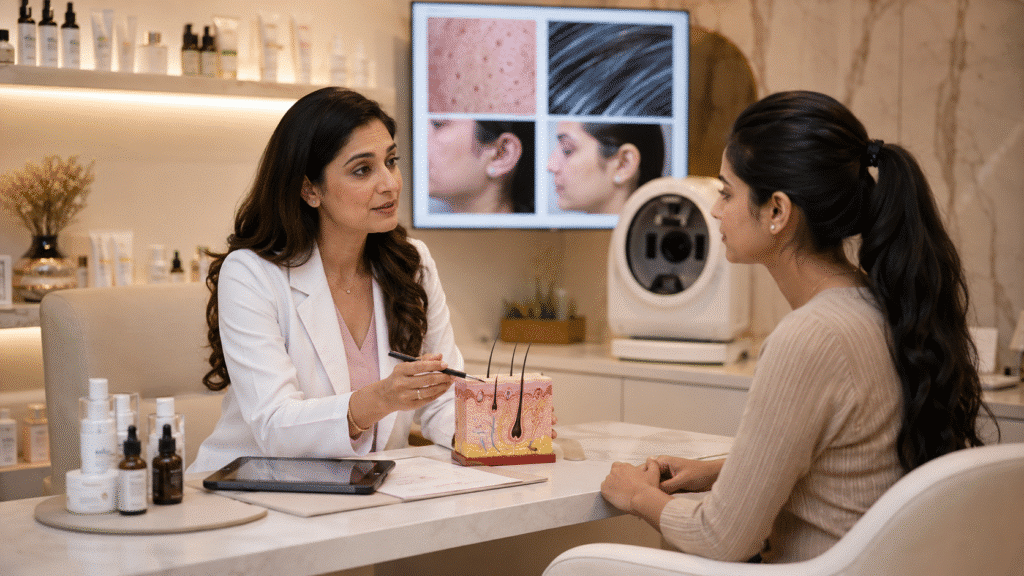
In PCOS, the body may produce or respond more strongly to androgens. Androgens are hormones that are naturally present in women, but when their activity increases, they can affect both skin and hair.
Higher androgen activity can increase oil production in the skin, leading to clogged pores and acne. It can also stimulate unwanted hair growth on the face or body while contributing to scalp hair thinning in some women.
Insulin resistance is another important factor linked with PCOS. When the body does not use insulin effectively, it may cause hormonal changes that can worsen acne, pigmentation and other skin concerns.
This is why PCOS-related skin and hair problems often need a combined approach. A dermatologist can help manage the visible concerns, while a gynecologist or endocrinologist may help evaluate the hormonal side when required.
1. PCOS Acne: Why It Keeps Coming Back
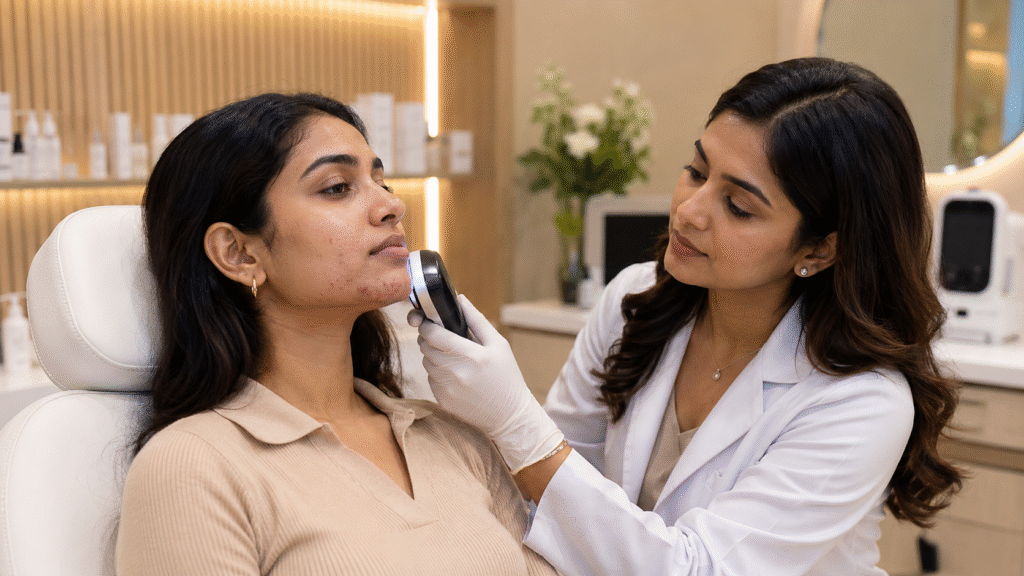
PCOS acne is often different from occasional breakouts. It may appear repeatedly around the chin, jawline, cheeks, neck or back. The breakouts may be deeper, painful and slow to heal.
Hormonal acne may flare before periods or continue even after teenage years. In many women, acne that keeps returning despite using multiple products may be linked with internal hormonal triggers.
Common signs that acne may be hormone-related include repeated breakouts around the chin and jawline, painful bumps, acne flare-ups before periods, oily skin, irregular periods, facial hair growth and acne marks that take time to fade.
A dermatologist may recommend topical medicines, oral medicines, chemical peels, acne-control procedures or acne scar management depending on the severity. The goal is not only to reduce active acne but also to prevent dark spots, pigmentation and long-term scars.
2. Facial Hair Growth in PCOS
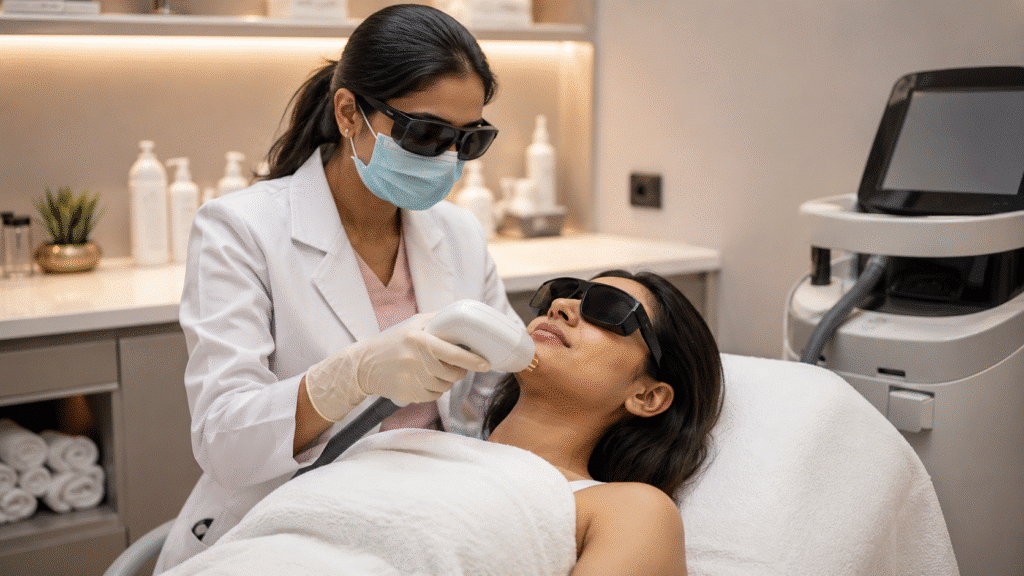
Unwanted hair growth on the upper lip, chin, jawline, sideburns, chest or abdomen is known as hirsutism. It is one of the common visible signs of PCOS and is often linked with increased androgen activity.
Facial hair growth can affect confidence and may become frustrating when waxing, threading or shaving causes bumps, ingrown hair, irritation or pigmentation.
Laser hair reduction is commonly considered for long-term hair reduction in areas such as the upper lip, chin, jawline and sideburns. It does not cure PCOS, but it can help reduce visible hair growth when done in suitable sessions under professional guidance.
For best results, the hormonal cause should also be evaluated. If the internal trigger remains active, new hair growth may continue over time, even after cosmetic procedures.
3. Hair Fall and Scalp Thinning in PCOS
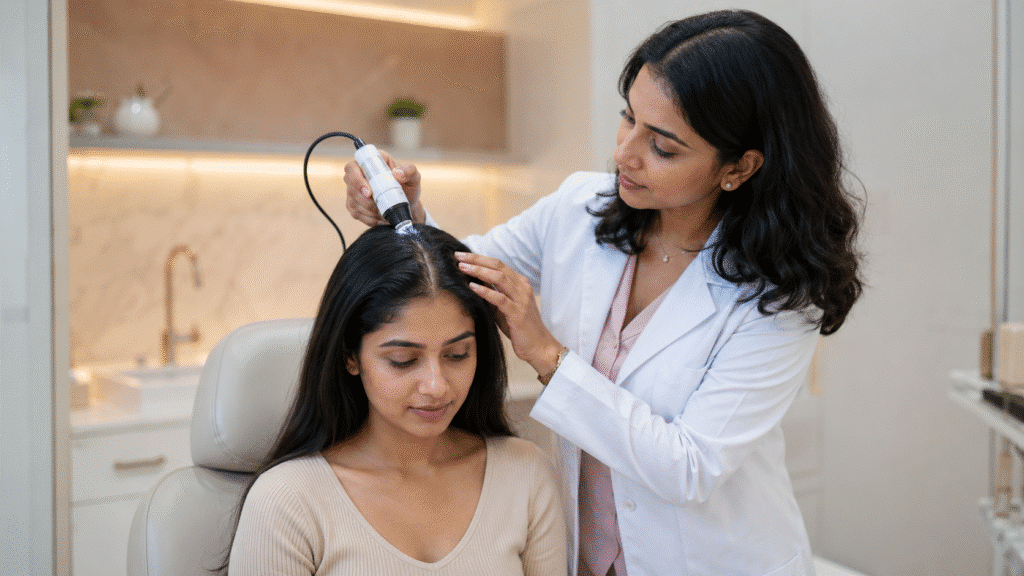
PCOS can also affect scalp hair. Some women notice increased hair fall, reduced hair volume, widening of the hair partition or thinning around the crown area.
This may happen due to androgen sensitivity of hair follicles. However, hair fall can also be caused by low iron, vitamin D deficiency, thyroid imbalance, stress, poor sleep, crash dieting, post-illness shedding or nutritional gaps.
Because many conditions can cause hair fall, proper diagnosis is important before starting treatment. A dermatologist may suggest scalp analysis, blood tests and a personalized treatment plan based on the exact cause.
PCOS-related hair thinning may require a combination of topical treatments, oral medicines, hair growth stimulating procedures, nutritional correction and long-term scalp care. Treatments like PRP or GFC may be suggested in selected cases depending on the stage of hair thinning and overall scalp condition.
Early consultation is important because hair thinning is usually easier to manage in the early stage than after advanced density loss.
4. Pigmentation and Dark Patches in PCOS
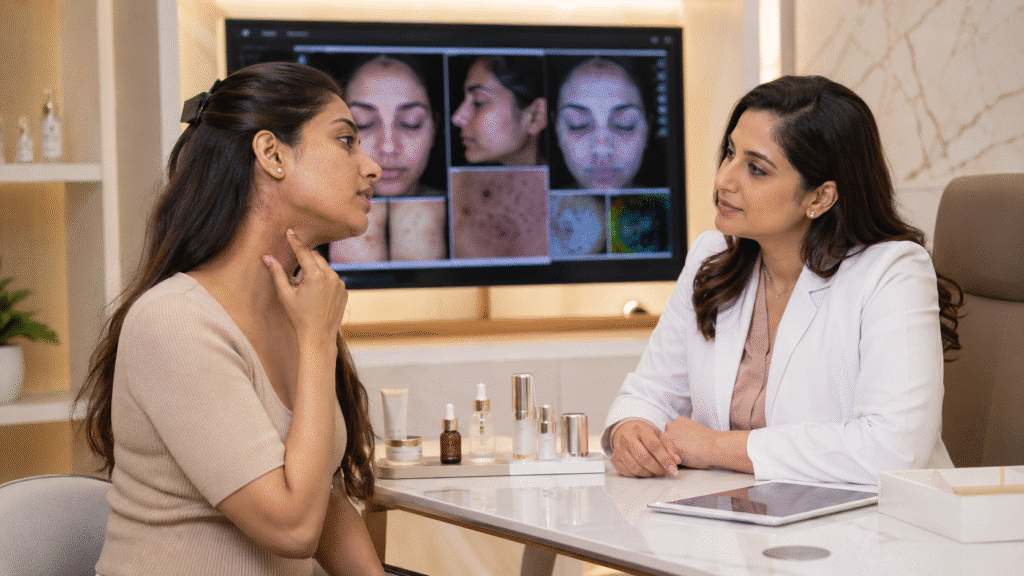
Some women with PCOS develop dark, thick or velvety-looking patches around the neck, underarms, inner thighs or under the breasts. This may be associated with insulin resistance.
Pigmentation can also happen because of acne marks, ingrown hair, repeated waxing or threading, friction, sun exposure, hormonal changes, harsh skincare products or skin barrier damage.
It is important not to treat pigmentation randomly with strong creams or home remedies. Lemon, toothpaste, harsh scrubs and steroid-mixed creams can irritate the skin and make pigmentation worse.
A dermatologist may recommend sunscreen, barrier repair skincare, brightening agents, chemical peels, laser treatments or pigmentation-focused procedures depending on the depth and cause of pigmentation.
5. Why DIY Skincare Often Fails in PCOS
PCOS-related skin concerns are not always surface-level problems. Acne creams may reduce pimples temporarily, but if hormonal triggers remain active, breakouts may keep returning.
Similarly, waxing or threading may remove facial hair for a few days, but it does not slow the hormonal pattern of hair growth. Hair fall shampoos may also fail if the root cause is hormonal, nutritional or medical.
Common mistakes include using too many active ingredients together, over-washing oily skin, scrubbing acne or pigmentation, trying viral DIY remedies, using steroid creams without prescription, stopping treatment too early and treating hair fall without checking the cause.
PCOS skin and hair care works better when the treatment plan is structured, consistent and guided by a qualified professional.
6. When Should You See a Dermatologist?
You should consider seeing a dermatologist if your acne keeps coming back, acne is painful or cystic, acne marks are becoming darker, facial hair is increasing, hair thinning is visible around the crown, dark patches are appearing around the neck or underarms, or repeated waxing and threading are causing irritation.
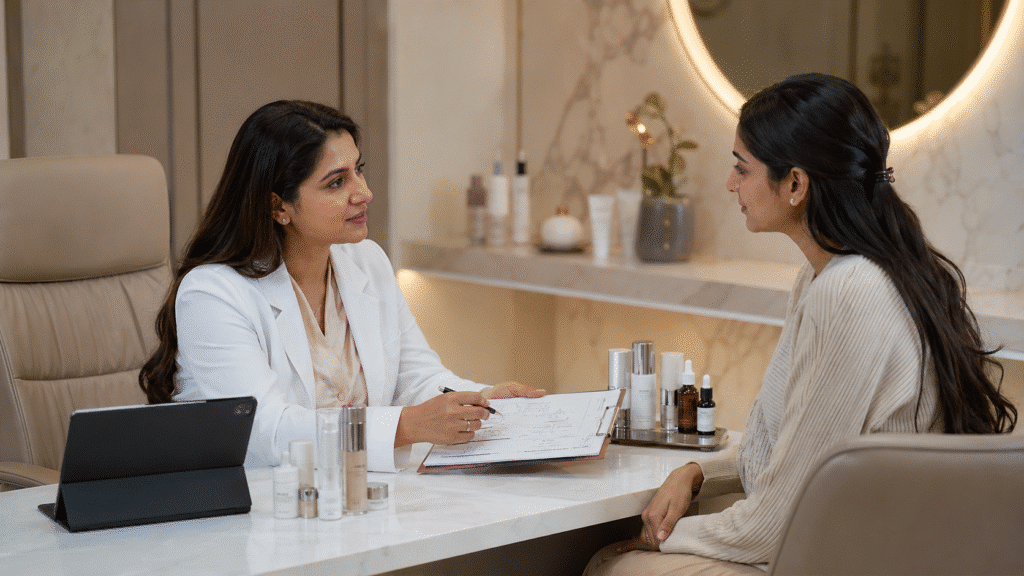
A dermatologist can evaluate your skin, scalp and hair pattern. If PCOS is suspected, they may also recommend consultation with a gynecologist or endocrinologist for hormonal assessment.
The right diagnosis helps in choosing the correct treatment instead of trying random products or temporary solutions.
7. Treatment Approach for PCOS Skin and Hair Concerns
The right treatment depends on the concern, severity, skin type, hair pattern and underlying cause.
For acne, treatment may include dermatologist-prescribed creams, oral medicines, chemical peels, acne-control facials, laser-based procedures and acne scar prevention.
For facial hair, laser hair reduction may help reduce unwanted hair growth over multiple sessions. In some cases, hormonal evaluation may also be required.
For hair fall, treatment may include scalp analysis, blood tests, topical medicines, oral medicines, PRP, GFC, nutritional correction and long-term scalp care.
For pigmentation, treatment may include sunscreen, barrier repair, skin-brightening ingredients, chemical peels, laser treatments or pigmentation-focused procedures.
For long-term control, lifestyle support also plays an important role. Healthy diet, regular activity, proper sleep, stress management and medical follow-up may help support better skin and hair outcomes.
Conclusion
PCOS can show up on your skin and hair in many ways, including acne, facial hair, hair thinning, oily skin and pigmentation. These concerns are common, but they should not be ignored or treated randomly.
If your acne keeps returning, facial hair is increasing, hair fall is becoming noticeable or dark patches are appearing on your skin, it may be time to look deeper.
With the right diagnosis and dermatologist-guided treatment, PCOS-related skin and hair concerns can be managed more effectively and safely.