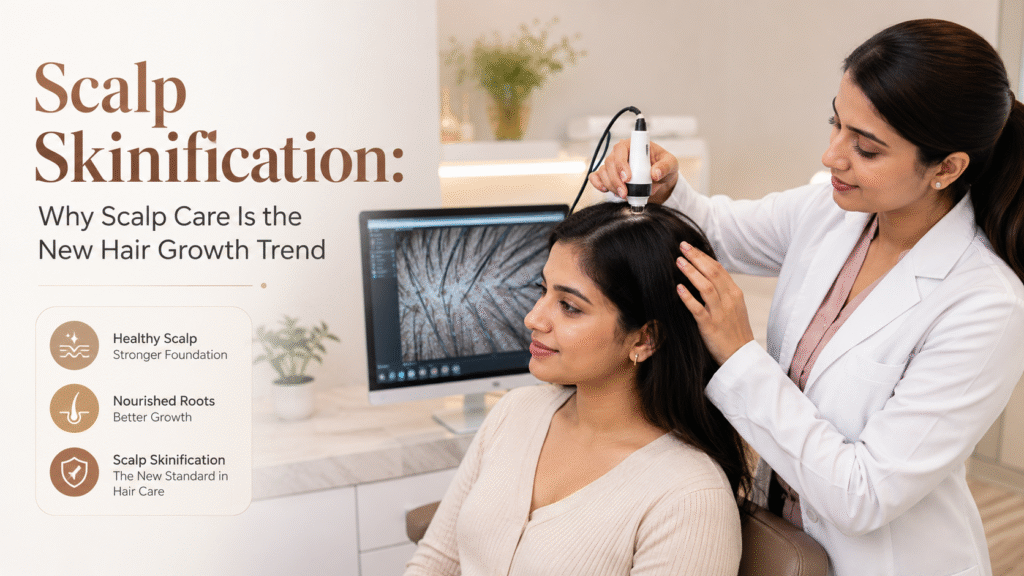
Hair care is no longer just about shampoo, conditioner and hair oil. Today, one of the biggest trends in hair and dermatology is “scalp skinification” — the idea of treating your scalp with the same attention you give to your facial skin.
Just like facial skin, the scalp also has oil glands, pores, microbiome, sensitivity, dryness, inflammation and buildup. When the scalp is unhealthy, it can affect hair quality, hair fall, dandruff, itchiness, oiliness and overall hair growth environment.
Many people focus only on hair strands, but healthy hair starts at the scalp. If the scalp is oily, flaky, irritated or inflamed, even the best hair products may not give the expected results.
Scalp skinification is about understanding your scalp type, using the right ingredients, avoiding harsh practices and choosing treatment based on the actual scalp condition.
What Is Scalp Skinification?

Scalp skinification means applying skincare principles to scalp care. It focuses on cleansing, exfoliation, hydration, barrier repair, sun protection when needed and targeted treatments for scalp concerns.
Just as we use different skincare products for acne, dryness, pigmentation or sensitivity, the scalp may also need customized care depending on the concern.
For example, an oily scalp may need sebum control, a flaky scalp may need dandruff treatment, a sensitive scalp may need calming care, and a thinning scalp may need hair growth-focused treatment.
This trend is becoming popular because people are now understanding that hair health is connected to scalp health. Instead of only treating hair fall from the outside, scalp skinification looks at the root environment where hair grows.
Why Scalp Health Matters for Hair Growth
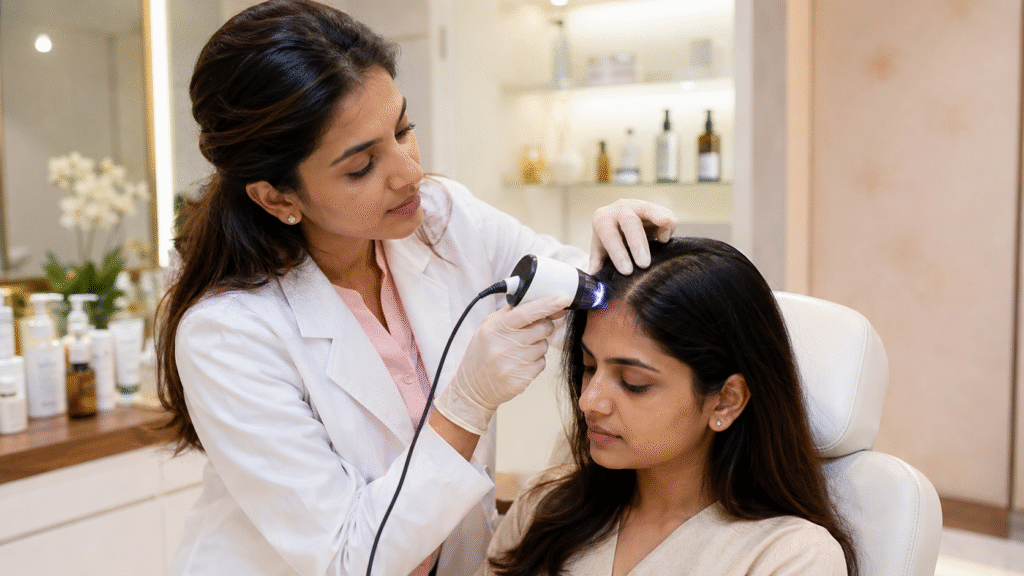
Hair grows from follicles present inside the scalp. If the scalp environment is unhealthy, the hair follicles may not function at their best.
Excess oil, dandruff, product buildup, inflammation, infection, poor hygiene or harsh chemical exposure may disturb the scalp balance. This can make the scalp itchy, greasy, flaky or sensitive. In some cases, it may also contribute to hair fall or poor hair quality.
A healthy scalp supports better hair growth conditions. It does not mean that scalp care alone can cure every type of hair fall, but it plays an important role in overall hair and follicle health.
Hair fall can happen due to many reasons such as genetics, hormonal imbalance, PCOS, thyroid issues, iron deficiency, vitamin D deficiency, stress, crash dieting, post-illness shedding, dandruff or scalp inflammation. This is why scalp evaluation is important before starting random hair treatments.
Common Scalp Problems People Ignore
Many people notice hair fall but ignore scalp symptoms. However, the scalp often gives early warning signs.
Common scalp concerns include oily scalp, dandruff, itching, redness, burning sensation, scalp acne, product buildup, bad scalp odour, painful roots, flaky patches, hair thinning and widening hair partition.
Sometimes people assume dandruff is only dryness, but dandruff can also be linked with oiliness and yeast overgrowth. Similarly, an itchy scalp may be caused by dandruff, allergy, product irritation, psoriasis, infection or sensitivity.
Using random anti-dandruff shampoos, oils or home remedies without knowing the cause may worsen the condition. A dermatologist can help identify whether the concern is dandruff, seborrheic dermatitis, scalp psoriasis, fungal infection, folliculitis or another scalp condition.
Oily Scalp and Hair Fall: What Is the Connection?
An oily scalp is very common, especially in humid weather or among people with active oil glands. Oil itself is not bad because natural sebum protects the scalp. The problem starts when excess oil mixes with sweat, dust, dead skin cells and product buildup.
This can make the scalp feel greasy, itchy and heavy. In some people, excess oiliness may also worsen dandruff and scalp inflammation.
Many people with oily scalp avoid washing their hair frequently because they fear more hair fall during washing. However, the hair seen during washing is often hair that was already in the shedding phase. Avoiding scalp cleansing for too long may worsen buildup and discomfort.
The right washing frequency depends on scalp type, lifestyle, sweating, dandruff and dermatologist advice. Scalp skinification focuses on cleaning the scalp properly without stripping it harshly.
Dandruff, Itching and Flaky Scalp

Dandruff is one of the most common scalp problems. It may cause white or yellowish flakes, itching, oiliness and scalp irritation.
People often try oiling to reduce dandruff, but oiling may not suit everyone. In some cases, excessive oiling can make dandruff worse by increasing greasiness and buildup.
Anti-dandruff shampoos can help when used correctly, but the type of shampoo and frequency should depend on the severity. If dandruff is severe, recurring, associated with redness, thick flakes or hair fall, it should be evaluated by a dermatologist.
Scalp skinification does not mean using too many products. It means using the right product for the right scalp condition.
Product Buildup: The Hidden Reason Your Hair Feels Heavy
Hair serums, dry shampoos, styling creams, oils, gels and heavy conditioners can leave residue on the scalp. Over time, this product buildup can block the scalp surface, attract dust and make hair feel dull or greasy.
Some people apply conditioner directly on the scalp, which may not suit oily or dandruff-prone scalps. Others use too many leave-on products, causing irritation or scalp acne.
Scalp buildup can make the hair roots feel heavy and reduce freshness even after washing. Clarifying shampoos or scalp exfoliating products may help in selected cases, but overuse can cause dryness and irritation.
A balanced scalp routine should cleanse properly while protecting the scalp barrier.
Scalp Barrier: Why Harsh Hair Care Can Damage It
The scalp has a protective barrier, just like facial skin. Harsh shampoos, frequent chemical treatments, strong fragrances, excessive heat styling, tight hairstyles and aggressive scratching can disturb this barrier.
When the scalp barrier is damaged, it may become dry, itchy, red, sensitive or flaky. Some people may feel burning or tightness after using certain shampoos or hair colours.
A damaged scalp barrier can make existing scalp concerns worse. This is why gentle cleansing, avoiding unnecessary harsh products and treating inflammation early are important.
Scalp skinification encourages people to stop treating the scalp roughly and start caring for it with a more skin-friendly approach.
Scalp Exfoliation: Helpful or Harmful?
Scalp exfoliation has become popular, but it is not suitable for everyone. It can help remove dead skin cells and buildup in some cases, but over-exfoliation can irritate the scalp.
Physical scrubs with rough particles may cause micro-irritation, especially if the scalp is already sensitive, inflamed or infected. Chemical exfoliating ingredients may also cause irritation if used too frequently or without guidance.
People with dandruff, scalp psoriasis, eczema, scalp acne, wounds or active inflammation should avoid random exfoliation and consult a dermatologist first.
Scalp exfoliation should be gentle, occasional and suitable for your scalp type.
Hair Thinning and Scalp Analysis
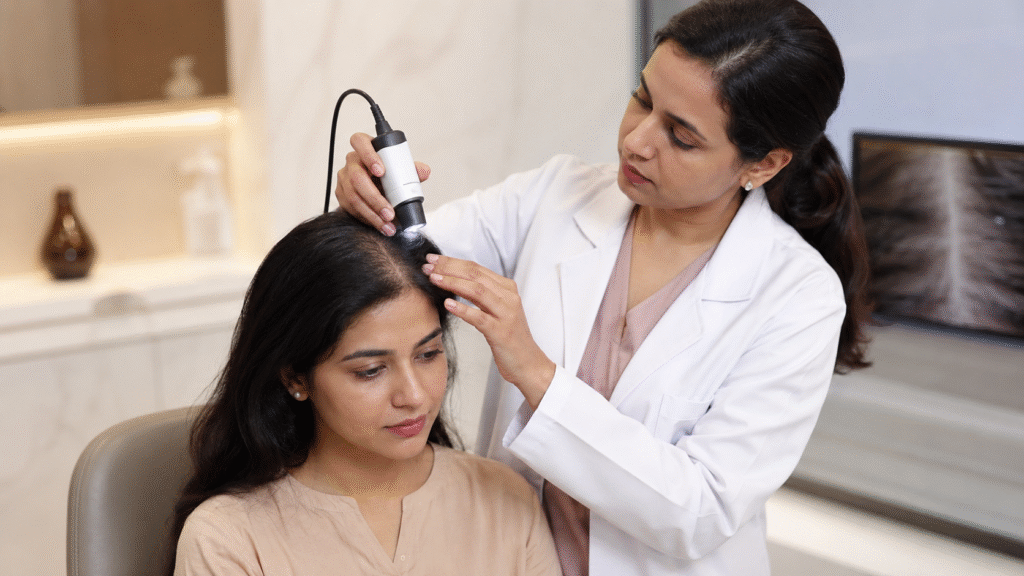
Hair thinning is not always visible in the early stage. Many people notice it only when the hair partition becomes wider, ponytail volume reduces or scalp starts showing under light.
A scalp analysis can help assess hair density, follicle condition, scalp oiliness, dandruff, miniaturization and overall scalp health. This can guide a more accurate treatment plan.
Hair thinning may be linked with androgenetic alopecia, PCOS, nutritional deficiency, thyroid imbalance, stress, post-pregnancy changes, illness, medication or chronic scalp inflammation.
Depending on the diagnosis, a dermatologist may suggest topical treatments, oral medicines, PRP, GFC, mesotherapy, dandruff control, nutritional correction or lifestyle changes.
Scalp skinification supports this approach by focusing on the scalp environment along with hair growth treatment.
Ingredients Commonly Used in Scalp Care
Scalp care products may include ingredients used for oil control, dandruff control, hydration, soothing, strengthening or hair growth support.
For oily or dandruff-prone scalp, ingredients like ketoconazole, zinc pyrithione, selenium sulfide or salicylic acid may be used in certain shampoos, depending on the condition.
For dry or sensitive scalp, soothing and hydrating ingredients such as aloe vera, panthenol, glycerin or ceramides may be helpful.
For hair thinning, dermatologist-guided ingredients such as minoxidil or peptide-based formulations may be considered depending on the diagnosis.
However, not every ingredient suits every scalp. Using strong actives without understanding your scalp type can cause irritation, dryness or worsening of symptoms.
Scalp Care Mistakes to Avoid
One of the biggest mistakes is applying too many products without knowing the scalp concern. A complicated routine does not always mean better results.
Common scalp care mistakes include oiling heavily despite dandruff, using anti-dandruff shampoo daily without advice, applying conditioner on the scalp, scratching flakes aggressively, using harsh scrubs, ignoring scalp acne, tying hair tightly, delaying treatment for hair thinning and stopping treatment too early.
Another common mistake is expecting instant hair growth. Hair growth is a slow biological process. Most hair treatments need consistency and time to show visible improvement.
A dermatologist-guided scalp plan helps avoid trial-and-error and reduces the risk of worsening scalp problems.
How to Build a Simple Scalp Care Routine
A good scalp routine should be simple, consistent and based on scalp type.
For oily scalp, regular cleansing with a suitable shampoo may help control greasiness and buildup. For dandruff-prone scalp, a medicated shampoo may be recommended for a specific duration. For dry or sensitive scalp, gentle shampoos and barrier-supporting care may work better.
Avoid applying heavy oils or styling products directly on the scalp if they cause itching, acne or dandruff. Keep the scalp clean after sweating, workouts or long outdoor exposure.
Do not scratch the scalp aggressively. If there is itching, flakes, redness or pain, it is better to treat the cause instead of hiding it with temporary products.
A simple routine done correctly is often more effective than a complicated routine done randomly.
When Should You See a Dermatologist?
You should consider seeing a dermatologist if you have severe dandruff, constant itching, scalp redness, painful bumps, patchy hair loss, sudden hair fall, widening hair partition, scalp sensitivity, excessive oiliness or hair fall that continues for more than a few weeks.
You should also seek help if over-the-counter shampoos are not working or if hair thinning is progressing.
Early diagnosis can make a big difference, especially in hair thinning. The earlier the cause is identified, the better the chances of managing the condition effectively.
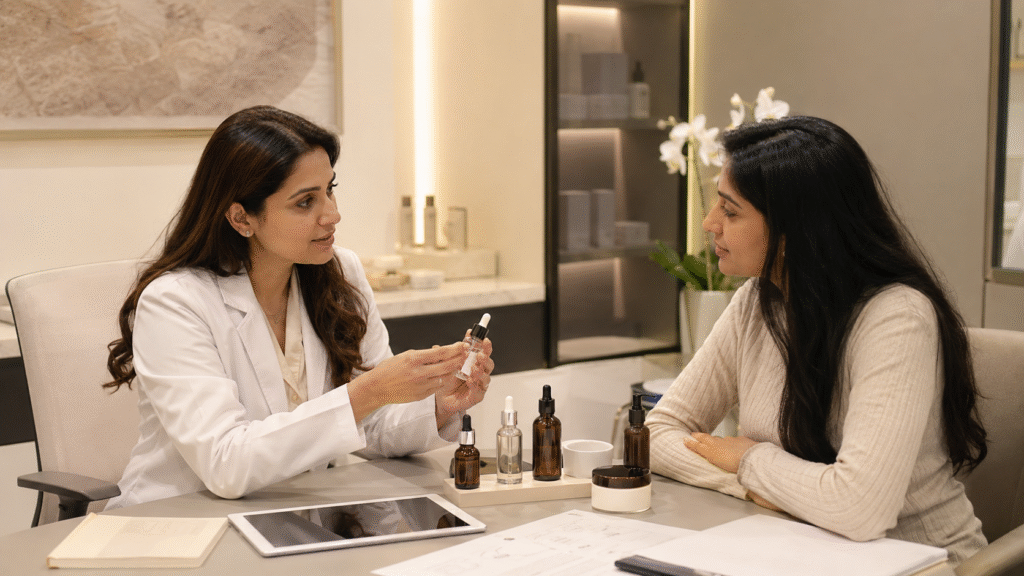
A dermatologist can examine the scalp, suggest tests if required and create a personalized treatment plan based on the actual cause.
Conclusion
Scalp skinification is more than a beauty trend. It is a smarter way to understand that healthy hair starts with a healthy scalp.
Oily scalp, dandruff, itching, buildup, inflammation and hair thinning should not be ignored or treated randomly. The scalp needs the same care, attention and diagnosis that we give to facial skin.
By understanding your scalp type, avoiding harsh products and choosing dermatologist-guided treatment when needed, you can create a healthier environment for better hair quality and long-term scalp wellness.