

Winter brings a beautifully welcome change of scenery, cozy wardrobes, and holiday festivities, but it also introduces a harsh, unavoidable reality for our skin. As the temperature outside plummets, so does the humidity in the air. When you combine this freezing, moisture-stripped outdoor environment with the aggressive, dry artificial heat blasting from indoor room heaters, you create the absolute perfect storm for severe skin damage.
Instead of looking dewy, fresh, and vibrant, your complexion might suddenly start to feel uncomfortably tight, intensely itchy, and visibly irritated. For many, the transition into winter signifies the beginning of a painful, months-long battle with their skin. If you are noticing sudden, adverse seasonal changes in your complexion, you are entirely not alone.
To effectively protect your skin, you must first understand exactly how the cold weather alters your skin’s biology. Let’s dive deep into the science of the skin barrier, explore the most common dermatological conditions triggered by the winter months, and detail a comprehensive, scientifically backed strategy for prevention and clinical care.
The Biology of the Skin Barrier: Why Winter Causes Havoc
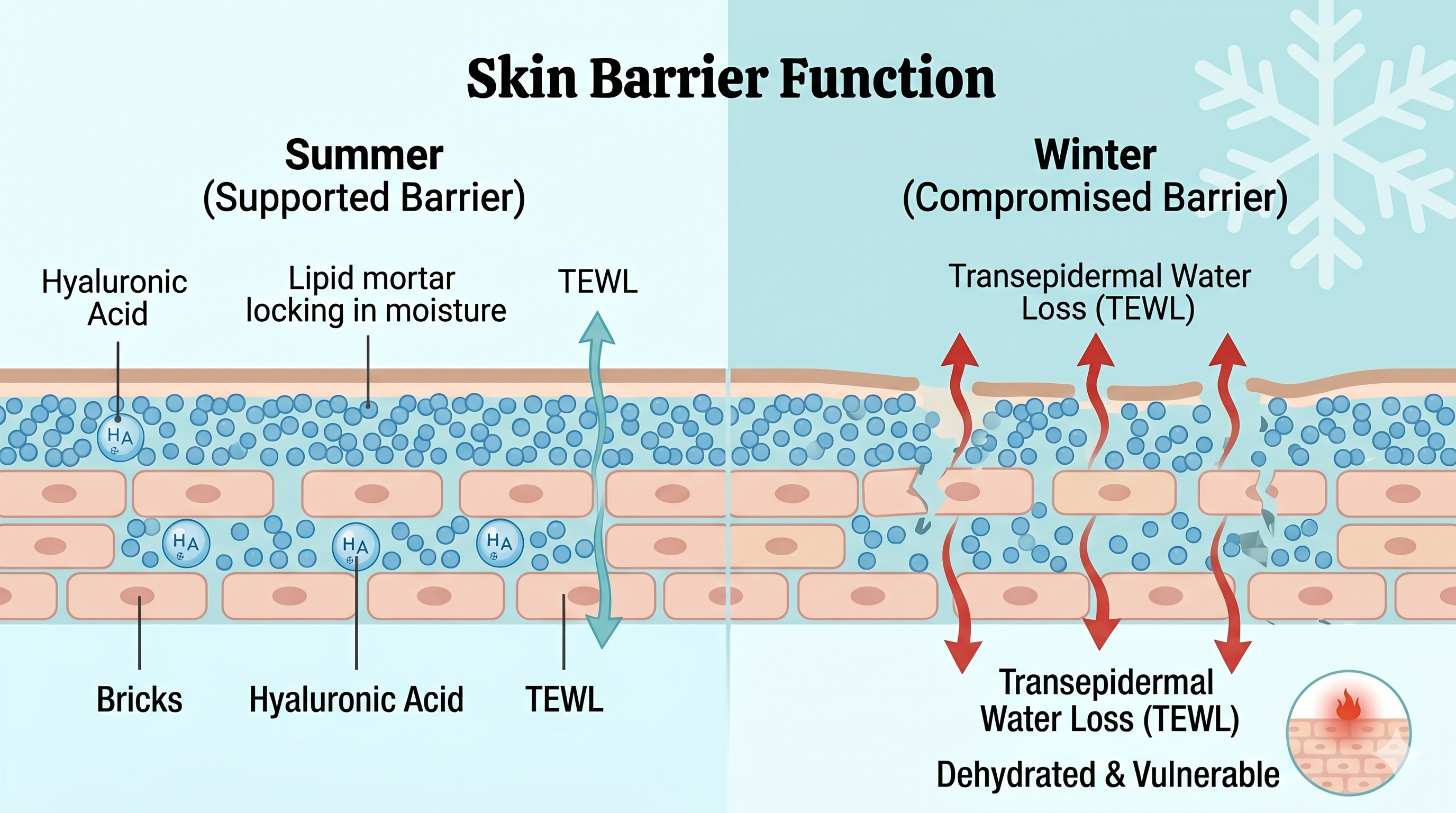
To understand winter skin conditions, we have to look at the outermost layer of your skin, scientifically known as the Stratum Corneum. Think of this layer as a microscopic brick wall. The “bricks” are your dead skin cells, and the “mortar” holding them together is a complex matrix of natural lipids (oils), ceramides, and cholesterol.
This brick wall serves two vital biological purposes: it keeps harmful environmental irritants and bacteria out, and it keeps essential moisture in.
During the summer, high humidity in the air helps support this barrier. However, during the winter, the freezing, dry air acts like a sponge, literally sucking the moisture out of your skin—a process dermatologists call Transepidermal Water Loss (TEWL). As the water evaporates, the lipid “mortar” in your skin barrier begins to crack and break down. Once that protective barrier is compromised, your skin becomes instantly vulnerable to a cascade of inflammatory conditions.
The Most Common Winter Skin Conditions
When the skin barrier fails, several specific dermatological conditions can arise or severely worsen. Here are the most common issues you may encounter during the colder months:
1. Severe Winter Itch (Xerosis Cutis)
The medical term for chronically dry skin is Xerosis. In the winter, it often manifests as the “winter itch.” As TEWL accelerates, the skin becomes drastically depleted of water and natural oils. This leads to rough, scaly, and flaky patches, most commonly found on the arms, lower legs, and back.
The itching associated with Xerosis can be maddening. Unfortunately, scratching the dry skin causes micro-tears in the compromised barrier. If left untreated, this can cause the skin to fissure, crack, and bleed, opening the door to painful bacterial infections that require medical antibiotics to resolve.
2. Eczema (Atopic Dermatitis) Flare-Ups
For individuals who already suffer from eczema, winter is universally the most dreaded and challenging season. Eczema is a genetic condition where the skin naturally struggles to produce enough ceramides to maintain a healthy lipid barrier.
The sudden drop in environmental moisture acts as a massive primary trigger for eczema patients. The dry air penetrates the already weakened barrier, causing the immune system to overreact. This leads to highly inflamed, raised, red, and intensely itchy rashes. In severe winter flare-ups, the skin can even begin to weep fluid and form heavy crusts.
3. Rosacea and Cold-Weather Flushing
Rosacea is a chronic inflammatory skin condition characterized by facial redness, visible blood vessels, and sometimes small, red, pus-filled bumps. While heat and sun are common triggers, extreme cold and biting winds are equally detrimental.
Moving rapidly from the freezing outdoor air into a heavily heated indoor room causes the blood vessels in the face to rapidly dilate and constrict. This vascular instability triggers severe, burning flare-ups in rosacea patients, leaving the cheeks and nose looking persistently flushed, swollen, and highly sensitive to the touch.
4. Chapped, Cracked Lips (Cheilitis)
The skin on your lips is anatomically unique. It is exceptionally thin and completely lacks the sebaceous (oil-producing) glands found on the rest of your face and body. This means your lips have absolutely no natural mechanism to keep themselves moisturized.
When exposed to the harsh winter wind, freezing temperatures, and dry indoor heat, the lips rapidly lose moisture, leading to Cheilitis—painful cracking, peeling, and bleeding. Licking your lips to moisten them only makes the problem worse, as the digestive enzymes in your saliva actively break down the delicate skin.
The Golden Rules for At-Home Winter Skin Prevention
The secret to surviving the winter without succumbing to severe skin irritation lies in highly proactive, preventative care. You cannot use the same skincare routine in December that you used in July. You must adjust your regimen to focus entirely on extreme moisture retention and barrier repair.
Step 1: Rethink Your Cleansing Routine
There is nothing more psychologically comforting than stepping into a piping hot, steamy shower on a freezing winter morning. Biologically, however, it is the absolute worst thing you can do for your skin. Hot water acts as a harsh solvent, instantly melting away your skin’s natural protective lipid layer.
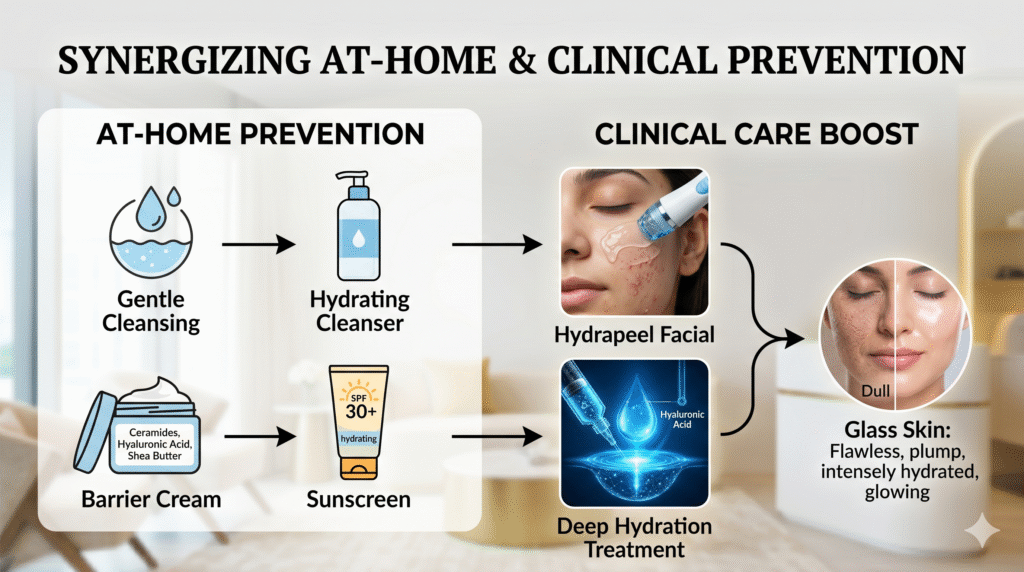
- The Fix: You must stick to lukewarm water. Keep your showers exceptionally short—ideally under 10 minutes. Furthermore, swap out harsh, foaming, heavily fragranced bar soaps for gentle, cream-based, or oil-based hydrating cleansers that deposit moisture rather than stripping it away.
Step 2: The Strategic Application of Moisturizers
In the winter, a lightweight, oil-free gel moisturizer will simply evaporate off your face within minutes. You need to upgrade to thicker, richer, cream-based formulations.
- The Fix: Look for moisturizers containing a strategic blend of Humectants (like Glycerin or Hyaluronic Acid, which draw water into the skin), Emollients (like Ceramides or Squalane, which repair the cracked barrier), and Occlusives (like Shea Butter or Petrolatum, which seal the moisture in).
- The Timing: The golden rule of winter hydration is timing. You must apply your rich body and face creams immediately after stepping out of the shower while your skin is still slightly damp. This physically traps the surface water into your skin before it has a chance to evaporate into the dry air.
Step 3: Environmental Adjustments
You cannot control the weather outside, but you can control the climate inside your home. Central heating systems rapidly completely destroy indoor humidity levels.
- The Fix: Invest in a high-quality cool-mist humidifier and run it in your bedroom while you sleep. By artificially adding moisture back into the air, you prevent the environment from pulling hydration out of your skin overnight.
Step 4: Year-Round Sun Protection
A dangerous and pervasive winter myth is that you do not need sunscreen if the weather is freezing or cloudy. The reality is that UVA rays (the rays responsible for deep skin aging and barrier degradation) penetrate through thick winter clouds and glass windows with complete ease.
- The Fix: Applying a broad-spectrum, hydrating sunscreen every single morning is a non-negotiable step. If you live in or visit an area with snow, this is even more critical, as snow powerfully reflects up to 80% of UV rays, essentially hitting your skin twice and doubling your risk of damage.
Elevating Your Routine: The Role of Professional Clinical Care
Sometimes, despite your most diligent at-home efforts, religious moisturizing, and environmental control, the winter environment simply wins. When your skin barrier is deeply compromised, over-the-counter creams can only do so much. When your skin feels chronically tight, looks visibly dull, or refuses to heal, it requires a much deeper level of clinical intervention.
At Aestheticaa By Madhulika, we offer highly specialized, medical-grade treatments specifically designed to instantly revive, repair, and profoundly hydrate winter-stressed skin:
- Deep Hydration with Hydrapeel Facials: This is the ultimate clinical rescue for a dull, flaky winter complexion. The Hydrapeel Facial utilizes advanced technology to gently and painlessly exfoliate the dead, dry outermost layer of skin. Simultaneously, it deeply infuses the newly exposed, healthy skin cells with potent, proprietary hydrating serums and antioxidants. The result is a complexion that is instantly cleared of dry flakes and restored to a dewy, fresh, and vibrantly healthy state.
- The Power of Hyaluronic Acid Treatments: For skin that feels deeply, chronically parched and has lost its youthful plumpness due to severe winter dehydration, our specialized hyaluronic acid-based treatments are truly transformative. Hyaluronic acid is a miracle molecule that naturally holds up to 1,000 times its weight in water. By clinically administering strictly hyaluronic acid-based therapies, we bypass the damaged surface barrier and deliver profound, structural hydration directly into the deeper dermal layers. This safely restores facial volume, enhances elasticity, and provides a lasting, deeply rooted glow that no topical winter cream could ever achieve.
Conclusion
Winter does not have to spell inevitable disaster for your complexion. By thoroughly understanding the biological mechanisms of how the cold environment affects your delicate skin barrier, you can make intelligent, proactive adjustments to your daily routine. Focusing heavily on gentle cleansing, strategic, heavy-duty hydration, and consistent environmental protection can keep dryness, itching, and severe irritation safely at bay.
However, if your skin is still visibly struggling to cope with the aggressive seasonal shift, do not force yourself to suffer through the discomfort until spring. Professional dermatological care can provide the profound, structural nourishment your skin so desperately requires. With the extensive clinical expertise of Dr. Madhulika Mohanty and the dedicated, compassionate medical team at Aestheticaa By Madhulika, you can safely and effectively navigate the harsh winter season, ensuring your skin remains deeply resilient, perfectly hydrated, and beautifully glowing all year round.